The “Knuckle” Problem: Why 42CrMo Cylinders Are Mandatory for Articulating Booms
If you have been in this industry as long as I have, you know exactly what I mean by the “knuckle” problem. You are inspecting a fleet of articulating boom lifts—maybe 15 or 18-meter units—that have been working hard on a construction site in Utrecht. You wipe the grease off the cylinder trunnion mount on the folding arm, and there it is: a hairline fracture right next to the weld bead.
It makes your stomach drop, doesn’t it? (It certainly ruins my morning. The articulating boom cylinder, or folding arm cylinder, has arguably the toughest job on the entire machine. Unlike a telescopic cylinder that pushes in a straight line, the folding cylinder has to manage complex torque and massive geometric changes. As the arm unfolds, the angle of attack changes, creating weird side-loads that standard ST52 steel just hates. We’ve seen operators trying to maneuver a basket over a canal bridge, pulsing the controls, and every sudden stop sends a shockwave straight into the cylinder wall.
Most manufacturers try to save costs here. They use standard wall thickness and rely on the safety valve to do the work. But in our experience, the only way to beat the dreaded “fatigue crack” is by upgrading the metallurgy itself to Acciaio legato 42CrMo (cromo-molibdeno) with a heavy-duty welded construction. It’s overkill for a scissor lift, but for a Z-boom? It is an absolute necessity.
Before we get into the nitty-gritty of yield strengths and weld procedures, I want to invite you to see where the magic happens. We aren’t hiding anything.
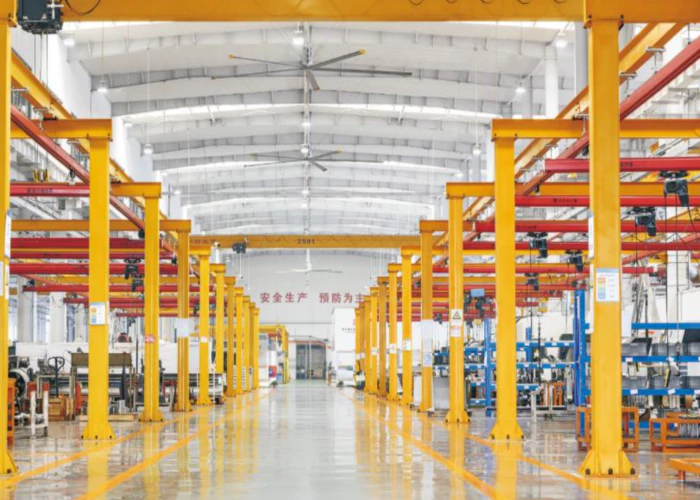
👀 Take a Virtual Walk Through Our Factory
See the welding robots handling the thick-wall alloy tubes. No travel required.
Why “Standard” Cylinders Fail on Folding Arms
Let’s talk shop. In a telescopic boom, the forces are largely axial (linear compression). But in an articulating boom (Z-type), the cylinder is often acting as a structural link while the arm is at a 90-degree angle. This creates a moment of force that tries to bend the cylinder barrel like a banana.
We’ve seen it time and again with generic replacement parts. The steel might handle the hydraulic pressure (bar), but it fatigues under the structural stress. After 10,000 cycles, the grain structure of standard carbon steel starts to separate at the stress points—usually the trunnion or the cap weld. This is what we call “geometry-induced failure.”
The trick is using thick-wall 42CrMo alloy steel. This material has a yield strength roughly 30-40% higher than standard S355 (ST52). It allows the cylinder to absorb those shock loads without plastic deformation. However, welding 42CrMo is an art form. You can’t just blast it. It requires pre-heating the material and controlled cooling, or the weld itself becomes brittle. (Most budget shops skip the pre-heat, and that’s why their eyes break off).
🇳🇱 Case Study: The Urban Tree Surgeons of Amsterdam
Il Cliente: “GroenStad Service B.V.” (Pseudonym), a specialized arboriculture company maintaining the trees along the historic canals of Amsterdam and Utrecht.
La sfida: Their 22-meter articulating spider lifts operate in extreme positions—often reaching down over a canal wall or up through dense branches. The lower folding arm cylinders were cracking every 8-10 months. The OEM parts were taking 12 weeks to arrive, and the downtime was costing them municipal contracts. The salty, humid air was also causing rod pitting, which chewed up the seals.
La soluzione: We engineered a bespoke Double-Acting 42CrMo Replacement. We increased the barrel wall thickness by 4mm and applied a dual-layer chrome plating (passing a 120-hour salt spray test). We also redesigned the trunnion mount with a larger radius to distribute stress.
Il risultato: The new cylinders have been in operation for 24 months with zero structural defects. The maintenance team reported that the “bounce” in the arm when stopping suddenly has virtually disappeared.
Feedback dal mercato olandese
“The weld quality on the trunnions is visibly better than the original parts we took off. You can see the penetration is deeper. It gives our safety inspectors peace of mind.”
— Kees V., Fleet Manager, Rotterdam
“We work in tight streets in The Hague. The precision of these cylinders means the arm goes exactly where I put it. No drift, no creep.”
— Marco, Senior Operator
“I was worried about the shipping cost for heavy alloy cylinders, but Ever Power handled the logistics to the port smoothly. The landed cost was still better than local sourcing.”
— Anouk D., Procurement, Brabant
Technical Deep Dive: The Alloy Advantage
When we say “Complex Torque,” we aren’t just using buzzwords. We are talking about the lateral forces applied to the guide bands when the boom is fully extended sideways. Here is how our spec handles it.

| Caratteristica | Il nostro standard elevato | Engineering Logic |
|---|---|---|
| Materiale del cilindro | 42CrMo (bonificato e bonificato) | Prevents barrel ballooning under high-pressure spikes (shock loads). |
| Struttura | Heavy Wall, Fully Welded | Eliminates thread stripping risks common in tie-rod designs under side load. |
| Biella | Induction Hardened, Chrome >50μm | Resists scratches from falling debris (tree branches, concrete dust). |
| Sistema di tenuta | Double Lip Wiper + Heavy Guide Bands | Thicker guide bands absorb the side-load so the metal rod doesn’t touch the gland. |
| Fatigue Life | > 200,000 Cycles | Designed for high-frequency “up-and-over” maneuvers. |
Beyond the Standard AWP
While the focus is on articulating boom lifts, the physics of “folding arms” applies to several machines we see in the Dutch infrastructure sector. The common denominator is non-linear movement.
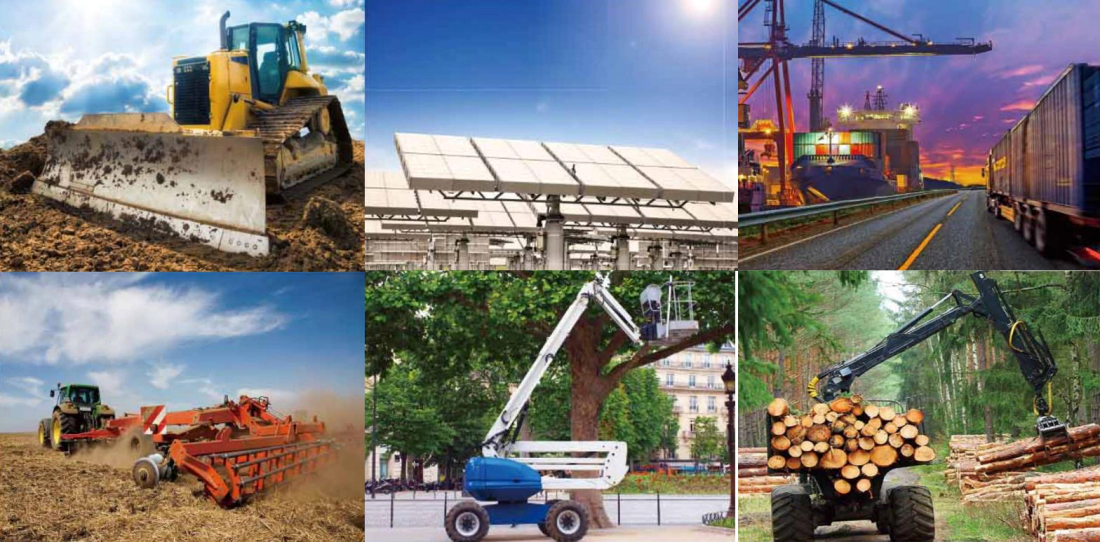
- Autopompe per calcestruzzo: The folding boom on a pump truck works exactly like an AWP, but with the added weight of liquid concrete pulsing through it. Our 42CrMo cylinders are a popular upgrade here.
- Spider Lifts (Tracked Lifts): Essential for working inside Dutch churches or shopping malls with fragile floors. These compact machines use extremely high-pressure, small-bore articulating cylinders where material strength is the *only* way to save weight.
- Loader Cranes (Knuckle Booms): Mounted on trucks for loading bricks or pallets. They face intense shock loads when a load is dropped or snagged.
Non ci limitiamo a vendere, ristrutturiamo
Here is something most suppliers won’t tell you: A lot of the time, the original cylinder on your machine was “value engineered” (read: made as cheap as possible). When you come to us for a replacement, we often suggest improvements.
Do you need an integrated counterbalance valve port block to save space? We can machine that directly into the cylinder cap. Do you need spherical bearings on the rod eye to allow for more chassis flex? We can install those. Our factory isn’t just an assembly line; it’s a solution center. We can take your worn-out sample, analyze the failure mode, and build a Version 2.0 that won’t fail the same way.
Analisi strategica del prodotto (SWOT)
Transparency is key in my book. This 42CrMo cylinder is a beast, but is it right for every application? Let’s break it down.
Punti di forza
- Fatigue Resistance: 42CrMo outlasts standard steel by 3x in high-cycle apps.
- Side-Load Handling: Thick walls prevent ovalization.
- Integrità della saldatura: Specialized pre-heat process prevents cracking.
Punti deboli
- Peso: These are heavier than standard units (might affect payload).
- Costo: Alloy steel and specialized welding cost more upfront.
Opportunità
- Safety Upgrades: Companies are retrofitting older fleets to meet new EU safety norms.
- Heavy Rental Market: High demand for durable machines in Dutch construction.
Minacce
- Electrification: Electric linear actuators are improving (though not ready for heavy booms yet).
- Costi delle materie prime: Alloy steel prices fluctuate globally.
Answers to Your Tough Questions
Why is 42CrMo steel better for articulating boom cylinders?
It’s all about toughness. 42CrMo has a much higher yield strength than standard ST52. This means it can withstand the complex twisting and bending forces (side loads) of a folding arm without developing those nasty fatigue cracks over time.
How much does a custom articulating boom cylinder cost?
Because these require alloy steel and specialized welding, they cost a bit more than standard mild steel cylinders. However, buying direct from our factory typically saves you 25% rispetto ai prezzi dei concessionari OEM. Clicca sul pulsante "Preventivo" per un preventivo esatto.
Can you ship heavy hydraulic cylinders to the Netherlands?
Yes, we handle all logistics to major Dutch ports like Rotterdam. We understand the customs and import requirements, so the cylinders arrive at your door (or job site) ready to install without paperwork headaches.
What causes cracks near the cylinder welding points?
Cracks usually form due to fatigue from cyclic loading—basically, the metal gets “tired” from constant bending. Using proper alloy materials and correct pre-heat welding techniques is the only real way to prevent this in the long run.
Do you offer warranties on these high-stress cylinders?
Absolutely. Because we control the metallurgy and the welding process (we don’t outsource it), we stand behind our 42CrMo cylinders with a comprehensive warranty against structural defects.
End the Cycle of Cracks & Repairs
Your fleet deserves cylinders that work as hard as you do. Upgrade to 42CrMo today.
Fast Dutch Shipping • Manufacturer Direct Pricing