The Gatekeeper of the Underground: Optimizing the TBM Screw Conveyor Discharge Cylinder
Why standard hydraulics fail in the muck, and how 27SiMn welded precision changes the game.
Let’s be honest for a second: nobody pays attention to the hydraulic cylinder on the screw conveyor discharge gate until it fails. I’ve been in this industry for nearly two decades, crawling through the back-end of TBMs (Tunnel Boring Machines) from Singapore to Seattle, and I’ve seen grown men cry over a stuck gate. The TBM Screw Conveyor Discharge Gate Hydraulic Cylinder is essentially the throttle of your Earth Pressure Balance (EPB) machine. If you can’t regulate the opening of that gate, you lose control of the chamber pressure. Open it too wide? You risk face collapse. Keep it too shut? Torque spikes, and you wear out the screw flighting in days.
Most printers and catalog suppliers don’t realize that this isn’t just a “push-pull” application. This cylinder lives in a bath of abrasive slurry, rock paste, and corrosive groundwater. We’ve seen standard agricultural-grade cylinders pitted and leaking within 200 hours of boring. The trick is not just in the seal kit (though that matters); it’s in the metallurgy and the welding integrity. We specifically engineer our cylinders using Acciaio 27SiMn—which offers higher yield strength than the standard ST52—and employ a double-acting piston design that allows for micro-adjustments of the gate aperture, even under massive back-pressure. It’s about giving the pilot “feel” through the hydraulics.
👀 See Where the Heavy Metal is Made
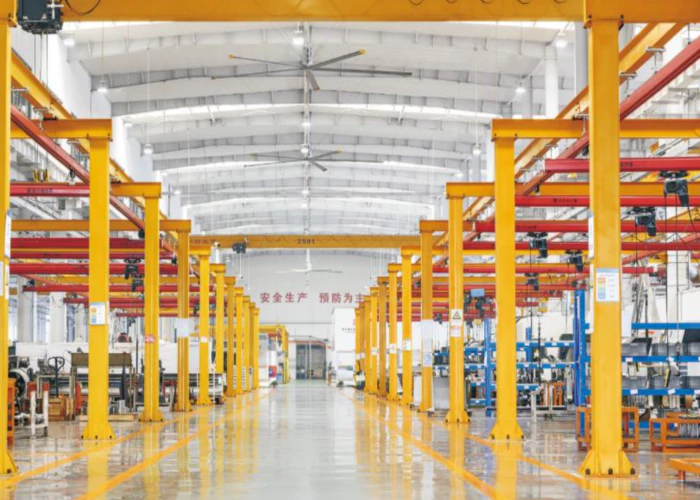
Don’t just take my word for it. We’ve digitized our entire production floor so you can see the honing machines and chrome plating baths yourself.
Step into our facility right now:
Why “Off-the-Shelf” Won’t Cut It: The Tech Specs
In the tunneling world, space is the ultimate luxury. The discharge gate area is cramped, vibrating violently, and covered in muck. A standard tie-rod cylinder will rattle apart here. That’s why we exclusively use a Welded Body Design. The structural integrity of a welded cylinder withstands the high-frequency vibration of the screw conveyor much better than bolted assemblies. Furthermore, the material choice of 27SiMn is crucial. It’s a silicon-manganese steel that provides excellent hardenability and wear resistance. When you are 50 meters underground, you don’t want to be worrying if your cylinder barrel is going to balloon under a pressure spike.
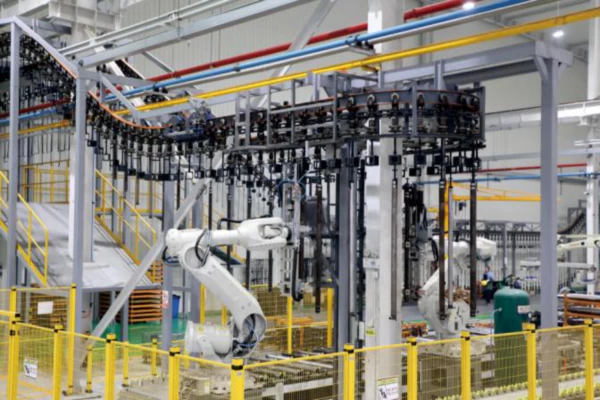
*Precision honing of cylinder barrels in our workshop to ensure seal longevity.*
But let’s talk about the real enemy: Corrosion and Abrasion. The slurry coming out of the screw is wet and sandy. If that gets past the wiper seal, it enters the hydraulic system. We tackle this with a multi-stage sealing system (often custom Parker or Hallite profiles) and, crucially, a rod coating that goes beyond standard chrome. We often apply a double-layer hard chrome plating, or, for extreme saline environments, a Nickel-Chrome overlay. This ensures that even if the muck cakes onto the rod (which it will), it won’t pit the surface, allowing the discharge gate regulation to remain smooth and predictable.
| Parametro | Specifiche standard | Our TBM Heavy Duty Spec |
|---|---|---|
| Materiale | Acciaio ST52 / 1045 | 27SiMn (alta resistenza alla trazione) |
| Costruzione | Tie-Rod or Bolted | Heavy Duty Welded |
| Placcatura delle barre | Cromo standard (20μm) | Double Chrome / Ni-Cr (30-50μm) |
| Foche | PU standard | Anti-dust, Slurry Resistant (PTFE/Bronze) |
| Valutazione della pressione | 160 – 210 Bar | 250 – 350 Bar (Peak 400) |
Where Does This Beast Operate?
While the primary home for this cylinder is the TBM Screw Conveyor Discharge Gate, the technology applies elsewhere. We’ve successfully adapted this design for pipe-jacking machines and slurry separation plants. In a pipe-jacking rig, the space is even tighter than a main TBM, requiring compact, high-force actuators. The capability to fine-tune the gate opening is critical for maintaining the “earth pressure balance.” If the gate opens too fast, the pressure drops, and the tunnel face becomes unstable. Our cylinders provide that necessary stiffness and control.

*Typical application environments: High vibration, mud, and continuous duty cycles.*
Case Study: The “Wet Sand” Nightmare in Southeast Asia
Il progetto: A metro line extension in Bangkok. High water table, sandy soil.
Il problema: The OEM cylinders on the screw conveyor discharge gate were failing every 3 weeks. The abrasive sand was working its way past the rod wiper, scoring the rod and destroying the main seal. The result? Hydraulic fluid leaking into the muck (an environmental no-no), and the gate is drifting open, causing pressure loss.
La nostra soluzione: Abbiamo progettato un prodotto personalizzato Cilindro a pistone a doppio effetto using 27SiMn steel.
1. Rod: We applied a specialized ceramic-infused coating (harder than sand).
2. Wiper: Installed a heavy-duty metallic scraper to physically shave the dried mud off the rod before it hit the soft seal.
3. Progetto: Reinforced the rear clevis to handle the eccentric loads caused by the gate jamming on rocks.
Il risultato: The replacement cylinders have been running for 8 months without a single leak. The maintenance manager treated us to dinner—best Pad Thai I’ve ever had!
Cosa dice l'industria
“We were skeptical about switching from the German OEM, but the lead times were killing us. Ever Power delivered a custom gate cylinder in 18 days. It fitted perfectly.”
— Marcus T., Project Director, UK
“The mud in our sector is extremely corrosive. Standard rods were pitting in weeks. Their double-chrome solution actually lasts. Saved us a lot of downtime.”
— Li Wei, Maintenance Lead, Singapore
“Good price, better service. They understood exactly what I meant by ‘stick-slip’ on the gate opening. The engineers speak our language.”
— Carlos R., Procurement, Brazil
Strategic Analysis: The Ever Power Advantage (SWOT)
Punti di forza
- High-tensile 27SiMn material standard.
- In-house chrome plating quality control.
- Ability to reverse engineer from worn samples.
- Fast reaction time (Quotes in <24h).
Punti deboli
- Higher cost than generic mild steel cylinders.
- Slightly heavier due to reinforced wall thickness.
- Requires accurate mounting dimensions for custom orders.
Opportunità
- Global boom in metro/subway construction.
- Integration of smart sensors (IoT) for gate position.
- Upgrading older TBM fleets with better hydraulics.
Minacce
- Fluctuation in raw steel material prices.
- Low-quality, cheap imitations flooding the market.
- Shift towards electric actuators (though still weak for high force).
Future Trends: Smarter Cylinders?
We are seeing a massive shift towards “Smart TBMs.” It’s not just about pushing dirt anymore; it’s about data. The latest request we’re getting is for discharge gate cylinders with integrated linear position sensors. This allows the TBM operator to see the exact percentage the gate is open on their screen, rather than guessing. We are also seeing a trend towards higher system pressures (up to 350 bar) to allow for smaller, more compact cylinders that leave more room for maintenance access. If you aren’t thinking about sensor integration for your next overhaul, you might be falling behind.
Customization is Our Standard
In our experience, “standard” doesn’t exist in underground construction. Every machine is tweaked, modified, or repaired differently. That’s why we offer full customization. Need a specific port orientation to dodge a new slurry pipe? We can do that. Need high-temp seals because your friction heat is spiking? Done. We don’t just pull boxes off a shelf; we build the cylinder that fits tuo headache.
Domande frequenti (FAQ)
How do I prevent premature seal failure in TBM screw conveyor cylinders exposed to abrasive slurry and muck?
This is the number one headache we see in the field. If you are running standard NBR seals in a muck environment, you’re asking for trouble. We recommend upgrading to a filled-PTFE or specialized polyurethane composite profile that can handle the abrasive micro-particles in the slurry. Also, check your rod plating; if the chrome is pitted, it acts like a cheese grater on the seal.
What is the typical lead time for a custom replacement discharge gate cylinder for a Komatsu or Herrenknecht TBM?
We know that when a TBM stops, the project bleeds money. Typically, for a custom welded 27SiMn cylinder, we look at about 3 to 4 weeks for manufacturing. However, if you have the specs or the old unit for reverse engineering, we’ve managed to turn these around in under 15 days for emergency breakdown situations.
Why is 27SiMn steel preferred over standard ST52 for tunnel boring machine hydraulic cylinders?
It comes down to the yield strength. In our experience, 27SiMn offers significantly higher tensile strength compared to ST52, which allows us to keep the cylinder walls slightly thinner (lighter) without sacrificing burst pressure safety factors. In the tight confines of a TBM screw conveyor housing, that space-saving combined with durability is the trick to longevity.
Where can I get a competitive price quote for a double-acting discharge gate cylinder with corrosion-resistant coating?
You can get a direct manufacturer quote right here from Ever Power. Unlike trading companies, we machine the barrels and plate the rods in-house. Just send us your bore, stroke, and mounting dimensions, and we can usually provide a detailed commercial offer within 24 hours.
Can you retrofit a position sensor onto a standard welded gate cylinder for better automation control?
Yes, absolutely. Modern EPB (Earth Pressure Balance) driving requires precise gate regulation. We can integrate linear transducers (like magnetostrictive sensors) directly into the cylinder or offer external mounting solutions, allowing your operator to fine-tune the discharge opening percentage from the cabin.
Don’t Let a Stuck Gate Stop the Dig
Your TBM needs reliable muscles. Let’s build them.