TBM Erector Cylinders: Because Dropping a Segment Isn’t an Option
There is a very specific, tense silence that falls over the back-up gantry when the segment erector is in motion. You have a four-ton precast concrete segment hovering mid-air, and the operator is trying to slot it into the ring with millimeter precision. In my eighteen years of troubleshooting hydraulics in tunnels from the Alps to the subways of Singapore, I’ve learned that the TBM Erector Cylinder is the unsung hero of the entire drive. While the main thrust cylinders get all the glory for pushing the machine forward, it’s the erector cylinders—lift, slide, and rotate—that determine the build quality of the tunnel lining. If these cylinders have “stick-slip” (that jerky movement) or internal drift, you end up with stepped rings, leaking gaskets, and a project manager breathing down your neck. Most printers and purchasing agents don’t realize that these cylinders are operating in a paradoxical environment: they need the brute strength to lift heavy concrete but the delicate touch of a watchmaker to align the bolt holes. The trick is in the valve tuning and the seal friction coefficients, something we have spent nearly two decades perfecting.
🚧 Step Inside Our Production Facility
Don’t rely on photos. Walk our floor virtually and inspect the honing precision of our cylinder barrels right now.
100% Transparan. Tidak perlu membuat janji.
The Engineering of Precision: Why Standard Cylinders Fail
Let’s get under the hood. The erector system is a complex dance of multiple hydraulic actuators: the Lift Cylinder (hoisting the segment), the Slide/Shift Cylinder (lateral adjustment), and often Rotation Cylinders. The number one enemy here is “Drift.” Imagine holding a segment in the 12 o’clock position (the key-stone). If the lift cylinder has even a tiny amount of internal bypass leakage, that segment starts to creep down. This is dangerous. In our experience, standard industrial cylinders use piston seals that are designed for continuous motion, not static holding. For TBM erectors, we utilize zero-leak seal profiles with integrated load-holding valves (counterbalance valves) mounted directly to the cylinder port. We don’t pipe them externally if we can avoid it—pipes vibrate loose in a TBM. We machine the valve cavity right into the cylinder head.
Another factor is the environment. The erector area is often wet, dusty, and filled with cement grout mist. If the rod plating isn’t up to scratch, you get pitting. We’ve seen rods pitted so badly within three months that they shredded the wiper seals, letting grout enter the hydraulic system. That’s a catastrophe. We use a specialized Double-Chrome plating technique or a Nickel-Chrome overlay for our erector cylinders to resist the alkaline nature of the grout.
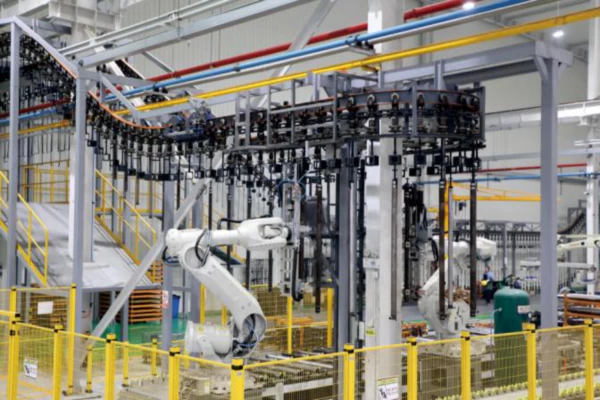
Our clean-room assembly area ensures no contaminants enter the cylinder before it hits the tunnel.
Technical Specifications: Built for the “Art of the Ring”
When you are spec’ing out a TBM Erector Cylinder, you aren’t just looking for push force. You need control. We often integrate Linear Displacement Transducers (LDTs) inside the rod. This allows the erector PLC to know the exact position of the arm, enabling semi-automated segment placement. Below is a comparison of what you might find on a generic cylinder versus what we engineer for tunnel boring machines.

Placing the keystone segment requires hydraulic precision that standard parts just can’t deliver.
Real-World Scenarios: From Metro Lines to Water Tunnels
The application of these cylinders varies hugely depending on the TBM diameter. In a massive 15-meter-diameter TBM (like those used for highway tunnels), the segments are enormous. The lift cylinders here are essentially crane booms. They face massive bending moments because the erector arm extends far out from the center. We reinforce the gland area (the “neck” of the cylinder) with high-strength bronze guide bushings to prevent the rod from ovalizing the seal under that leverage. Conversely, in smaller micro-tunneling or utility tunnel machines (3-4 meters), space is the enemy. We have to design compact “pancake” style cylinders or telescopic units to fit the required stroke into a cramped machinery space. It’s like building a ship in a bottle, but the ship has to lift 2 tons.
Case Study: The “Squeezing Ground” Challenge
Client: Alpine Link Constructors (Austria)
Masalahnya: Deep within the Alps, the construction team faced “squeezing ground” conditions. The tunnel walls were converging rapidly. The OEM erector cylinders on their TBM were too slow. By the time they positioned the segment, the rock had moved, and the segment wouldn’t fit. They needed a hydraulic system that was faster but maintained the “soft touch” to avoid cracking the concrete.
Solusinya: Kami merancang seperangkat alat khusus. TBM Erector Cylinders with oversized ports and low-friction PTFE seals to allow for higher flow rates (speed). Crucially, we integrated a proportional pressure-reducing valve directly onto the cylinder manifold. This allowed the operator to have a “Fine Mode” for final placement and a “Fast Mode” for grabbing the segment.
Hasilnya: The cycle time for building a ring dropped by 8 minutes. Over the course of a 10km tunnel, which saved them months of project time. The Project Director, Klaus, told us, “The cylinders paid for themselves in the first 500 meters.”
SWOT Analysis: The State of TBM Hydraulics
Kekuatan
Our in-house honing and plating capabilities mean we control the quality. We understand the specific safety codes for underground machinery (EN 16191).
Kelemahan
We are not a “big box” store. Custom engineering takes time (usually 3-4 weeks for design and build), so we can’t ship overnight for complex units.
Peluang
The trend toward automated segment erection. We are ready with sensor-integrated “Smart Cylinders” that feed data to AI-driven erector systems.
Ancaman
Cheap replacement cylinders that skip the safety valves. They lower the market price but increase the risk of injury underground.
Trend Watch: The Rise of the Robot
Tunneling is becoming increasingly automated. We are seeing a shift away from manual joystick control towards fully automated erector systems. This means the TBM Erector Cylinder is no longer just a muscle; it’s a data point. The cylinders we are prototyping now have redundant position sensors and built-in pressure transducers to monitor the “grip” force on the segment in real-time. If the pressure drops (indicating a potential slip), the system auto-locks. Also, energy efficiency is becoming a topic. We are optimizing seal designs to reduce friction, which lowers the heat generation in the hydraulic power pack—a big plus when you are working in a hot tunnel environment.
Factory & Customization: We Rebuild and Reinvent
Look, TBMs are expensive beasts. When a project finishes, the machine is often refurbished for the next job. But usually, the diameter changes, or the segment design changes. This is where we shine. You don’t need to buy a whole new erector arm. We can modify your existing cylinders—change the stroke, upgrade the rods, or retrofit new mounting styles. We take the old, battered cylinders covered in dried grout, strip them down, hone the barrels, and rebuild them to “better than new” specs. We handle the custom welding and pressure testing (up to 450 bar) right here in our factory.
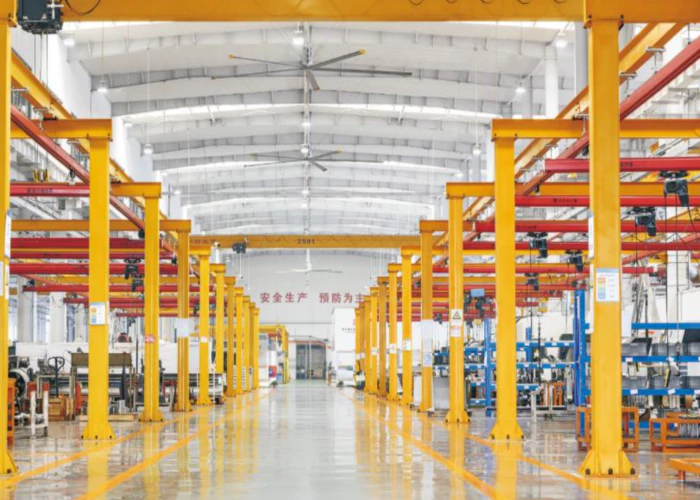
From raw steel tube to the final pressure test, quality control is rigorous.
Voices from the Tunnel (Testimonials)
“Our Herrenknecht TBM needed new pickup cylinders fast. Ever Power turned around a custom set in 20 days. The integrated safety valves are top-notch.”
— Marco R., Tunnel Superintendent, Italy
“Drift was a huge issue for us. These guys suggested a different seal profile, and it solved the problem instantly. Segment placement is dead on now.”
— Li Wei, Project Engineer, Shanghai Metro
“Honest advice. I tried to order a cheap replacement, and they explained why the rod would buckle. I bought their heavy-duty version and haven’t regretted it.”
— James T., Procurement, UK
FAQ: Conversations in the Gantry
Why is my TBM erector cylinder drifting down?
Drift is usually caused by internal leakage across the piston seal or a leaking counterbalance valve. In a TBM, vibration can also loosen valve cartridges, so check those first. If it drifts, it’s unsafe.
How much does a custom erector cylinder cost in the USA?
It depends on the size and complexity, but generally, a high-quality custom cylinder with integrated safety valves ranges from $3,000 to $8,000. It’s a small price compared to downtime.
Can you ship hydraulic cylinders to my tunnel site globally?
Absolutely. We ship DDP (Delivered Duty Paid) to sites worldwide. Whether you are in New York or New Delhi, we handle the customs and crates.
What is the best rod plating for wet tunnel conditions?
For wet or saline environments, standard chrome isn’t enough. We recommend Double Chrome (Nickel base + Chrome top) or a Ceramic coating to prevent pitting and rust.
Do you make cylinders for vacuum segment lifters?
Yes, we manufacture the hydraulic cylinders that articulate the vacuum pad frame. These require high precision to ensure the pad sits perfectly flat on the segment.
How long does it take to manufacture a replacement cylinder?
For urgent breakdowns, we can sometimes expedite production to 15-20 days. Standard custom orders usually take about 25-30 days, including rigorous testing.
Keep Your Drive Moving
Don’t let a $5,000 cylinder stall a $50 million project. Let’s talk specs.