Crane Hydraulic Cylinders: Why “Good Enough” is Dangerous at 100 Feet
There is a specific feeling in your gut when you are watching a 50-ton load dangle in the wind, and you see the boom hesitate. In my eighteen years of engineering hydraulic systems for mobile and stationary cranes, that hesitation is the stuff of nightmares. When we talk about a Crane Hydraulic Cylinder, we aren’t just talking about pushing oil into a tube; we are talking about the critical safety barrier between a successful lift and a catastrophic failure. Unlike standard earthmoving hydraulics, crane cylinders—whether they are telescoping boom cylinders, luffing cylinders, or outrigger jacks—operate under a microscope of safety regulations and physics that don’t forgive mistakes. Most printers and procurement managers don’t realize that the static holding capability is just as important as the lifting force. I’ve seen cheap seals hold pressure in a lab, but fail miserably when the temperature drops to freezing on a windy construction site in Chicago. The trick is understanding that a crane cylinder is effectively a structural member of the machine. It takes side loads, bending moments, and vibration, all while needing to hold a position within millimeters for hours. It’s a tough job, and frankly, not every cylinder is built for it.
👀 Don’t Take My Word For It
See the precision yourself. Walk through our honing workshop and assembly line right now on your phone.
100% Transparent Production Process.
The Engineering Reality: Holding Valves and Bending Moments
Let’s get into the weeds a bit. The defining feature of a Crane Hydraulic Cylinder is the integration of safety valves—usually counterbalance valves or pilot-operated check valves. In our experience, the mounting of these valves is where many aftermarket designs fail. They bolt them on with standard piping, which vibrates loose. We machine the valve ports directly into the cylinder head or use a hard-piped manifold block welded to the barrel. This eliminates leak points. Furthermore, consider the rod buckling load. When an outrigger cylinder is fully extended, it is essentially a slender column supporting the entire crane’s stability. If the rod material is standard 45# steel, it might flex too much. We typically upgrade to 42CrMo4 (chromoly) for these applications because the yield strength allows for that extra margin of safety without adding massive weight. Weight is the enemy here; every pound we save on the boom cylinder is an extra pound you can lift in the hook.
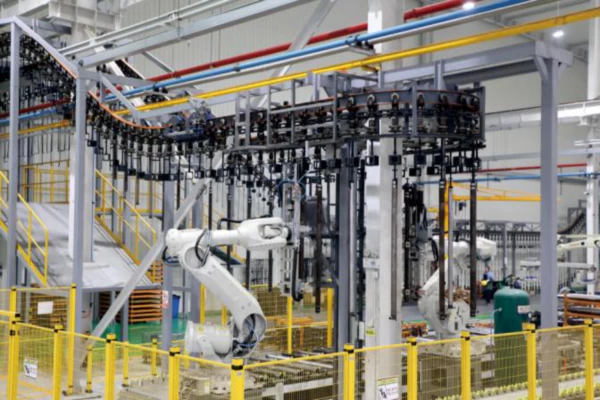
Our pressure testing bay, where every crane cylinder undergoes a static hold test at 1.5x operating pressure.
Specs That Matter: A Comparison
I’ve spent hours arguing with accountants about why we can’t use cheaper guide rings. In a crane application, the “stick-slip” effect (that jerky motion when you start to move the load) is unacceptable. It causes the load to swing. To prevent this, we use low-friction bronze-filled PTFE seals and phenolic guide bands that absorb the high side-loads without binding. Below is a breakdown of what makes a “Crane Grade” cylinder different from a standard ag-cylinder.
| Fitur | Silinder Hidrolik Standar | Ever Power Crane Grade |
|---|---|---|
| Katup Pengaman | External plumbing | Integrated Cartridge / Manifold |
| Pelapisan Batang Piston | Krom Standar (20µm) | Double Chrome / Nickel-Chrome (>35µm) |
| Teknologi Segel | Standar NBR | Low-Friction PTFE + Glass / Viton |
| Weld Quality | MIG Standard | Ultrasonic Tested (UT) Penetration Welds |
| Side Load Capacity | Low | High (Wide Guide Bands) |

From outriggers on rough terrain to telescoping booms reaching 80 meters, reliability is non-negotiable.
Diverse Application Scenarios: Not All Lifts Are Equal
Saat kita mendesain sebuah Crane Hydraulic Cylinder, the first question we ask is “Where does it live?” A knuckle boom crane on a forestry truck faces a completely different life than a telescopic mobile crane on a construction site. The forestry crane needs speed and extreme impact resistance because logs are heavy and operators are aggressive. The mobile crane needs finesse and zero-drift holding capability. We also see huge demand in the marine sector—deck cranes on barges. Saltwater is the ultimate destroyer of chrome. For those clients, we switch to a specialized ceramic coating or a multi-layer nickel-chrome process that resists pitting corrosion (which we call “rod pox”) for years longer than standard plating. And don’t forget the outrigger cylinders; they spend their lives covered in mud and road grit. If the wiper seal isn’t aggressive enough, that grit gets retracted into the cylinder, and you’ll be repacking seals every six months.
Case Study: The Windy North Sea Challenge
Client Profile: Oceanic Lift Solutions (Norway)
Masalahnya: Operating offshore platform cranes in the North Sea. The salt spray combined with high wind loading was causing their luffing cylinders to corrode within 18 months. The rust on the rods was tearing up the seals, leading to dangerous internal bypass drift. They were replacing cylinders almost as fast as they could buy them.
Solusinya: Kami merancang sebuah produk khusus. Crane Hydraulic Cylinder featuring stainless steel 17-4PH rod eyes (to prevent seizing) and applied our proprietary “Marine-Grade” plating—a double layer of nickel followed by hard chrome. We also integrated a dual-seal system with a seawater-resistant scraper.
Hasilnya: The new cylinders have been in operation for 3 years without a single seal failure or sign of pitting. The maintenance manager, Lars, sent us a message saying, “We finally have one less thing to worry about in a storm.” That’s the kind of feedback that makes this job worth it.
Strategic Analysis: The State of the Industry (SWOT)
Kekuatan
We control the honing and plating process in-house, ensuring tolerances that aftermarket shops can’t match. Our safety factors are calculated for worst-case scenarios.
Kelemahan
Our lead times for custom exotic alloys (like high-tensile stainless) can be longer than off-the-shelf standard parts. Quality takes time.
Peluang
The rise of “Smart Cranes.” We are integrating linear position sensors (LDTs) directly into the cylinder rod for real-time load moment monitoring.
Ancaman
Low-cost “copycat” cylinders flooding the market that use inferior steel grades, risking catastrophic buckling under heavy loads.
Trend Watch: Lightweighting & Intelligence
We are seeing a massive shift towards “lightweighting.” Crane manufacturers want to reduce the gross vehicle weight to meet road regulations, which means the cylinders need to be lighter but stronger. We are achieving this by using ultra-high-strength steels (yield strengths over 900 MPa), which allow us to use thinner cylinder walls without compromising burst pressure. Another huge trend is the smart Crane Hydraulic Cylinder. Instead of external cable reels to measure boom extension (which always break), we are installing magnetostrictive sensors inside the cylinder rod. This gives the crane computer exact length data, protected from the elements. It’s cleaner, safer, and the future of lifting.
Pabrik & Kustomisasi: Kami Membangun Apa yang Anda Butuhkan
Got an old Grove or Liebherr crane from the 90s, and the OEM part is obsolete? That’s our bread and butter. We don’t just sell from a catalog. We can reverse engineer a cylinder from a drawing or even a physical sample. We check the rod for straightness, analyze the seal failure, and build a replacement that is often better than the original because we use modern sealing compounds. We can adjust the port orientation if you’ve re-routed hoses, or add protective bellows if you are working in a cement plant. Our welding robots ensure that the base weld—the highest stress point—is perfect every time.
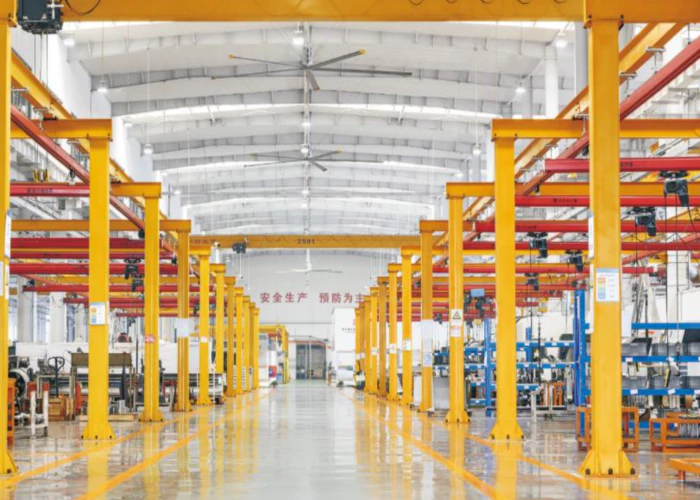
Precision welding is critical—one pore in the weld can lead to fatigue failure under high-cycle crane operations.
Apa Kata Industri
“We run a fleet of rental cranes. Downtime costs us $2000 a day. Ever Power sent us replacement outrigger cylinders in 2 weeks when the OEM said 3 months. The quality is solid.”
— Mike T., Fleet Manager, Texas, USA
“Hard to find a supplier who understands holding valves. These guys knew exactly what I needed for my knuckle boom. No drift, smooth operation.”
— Jurgen K., Equipment Builder, Germany
“The chrome plating on the rods is visibly thicker than the cheap stuff we bought last time. Worth the extra few bucks for the peace of mind.”
— Ahmed S., Port Operations, Dubai
FAQ: Field Questions Answered
We get these questions daily. Here is the no-nonsense truth.
Why is my crane outrigger cylinder drifting down overnight?
Drift is almost always internal leakage across the piston seal. Even a tiny scratch in the barrel can let oil bypass. Sometimes it’s the holding valve, but 90% of the time, it’s the seal.
Berapa biaya pembuatan silinder boom teleskopik khusus?
It varies wildly based on stages and length, but generally, a multi-stage telescopic cylinder can range from $3,000 to $15,000. We need your specs to give an accurate number.
Can you repair a scored hydraulic cylinder rod?
Technically, yes, by stripping and re-chroming, but for crane safety, we usually recommend replacing the rod. Structural integrity is too important to risk on a repaired rod.
Di mana saya bisa menemukan pemasok silinder hidrolik di dekat saya?
While we are a global manufacturer, we ship directly to your door with DDP terms (Duty Paid). We handle the logistics so it feels like buying local, but with factory-direct pricing.
What hydraulic oil is best for cranes in cold weather?
You need a high Viscosity Index (VI) oil. Standard AW46 gets too thick in freezing temps, causing pump cavitation and sluggish cylinders. Look for multi-grade fluids designed for low temps.
How do I measure a cylinder for replacement?
We need the closed length (pin to pin), the stroke length, the bore diameter, the rod diameter, and the port size. Photos help us identify the mounting style.
Lift With Confidence
Don’t risk your rig on cheap seals. Let’s build a cylinder that lasts.