Why standard hydraulics shatter in the scrap yard, and how ceramic-coated 42CrMo changes the game.
There is a specific sound a hydraulic cylinder makes right before it fails in a scrap shear. It’s not a hiss; it’s a dull gedebuk followed by the loss of cutting force. If you manage a scrap yard or run a demolition crew, you know that sound means your profit margin just took a nosedive for the week. In my 18+ years of engineering hydraulics for yellow iron, I’ve seen more dead shear cylinders than I care to count. Most printers and catalog suppliers don’t realize that a Shear Cylinder isn’t just pushing; it’s surviving an explosion. When you try to cut through a 20-inch steel I-beam and the shear stalls, the pressure spikes inside that barrel can momentarily exceed 5000 PSI (350 Bar). Standard ST52 steel tubes just can’t handle that repetitive “ballooning” effect—eventually, they crack.
The trick isn’t just making the wall thicker (though that helps); it’s changing the metallurgy and the rod surface. We’ve stopped recommending standard chrome rods for scrap shears entirely. Why? Because flying metal shards pit the chrome, and once the chrome flakes, your seals are hamburger meat. Instead, our Heavy-Duty Shear Cylinder line utilizes 42CrMo (Kromium-Molibdenum) steel for the barrel and a proprietary Ceramic Coating for the rod. It’s overkill for a digger, but for a shear? It’s the only way to get through the season without a rebuild.
👀 See the Heat Treatment Process
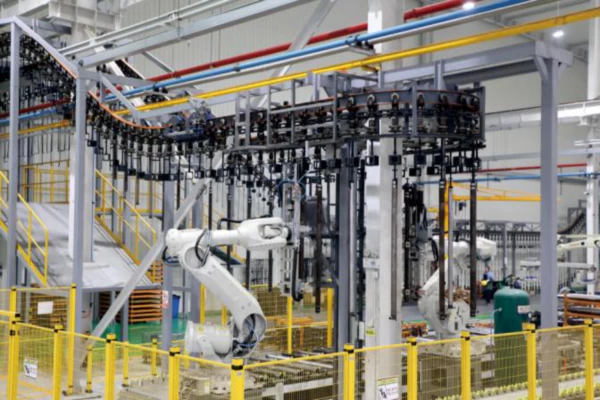
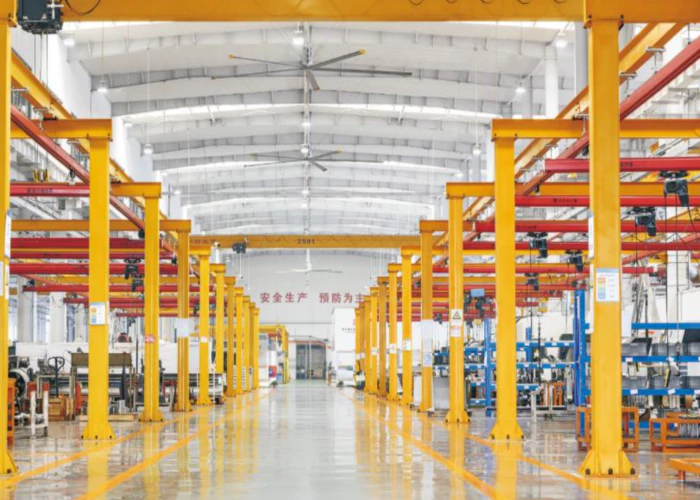
We don’t hide our process. We’ve digitized our entire production floor so you can see the tempering furnaces and the honing machines that handle these massive 42CrMo barrels.
Take a virtual walk through the shop floor:
Why “Off-the-Shelf” Cylinders Crack (The Science)
Let’s get technical for a minute. The environment inside a shear cylinder is violent. You are dealing with High-Frequency Shock Loading. When the shear blades bite into steel, the pressure builds, builds, builds… and then SNAP, the steel cuts and pressure drops to zero instantly. This “water hammer” effect sends shockwaves through the fluid.
Standard cylinders use ST52 (equivalent to 1026) steel. It has a yield strength of around 355 MPa. Our 42CrMo material, after Quenching and Tempering (Q+T), boasts a yield strength of over 900 MPa. This means we can resist the “hoop stress”—the force trying to tear the barrel open from the inside out. Furthermore, we address the rod surface. In a demolition zone, the air is filled with abrasive dust and flying sparks. Standard chrome is micro-porous. We apply a Ceramic Coating (often known as Ceraplate or similar technologies). It is electrically insulating (no galvanic corrosion), extremely hard (Vickers hardness > 1000), and most importantly, if it gets hit by a rock, it doesn’t flake off. It ensures the seals run on a smooth surface for years, not months.
| Fitur | Standard Market Spec | Our “Scrap Master” Spec |
|---|---|---|
| Bahan Laras | ST52 / E355 Steel | 42CrMo (Didinginkan & Ditempa) |
| Pelapisan Batang | Hard Chrome (20μm) | Ceramic Coating / Double Nickel-Chrome |
| Ketebalan Dinding | Standard Hydraulic Tube | Heavy Wall (+30% Thickness) |
| Anjing laut | NBR / PU Standar | Parker/Hallite Heavy Duty Step Seals |
| Ketahanan terhadap benturan | Low | Extreme (Designed for Shock) |
Silinder ini seharusnya berada di mana?
The primary home for this beast is on the arm of a Hydraulic Scrap Shear (like those from Genesis, LaBounty, or NPK). It’s the muscle that drives the moving jaw. However, we also deploy variants of this cylinder for Concrete Pulverizers and heavy-duty Demolition Grapples.

One trend we’ve seen recently is the use of these cylinders in mobile rail-breaking equipment. The vibration there is intense. We also see them in “Balers” within the scrap yard, where the cycle times are faster. In these high-cycle applications, heat buildup becomes the enemy. The ceramic coating helps here too, as it has different thermal properties than chrome, reducing the friction heat generated at the seal interface. It’s a small detail, but when you are running 24/7, it matters.
Case Study: The Ohio Scrap Yard Turnaround
Klien: “Midwest Metal Recyclers” – A large-scale processing facility in Ohio, USA.
Tantangannya: They were running a 90-ton excavator with a retrofitted shear. The OEM cylinders (standard steel) were cracking at the gland weld every 600-800 hours. The downtime was killing their production quotas. Every time a cylinder cracked, it was a $5,000 repair bill plus two days of lost production.
Solusinya: Kami merancang sebuah produk khusus. 42CrMo Thick-Wall Cylinder.
- ✅ Bahan: Upgraded from ST52 to 42CrMo4 (Quenched & Tempered).
- ✅ Desain: Increased barrel wall thickness by 15mm to reduce hoop stress.
- ✅ Batang: Applied 300-micron Ceramic Coating to resist the flying rebar shards.
Hasilnya: The replacement cylinder has been in operation for 18 months (approx. 3,500 hours) with zero structural failures. They replaced the seals once during routine maintenance, and the rod looked brand new. The maintenance manager told us, “It’s the first time I haven’t had to worry about that machine in years.”
Suara dari Halaman
“We process demolition scrap, lots of concrete, and rebar. The ceramic rod on these cylinders is the only thing that doesn’t get pitted. Worth every penny.”
— Tom H., Site Foreman, UK
“I was skeptical about the Chinese manufacturing, but the 42CrMo steel specs checked out. We UT tested the welds when it arrived—flawless.”
— Ahmed K., Procurement, Dubai
“Fast quote, and they understood exactly what I meant by ‘ballooning.’ The reinforced wall design saved our shear.”
— Carlos M., Contractor, Chile
Analisis Strategis (SWOT)
Kekuatan
- Unmatched tensile strength (42CrMo).
- Superior abrasion resistance (Ceramic).
- Thick-wall design eliminates fatigue cracking.
- In-house heat treatment capabilities.
Kelemahan
- Higher cost compared to mild steel units.
- Heavier weight (affects boom payload slightly).
- Longer production lead time due to the Q+T process.
Peluang
- The booming global metal recycling market.
- Replacement market for failing OEM cylinders.
- Integration of smart pressure sensors.
Ancaman
- Cheap, low-grade steel copies are flooding the market.
- Raw material price volatility (Molybdenum).
- Shift to fully electric shears (long term).
Future Trends: The Smart Shear?
We are watching the industry move toward higher pressures. Five years ago, 320 bar was standard. Now, everyone wants 380-400 bar to get more cutting force out of a smaller, lighter shear. This makes our 42CrMo Thick-Wall design even more critical, as standard steel simply cannot handle those pressures safely. We are also prototyping cylinders with integrated linear position sensors protected inside the rod, allowing the operator to set “short cycle” cutting modes from the cab, dramatically increasing processing speed.
Built to Your Ruins (Reverse Engineering)
Here is the reality: Most of the shears out there are old. The ID plates are scratched off, and the manuals are lost. That’s fine. We specialize in Reverse Engineering. You send us the damaged cylinder (or even just the main dimensions and photos), and we will create a CAD model for a replacement that fits perfectly but is built stronger. We control the welding, the plating, and the assembly in-house.
Pertanyaan yang Sering Diajukan (FAQ)
Why does my excavator shear cylinder keep cracking at the weld seam after only six months of use?
This is the classic “hoop stress” failure we see in scrap yards. Standard cylinders are often made of ST52 steel. When you spike the pressure to 350 bar to cut a thick I-beam, the barrel “balloons” slightly. Over thousands of cycles, that flexing fatigues the weld. We solve this by using 42CrMo tempered steel with a much thicker wall, which essentially eliminates that elastic deformation.
Is a ceramic rod coating really worth the extra cost compared to standard chrome for a scrap shear?
In a clean environment? No. But in a scrap yard with flying metal shards? Absolutely. Standard chrome is hard but brittle; if a piece of rebar hits it, it chips. Ceramic coatings (like Lunac) are incredibly dense and impact-resistant. They don’t flake, meaning your seals don’t get chewed up by chrome particles. It pays for itself in seal longevity alone.
Can you manufacture a direct replacement cylinder for a Genesis or LaBounty shear without the original drawings?
Yes, we do this all the time. Since these are often legacy attachments, drawings are usually long gone. We can reverse engineer from your damaged unit or, if you can provide critical dimensions (pin-to-pin, bore, stroke, port location), we can build a drop-in replacement that often exceeds the OEM specs in terms of material strength.
What is the typical lead time for a custom 42CrMo thick-wall shear cylinder for a 40-ton excavator?
Because 42CrMo requires specific heat treatment and tempering (Q+T) to get that toughness, it takes a bit longer than a mild steel cylinder. Typically, we look at 4 to 5 weeks for a fully custom build. However, for urgent breakdown situations, we have expedited tracks where we can sometimes turn it around in 20 days.
Do you ship these heavy demolition cylinders to scrap processors in the USA or Australia?
We sure do. A huge portion of our client base is in the US “Rust Belt” and Australian mining/demo sectors. We pack them in heavy-duty, fumigated wooden crates with anti-corrosion wrapping to ensure they arrive ready to bolt on, regardless of the ocean transit time.
Stop Welding Cracks. Start Cutting Profit.
Your shear is the heartbeat of the yard. Don’t let a weak cylinder stop it.