Crane Luffing Hydraulic Cylinders: Why “Holding” is Harder Than “Lifting”
There is a very distinct, sinking feeling you get when a crane boom starts to creep down on its own. I was on a job site in New Jersey back in ’09, watching a crawler crane hold a steel beam for a welder. The operator took his hands off the joysticks, and five minutes later, the welder was screaming because the beam had drifted four inches. That drift wasn’t just an annoyance; it was a safety violation waiting to shut down the site. When we talk about a Crane Luffing Hydraulic Cylinder (or derricking cylinder, depending on which side of the pond you learned your trade), we aren’t just talking about muscle. We are talking about precision holding under variable geometry. Unlike a standard lift cylinder that pushes straight up, a luffing cylinder constantly changes its angle of attack. It fights gravity, wind load, and the dynamic swing of the load all at once. Most printers and procurement managers see a part number, but I see the intense friction on the guide bands and the massive pressure spikes on the counterbalance valve. If your luffing cylinder isn’t engineered to handle the “micro-movements” caused by wind buffeting, you are going to be replacing seals—or worse, rods—every season.
🏭 Walk Through Our Factory (Virtually)
Don’t just take a spec sheet’s word for it. Step inside our honing workshop and see the precision testing bays for yourself right now.
100% Transparent Production Process.
The “Hidden” Physics of Luffing: It’s Not Just About Pressure
Let’s get technical for a moment, but I promise to keep the math out of it. The unique challenge with a Crane Luffing Hydraulic Cylinder is the side-loading curve. When a crane boom is nearly vertical (high angle), the cylinder is mostly taking compressive load. But as you luff down to pick up a load at a long radius, the geometry changes, and gravity starts trying to bend that cylinder rod like a twig. We’ve seen OEM cylinders buckle because they used standard 1045 steel rods, which are fine for log splitters but terrifying for a 100-ton crane. The trick is utilizing higher yield strength alloys, typically 42CrMo4 (Chromoly), which gives us that extra elasticity to absorb the bending moment without permanent deformation.
Another aspect most folks overlook is the valve integration. On a luffing cylinder, the holding valve (counterbalance valve) isn’t an accessory; it’s a lifeline. If a hose bursts, that valve must lock the oil inside the cylinder instantly. We machine the valve ports directly into the cylinder head or weld a manifold block to the barrel. I’ve seen aftermarket replacements where they plumbed the valve externally with hard pipes. The vibration from the crane engine eventually cracked the pipe threads, leading to a leak. We simply don’t take that risk. The valve needs to be “married” to the cylinder body.
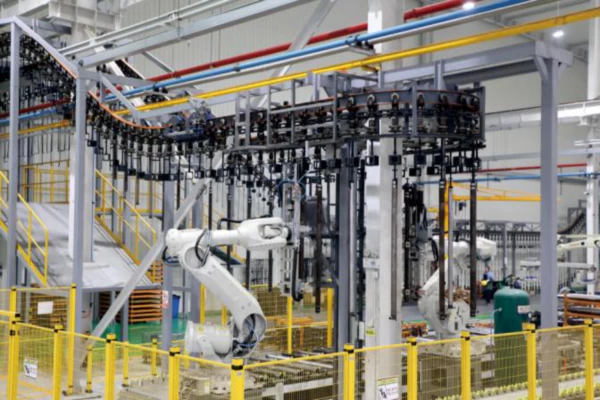
Precision Honing: We achieve surface finishes of Ra 0.2µm to ensure the piston seal glides smoothly, preventing the “stick-slip” that causes jerky boom movement.
Technical Specs: The Difference Between “Generic” and “Crane-Rated”
I often get asked, “Can’t I just use a standard double-acting cylinder?” The answer is yes, if you want your crane to be unsafe. A true Crane Luffing Hydraulic Cylinder is built with different safety factors (usually 4:1 instead of the industrial 2.5:1). The seals are also a major differentiator. Standard nitrile seals will extrude under the shock loads of a crane operation. We use a composite seal profile—usually a glass-filled PTFE slide ring energized by a square profile ring. This reduces friction (better control) and resists extrusion. Here is a breakdown of what we put inside our units versus what you might find on a cheap replacement.

Whether it’s a lattice boom crawler or a portside jib crane, the luffing cylinder is the muscle behind the reach.
Application Scenarios: From Docks to Deserts
We see these cylinders in environments that would make a lesser machine cry. Port Cranes (Ship-to-Shore or Jib cranes) are probably the harshest environment. You have saltwater spray essentially sandblasting the rod every time it extends. If the chrome has even a microscopic pore, rust starts (we call it “rod pox”), and that rust tears the wiper seal apart in weeks. For these clients, we often skip standard chrome and go straight to ceramic coatings or dual-layer nickel-chrome. Then you have the construction sector—mobile cranes working in dusty, gritty environments. Here, the danger is physical impact. A swinging chain or a dropped tool can dent the cylinder rod. We induction harden our rods to HRC 55-60 specifically to resist these kinds of accidental impacts. It costs a bit more to machine, but it saves thousands in downtime.
Case Study: The “Salty” Problem in Singapore
Client: Pacific Maritime Logistics (Singapore)
Mimpi Buruk: Operating a fleet of level-luffing dock cranes, PML was facing a crisis. The humidity and salt air in Singapore were eating their OEM cylinder rods alive. They were getting maybe 8 months of life before the seals failed due to rod corrosion. Every replacement meant shutting down a crane for 2 days—a massive revenue loss.
Solusinya: We flew out an engineer to inspect the failed units. Standard hard chrome was too porous for their environment. We engineered a custom replacement batch using a “High-Corrosion Resistance” process: a base layer of electroless nickel (for chemical resistance) topped with a micro-crack-free hard chrome layer. We also upgraded the wiper seals to a double-lip design with a seawater-resistant elastomer.
Hasilnya: The new cylinders have been running for 3.5 years now without a single leak. The maintenance director sent us a bottle of whiskey last Christmas, which I think says it all. Reliability isn’t just about parts; it’s about sleeping well at night.
SWOT Analysis: The State of Hydraulic Manufacturing
Kekuatan
We control the entire process, from raw steel tube to final paint. Our ability to integrate custom holding valves directly into the head is a major safety advantage.
Kelemahan
High-quality custom manufacturing takes time. We cannot compete with “off-the-shelf” standard cylinders for 24-hour delivery on complex luffing units.
Peluang
Integration of position sensors (LDTs) inside the rod. “Smart Cylinders” allow the crane computer to know the boom angle without external cable reels.
Ancaman
Market flooding of low-cost cylinders using inferior steel grades (Q235 vs Q345/42CrMo), posing significant safety risks to unaware buyers.
Trend Watch: Lightweighting & Intelligence
The crane industry is obsessed with weight. Every pound you save on the boom cylinder is a pound you can add to the lifting capacity chart. We are seeing a huge push towards high-tensile steels that allow us to use thinner barrel walls without compromising burst pressure. Five years ago, a cylinder might weigh 500kg; today, using advanced alloys, we can get that down to 420kg with the same strength. Also, “Smart Hydraulic Cylinders” are the future. We are increasingly installing magnetostrictive linear position sensors inside the cylinder rod. This feeds precise length data back to the Load Moment Indicator (LMI) system, eliminating those external cable reels that always seem to get snagged on tree branches.
Factory & Customization: Your Specs, Our Steel
If you are restoring an older Liebherr, Grove, or Tadano crane, you know the pain of “Obsolete Part” notices. We specialize in reverse engineering. You send us the old, leaking cylinder (or just a drawing/photo with dimensions), and we build a drop-in replacement. But we don’t just copy it; we improve it. We often upgrade the seal technology to modern polyurethane standards and improve the rod plating. We can also customize the port orientation. If you’ve modified the crane and the hoses are now routing differently, we can rotate the ports on the new cylinder to match.
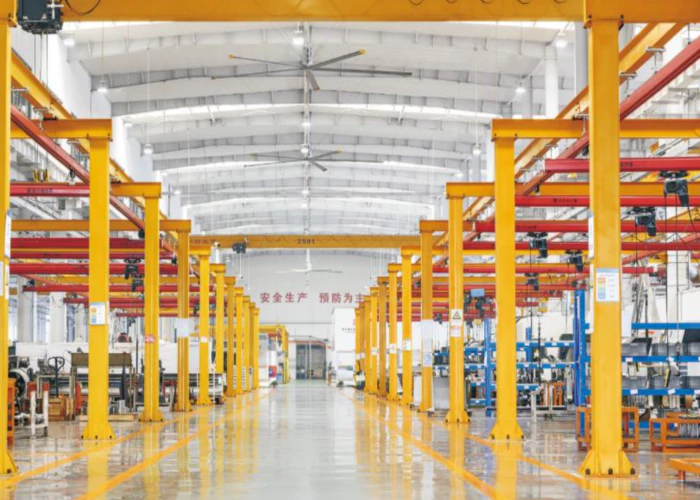
Certified welding is critical. A bad weld on a luffing cylinder isn’t a leak; it’s a dropped boom.
What the Industry is Saying (Testimonials)
“Finding replacement luffing cylinders for our 1998 Krupp crane was impossible until we found Ever Power. They built a pair from scratch based on my sketches. Perfect fit.”
— Mark D., Crane Rental Owner, Texas, USA
“We operate in a salt mine. Everything rusts. Their ceramic-coated rods are the only thing that lasts more than a year. Expensive, but worth every penny.”
— Hans G., Maintenance Lead, Germany
“Fast response. I needed a quote for a bulk order of derricking cylinders for our new barge cranes. They asked the right technical questions about safety factors.”
— Chen Wei, OEM Buyer, Shanghai
FAQ: Field Questions We Get Daily
Why is my crane boom dropping when I turn off the engine?
This is almost certainly a holding valve issue or internal piston seal leakage. If the cylinder bypasses internally, the oil flows from the high-pressure side to the low side, causing the boom to sink. Do not operate the crane; get it tested immediately.
How much does a custom luffing cylinder cost in the US?
Prices vary wildly based on size and tonnage, but typically, a high-quality custom luffing cylinder ranges from $2,500 to $8,000. It depends on whether you need integrated valves and specific marine-grade plating.
Where can I find a hydraulic cylinder supplier that ships globally?
We ship worldwide every week. Whether you are in Dubai, Houston, or Perth, we handle the DDP (Delivered Duty Paid) logistics, so the cylinder arrives at your door without customs headaches.
Can you repair a scratched crane cylinder rod?
Technically, yes, by re-chroming. However, for critical safety components like luffing cylinders, we usually recommend replacing the rod entirely to ensure structural integrity and fatigue resistance.
What is the lead time for a custom cylinder order?
For custom engineering, design usually takes 2-3 days, and production takes about 20-25 days. If you need it urgently, we can sometimes expedite the process or ship via air freight.
Which hydraulic oil is best for crane cylinders in cold weather?
You need a high Viscosity Index (VI) fluid. Standard AW46 gets too thick in freezing temps, causing sluggish luffing and cavitation. Look for a multi-grade hydraulic fluid designed for low-temperature operations.
Don’t Guess When Lifting 50 Tons
Drift, leaks, and corrosion are choices, not inevitabilities. Let’s fix your fleet.