Double-Acting Piston Hydraulic Cylinders for Multi-Function Garden Boom Vehicle Main Arm Lifting Systems
Welded Construction | 42CrMo Alloy Steel | Hard Chrome Rod | Oversized Rod Diameter | Reinforced Guide Sleeve | Full Custom Engineering
Multi-function garden boom vehicles are purpose-built machines that bring controlled aerial access to arboricultural and horticultural work across urban parks, highway greening corridors, utility infrastructure zones, and commercial landscape maintenance operations. Their defining mechanical feature — the main boom arm that lifts an operator platform or powered tool attachment to working height — depends on a hydraulic cylinder to execute the lifting, position holding, and controlled lowering functions that define the machine’s operational envelope. This cylinder generates the force to raise the fully loaded boom arm from its transport position to maximum working height, holds that position against gravitational load without drift, and lowers the system under full hydraulic authority as the work requires. Across the full angular range of the boom’s operating envelope — from folded transport position through horizontal extension to maximum lift height — the cylinder operates in continuously changing geometric relationships to the applied load, creating a combined loading profile that demands engineering attention to more than simple static force capacity.
The load characteristics that define a garden boom vehicle main arm lifting cylinder’s operating environment are more mechanically complex than a static lift calculation captures. As the boom arm extends outward from the vehicle and the angle between the boom and the horizontal changes, the moment arm between the cylinder mounting points and the boom’s center of gravity and payload location changes continuously. The resultant force on the cylinder — combining the axial force required to support the load with the lateral component created by the geometric relationship between the cylinder axis and the load application direction — varies throughout every lift cycle. Under dynamic conditions, when wind acts on an elevated operator platform, when the vehicle traverses uneven ground during boom operation, or when power tool attachments generate reaction forces through the arm structure, the cylinder rod experiences instantaneous bending moments substantially above the static design load. A cylinder specified for static conditions alone may be significantly underengineered for these dynamic loading realities.
Our double-acting piston hydraulic cylinders for multi-function garden boom vehicle main arm lifting are engineered for these combined loading conditions. Built from 42CrMo chromium-molybdenum alloy steel with welded construction that eliminates mechanical joint vulnerabilities, hard chrome-plated rods dimensioned for combined axial and lateral load resistance, and reinforced guide sleeves that extend the rod’s lateral support bearing length at the cylinder exit point, these cylinders address the rod bending failure mode that most commonly terminates main arm cylinder service life in garden boom vehicle applications across China’s municipal maintenance fleets and international horticultural machinery markets.
Tour Our Manufacturing Facility Virtually
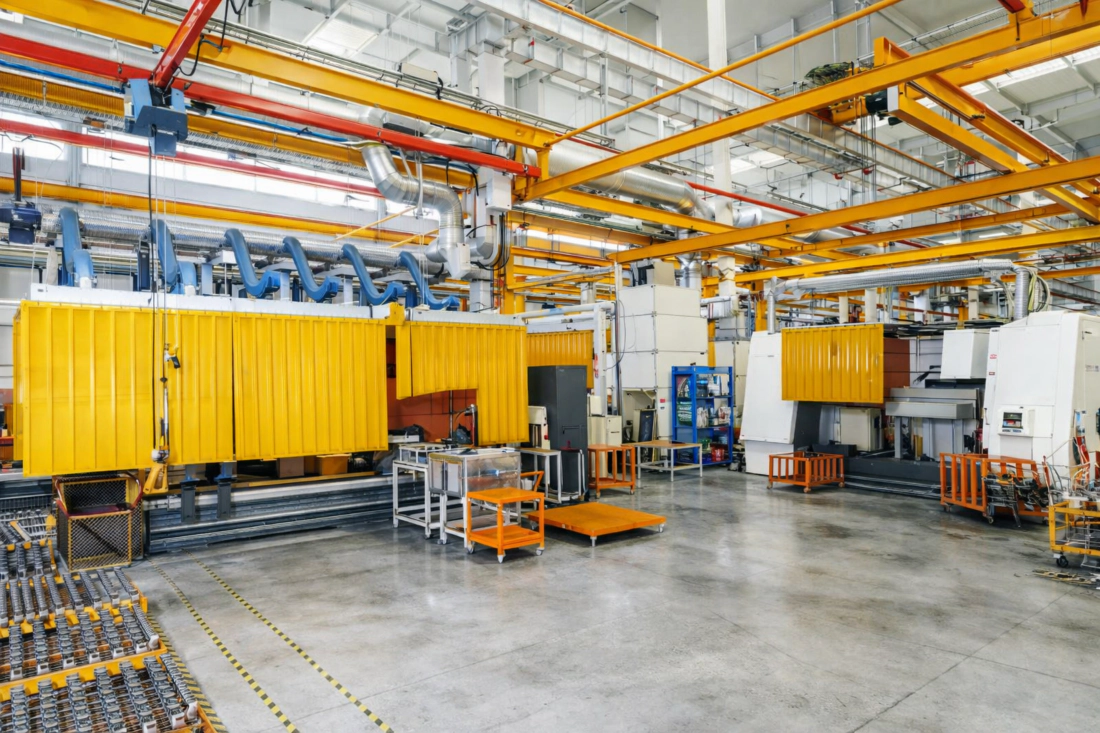
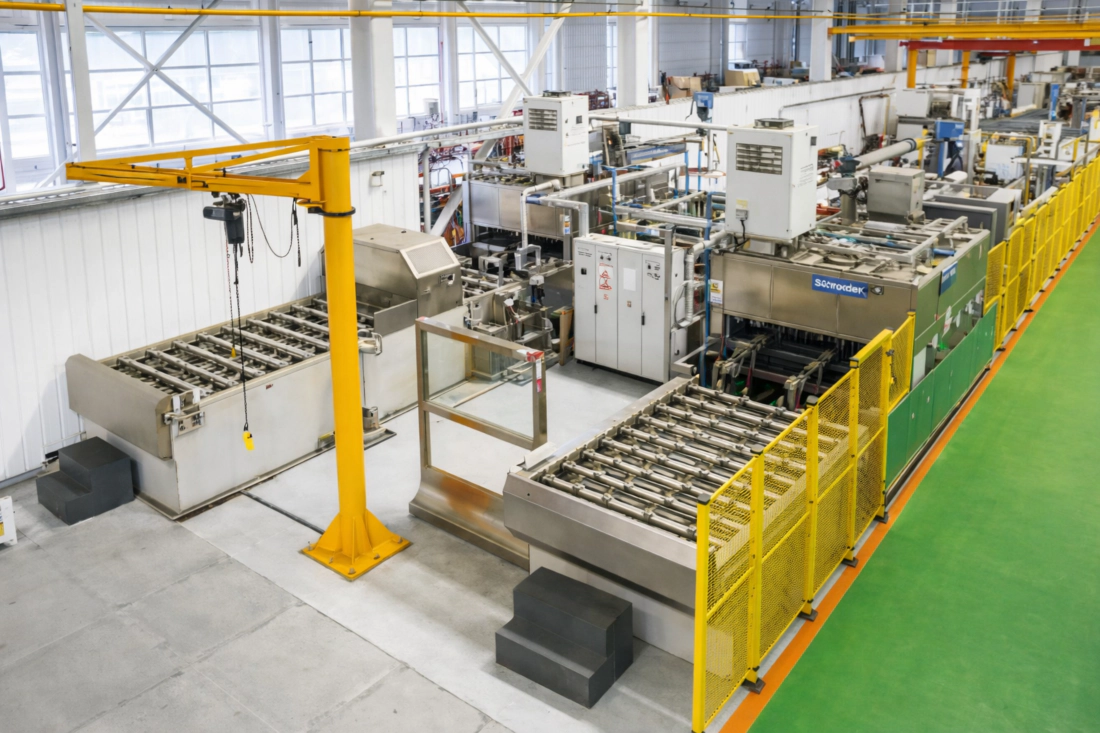
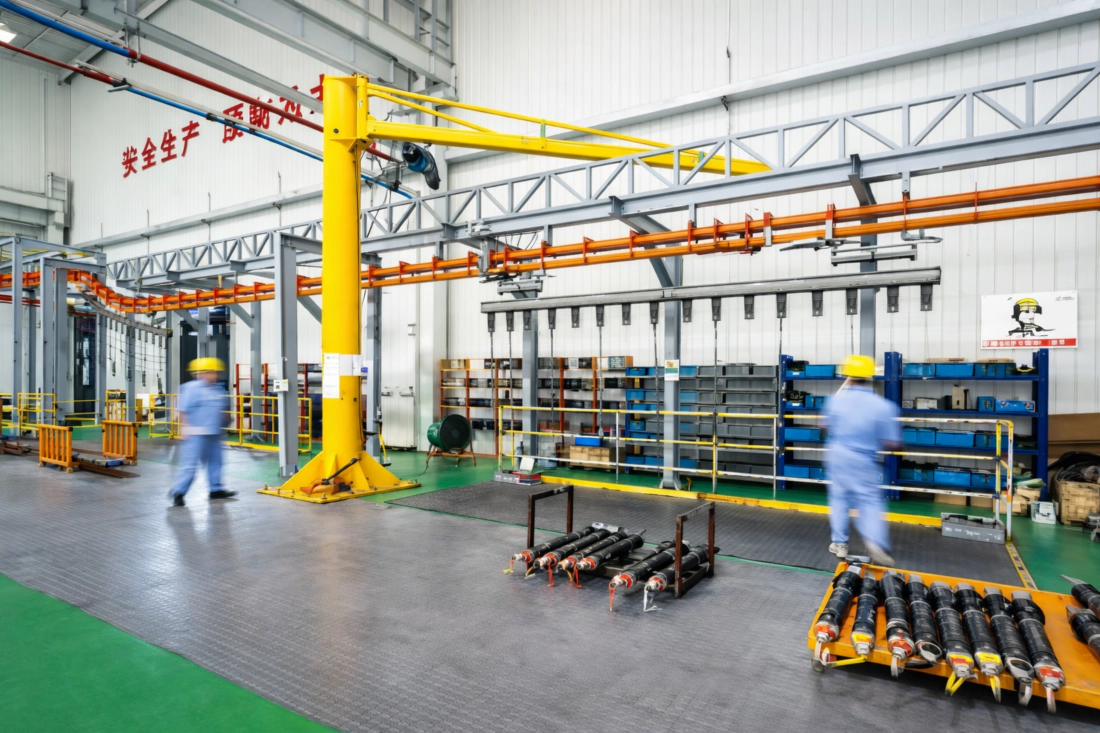
We welcome garden equipment designers, municipal fleet procurement managers, and OEM purchasing teams to explore our production facility from anywhere in the world. View our large-bore cylinder machining centers, welding and inspection stations, and chrome plating lines — all dedicated to custom hydraulic cylinder production for demanding outdoor equipment applications.
Masuk ke Tur Pabrik VR
Inquire Now — Submit Your Boom Arm Specifications
How the Main Arm Lifting Cylinder Controls Garden Boom Vehicle Operation
The double-acting piston cylinder installed as the main arm lifting actuator generates hydraulic force in both the lifting and lowering directions, giving the operator full hydraulic authority over boom arm position throughout the working height range. This bidirectionality is fundamental to garden boom vehicle operation in two distinct ways: the lifting function requires the cylinder to generate sustained force sufficient to raise the boom arm, platform, and operator payload from the transport stow position to maximum working height against gravity and structural weight; the lowering function requires controlled opposing hydraulic pressure to allow smooth, operator-governed descent rather than uncontrolled gravity-driven lowering. Without hydraulic authority in the lowering direction, a boom vehicle whose control valve loses pressure would lower its arm under gravity with no speed control — a safety condition that equipment standards in all major markets prohibit and that operators in China’s urban maintenance fleet environment cannot tolerate given the proximity of work operations to pedestrians and infrastructure.
Welded cylinder construction eliminates the mechanical joint interfaces that form the primary structural weak points in tie-rod and threaded-end-cap cylinder designs under combined axial and bending loads. A tie-rod cylinder’s end-cap assembly relies on tie-rod pre-load to maintain structural integrity against both pressure forces and external bending — a pre-load that degrades under the vibration and impact loads that boom vehicle operation generates, progressively allowing micro-motion at the end-cap joint face that eventually leads to bypass leakage and loosening of the overall cylinder structure. Our full-penetration welded construction integrates the end cap and barrel into a single structural element, with weld joint integrity confirmed by ultrasonic and magnetic particle inspection on every cylinder, and structural integrity verified by pressure testing to 1.5 times rated operating pressure before any seals or fittings are installed. The welded barrel is also inherently stiffer in lateral bending than a tie-rod assembly — contributing additional structural rigidity that complements the rod sizing and guide sleeve design in resisting the bending loads that boom arm geometry generates at the cylinder’s mounting points.
The piston assembly incorporates bronze guide rings that maintain piston concentricity under lateral loading, preventing metal-to-metal contact between the piston body and cylinder bore surface that would generate metallic contamination in the hydraulic fluid and create a progressive bore scoring failure. These piston guide rings work together with the reinforced guide sleeve at the rod exit point to create a two-location lateral load support system — distributing the rod’s bending moment across two separate bearing locations rather than concentrating the full lateral reaction at the single rod seal carrier location that standard end-cap designs provide. By distributing the lateral reaction across two points separated by the cylinder body length, this arrangement functions structurally analogously to a simply supported beam rather than a cantilever, reducing the peak bending stress at any individual support location and substantially extending structural fatigue life under the repetitive impact loads that boom vehicle main arm operation generates across thousands of working cycles.
Technical Specifications — Garden Boom Vehicle Main Arm Lifting Cylinders
The following parameters define our standard production range for multi-function garden boom vehicle main arm lifting cylinders. All dimensions, material specifications, and configuration details are fully customizable through our application engineering process. Values listed reflect the ranges appropriate for this application category; the specific configuration for each customer’s machine is determined from boom geometry and payload load data provided during the engineering review process.
| Parameter | Spesifikasi | Engineering Notes |
|---|---|---|
| Action type | Double-acting piston | Full hydraulic control in both lift and lower directions |
| Construction | Welded (full-penetration) | Eliminates tie-rod joint micro-motion under vibration |
| Diameter lubang | 80 mm to 200 mm | Standard boom arm range: 90 to 140 mm |
| Diameter batang | 55 mm to 140 mm | Oversized vs. axial load calc by 25 to 40% for bending resistance |
| Stroke range | 400 mm to 2,000 mm | Determined by boom geometry and working height range |
| Operating pressure | Up to 32 MPa | Test pressure: 1.5x rated, 100% of production units |
| Cylinder material | Baja paduan 42CrMo | Tensile strength 1,000 to 1,250 MPa after Q+T |
| Rod material | 42CrMo, induction-hardened | Surface hardness HRC 54 to 60; case depth for plating support |
| Pelapisan krom | Hard chrome, micro-crack type | Thickness 0.025 to 0.050 mm; hardness HV 900 to 1,100 |
| Rod surface finish | Ra 0.2 to 0.4 µm | Ground and polished before chrome plating |
| Guide sleeve | Reinforced bronze, 80 to 120 mm bearing length | Self-lubricating; 2 to 3x standard bearing length |
| Rod seal | Polyurethane standard; NBR / FKM optional | Compound selected for outdoor temperature range |
| Bantalan | Internal, adjustable both ends | Critical for impact absorption at boom end-of-travel |
| Quality inspection | UT weld + MPI + 100% pressure test | Full documentation provided with every shipment |
42CrMo Material System — The Structural Foundation for Heavy-Duty Boom Arm Performance
42CrMo chromium-molybdenum alloy steel is the material choice that most directly determines long-term structural reliability in garden boom vehicle main arm lifting cylinders. The application’s loading profile — sustained high pressure during boom lift cycles, dynamic impact loads from wind acting on elevated platforms and from terrain-induced vibration, and cyclic fatigue from thousands of lift-lower operations across the machine’s service life — creates material performance requirements that standard carbon steel cylinders cannot reliably satisfy at the bore sizes and operating pressures that garden boom vehicle specifications demand. The chromium content of 42CrMo (0.90 to 1.20 percent) provides both the through-hardening depth needed to achieve consistent mechanical properties across the heavy wall sections of large-bore boom cylinders and meaningful corrosion resistance for outdoor equipment operating in variable weather across China’s climate zones and international markets. The molybdenum addition (0.15 to 0.25 percent) improves elevated-temperature strength and fatigue resistance — properties that matter in boom cylinders that may operate for extended periods during peak tree-trimming season and summer maintenance program workdays.
In quenched and tempered condition, 42CrMo achieves tensile strength of 1,000 to 1,250 MPa and yield strength of 930 MPa — approximately 50 to 70 percent higher yield strength compared to commonly used S45C or 1045 carbon steel. This yield strength advantage directly translates to higher resistance against cylinder barrel deformation under the combined operating pressure and external bending loads that boom arm geometry applies through the cylinder’s mounting points. For bore diameters in the 90 to 140 mm range typical of multi-function garden boom vehicle main arm cylinders, the barrel wall stress under combined pressure and bending is meaningfully higher than in smaller cylinders, and the structural margin provided by 42CrMo’s yield strength becomes essential to preventing plastic deformation events that would compromise bore concentricity, accelerate piston guide ring wear, and ultimately lead to premature cylinder retirement. Chinese urban maintenance fleets that operate boom vehicles continuously through peak maintenance seasons — spring tree inspection programs, summer vegetation growth management, and autumn storm damage clearance operations — accumulate high cylinder cycle counts that require this structural margin for reliable multi-year service.
The piston rod is machined from solid 42CrMo bar stock, induction-hardened to HRC 54 to 60 at the rod surface, and ground to Ra 0.2 to 0.4 µm surface finish before hard chrome plating. Induction hardening of 42CrMo achieves deeper and more uniform hardened case depth than equivalent treatment of carbon steel, due to the improved hardenability provided by the chromium and molybdenum alloying elements. This deeper hardened case is particularly important at the interface between the chrome-plated rod surface and the reinforced guide sleeve’s bronze bearing surface — the contact point that experiences the highest contact pressure during lateral loading of the boom arm. A shallow hardened case would yield under the contact stress generated by the guide sleeve bearing load, causing sub-surface plastic deformation that buckles the chrome layer from below, leading to chrome delamination and rapid rod surface degradation. The 42CrMo rod’s deep hardened case prevents this failure mechanism and maintains the rod surface geometry that both the chrome plating integrity and the rod seal’s sealing function depend on.
Oversized Rod Diameter and Reinforced Guide Sleeve — The Rod Bending Defense System
Rod bending failure in boom arm lifting cylinders follows a mechanically predictable sequence that pure axial load analysis does not anticipate: the cylinder rod, when the boom arm is at intermediate extension and elevation angles, operates as a structural element subjected to combined axial compression and lateral bending. The lateral bending component derives from the geometric relationship between the cylinder mounting axis and the direction of the gravitational and wind loads applied through the boom arm structure — a relationship that changes continuously as the boom angle changes and reaches maximum rod bending moment at specific boom positions where the cylinder axis misalignment with the applied load direction is greatest. A rod sized only for the axial compressive force required to lift the boom arm load will experience progressive permanent deflection under these combined loading conditions — visible as a measurable rod curve when the cylinder is fully retracted — leading to uneven rod seal loading, bore scoring from rod-to-bore contact, and hydraulic fluid bypass leakage that requires cylinder replacement rather than seal service alone.
Our rod diameter specification for garden boom vehicle main arm cylinders begins with a combined load analysis that uses the actual boom arm geometry, maximum platform payload, maximum operating angle, and the estimated dynamic load amplification factor appropriate for the vehicle’s intended use profile. This analysis yields a minimum rod diameter that maintains stress below yield under the worst-case combined loading at any point within the boom’s operating range. We then apply a design safety factor of 1.3 to 1.5 above this calculated minimum before finalizing the specification, specifically to ensure that manufacturing tolerances, material property variation, wind load exceedances above design values, and instantaneous impact loads from boom contact events do not erode the structural margin in field service. For multi-function garden boom vehicles with working heights of 8 to 18 meters and operator platform payloads of 150 to 300 kilograms, this engineering process consistently yields rod diameters 25 to 40 percent larger than a static-force-only calculation would suggest — a specification difference that is not conservative over-engineering but an accurate reflection of the actual stress state the rod experiences during real boom arm operation.
The reinforced guide sleeve at the cylinder’s rod exit point amplifies the structural benefit of the larger rod diameter by extending the rod’s lateral support bearing length from the 20 to 40 mm typical of standard end-cap rod carrier designs to 80 to 120 mm — two to three times the standard bearing length. Standard end-cap guide geometry concentrates the full lateral load reaction at a single, short bearing contact zone, creating high rod surface contact pressure and a short-moment-arm cantilever condition that maximizes bending stress in the rod immediately inside the end cap. Our reinforced guide sleeve distributes the lateral load reaction over the extended bearing length, substantially reducing peak contact pressure on the rod surface and reducing the cantilever bending moment at the critical rod cross-section. The sleeve is manufactured from bronze alloy with a controlled porosity structure that retains lubricating oil in the bearing contact zone, providing a self-lubricating bearing interface that minimizes rod wear during lateral loading without requiring external lubrication maintenance access in the field. Sleeve geometry — inner diameter clearance, bearing length, and oil retention porosity — is matched to the specified rod diameter and maximum lateral bearing load in our engineering process, not selected from a standard catalog entry. The combination of oversized rod diameter increasing section modulus and the reinforced guide sleeve reducing the effective bending moment works multiplicatively to reduce rod bending stress to levels that provide service life margins significantly greater than either design measure could achieve alone.
Application Scenarios — Where Garden Boom Vehicle Main Arm Lifting Cylinders Work
Multi-function garden boom vehicles serve aerial access requirements across horticultural, arboricultural, and urban infrastructure maintenance operations that span China’s dense urban park networks, highway greening corridors, agricultural production zones, and utility infrastructure maintenance programs. The main arm lifting cylinder enabling this access appears in machines covering working heights from 8 meters in compact park maintenance platforms to 20 meters or more in large highway vegetation management vehicles. The primary deployment scenarios below represent the environments where our main arm lifting cylinders are most commonly specified — from compact municipal park units used in China’s urban core districts to large working-platform vehicles serving highway and orchard operations.

Pemeliharaan Pohon di Taman Kota dan Jalan
Compact boom vehicles used in China’s urban parks and street tree maintenance programs perform tree pruning, crown inspection, dead-branch removal, and pest management operations at heights from 8 to 14 meters. The boom arm operates in close proximity to buildings, pedestrian areas, and utility infrastructure, requiring precise position control and load-holding performance that only a correctly specified main arm cylinder can provide. Cycle frequency in active urban tree programs is high — a municipal arborist crew may complete 40 to 80 boom cycles per working day — making seal durability and structural fatigue resistance primary service life determinants.
Highway Greenery Corridor Management
Large boom vehicles operating along China’s highway network manage roadside tree canopies and green corridor vegetation at working heights of 12 to 20 meters, often with the vehicle on a road shoulder where terrain is uneven and wind exposure is high. The elevated platform load combined with wind effects on the extended boom arm creates the combined loading condition that most severely tests main arm cylinder rod bending resistance. These machines operate in continuous programs across spring and autumn maintenance seasons, accumulating the high annual cycle counts that require 42CrMo construction and reinforced guide sleeve design for adequate service life.
Orchard Harvest and Pruning Platforms
Orchard operations in China’s apple-growing regions of Shaanxi and Shandong, and export-market orchard management programs in New Zealand, Australia, and Chile, use boom platform vehicles for harvest assistance, mechanical pruning, and canopy management. These vehicles often operate on sloped terrain between orchard rows, where chassis leveling systems interact with boom arm geometry to create changing cylinder load conditions throughout the work cycle. Platform payloads include harvested fruit in addition to operator weight, and the cylinders must maintain position stability during picking operations when load varies dynamically as the platform is loaded and unloaded.
Urban Infrastructure and Utility Maintenance
Multi-function boom vehicles equipped with tool attachment interfaces are used for park lighting maintenance, banner and signage installation, bridge inspection, and urban infrastructure access across China’s city management programs. These vehicles carry powered tool attachments — augers, pole saws, hydraulic grippers — that generate reaction forces through the boom arm in addition to the gravitational payload. The main arm cylinder must hold position against these reaction forces without drift, and the reinforced guide sleeve bears the lateral load component that tool reaction forces add to the gravitational moment at different boom angles.
Engineering Advantages That Define Service Life in Aerial Work Platform Applications
Field experience with garden boom vehicle main arm cylinders in China’s municipal maintenance fleets shows that cylinders not specifically engineered for combined axial and bending loads experience progressive rod deflection within 18 to 36 months on vehicles with working heights above 12 meters and platform payloads above 200 kilograms. The failure cascade that follows rod deflection onset — uneven rod seal loading leading to accelerated seal wear, rod surface scoring from misalignment-induced bore contact, hydraulic fluid bypass — typically requires complete cylinder replacement rather than seal service alone, because the bent rod prevents reinstalled seals from sealing correctly against the misaligned rod geometry. Our cylinders, specified through combined-load analysis with oversized rod diameters and reinforced guide sleeves, have demonstrated field service intervals exceeding five years without rod bending events in equivalent operating conditions — a lifecycle improvement that directly reduces the total cost of ownership for municipal fleet operators managing multiple vehicles over extended service programs. For cities managing dozens of boom vehicles across park management contracts, eliminating mid-program cylinder replacements has meaningful budget impact beyond the direct replacement part cost.
The internal end-of-stroke cushioning system — adjustable via accessible needle valves without requiring cylinder disassembly — absorbs the kinetic energy of the boom arm and platform assembly as the main arm approaches its elevation limit under load. For garden boom vehicles, the mass of the fully-loaded boom arm and platform can be substantial — 300 to 600 kilograms of moving structure arriving at end-of-travel — and the hydraulic impact pressure generated without cushioning would generate fatigue cycles in the cylinder barrel, boom arm mounting structure, and vehicle chassis that accumulate to structural damage well within the vehicle’s intended service life. Cushion calibration is part of our engineering deliverable for each custom cylinder specification, matching the cushion geometry and needle valve adjustment range to the specific machine’s boom arm mass and operating speed profile.
| Fitur | Our Cylinders | Standard Catalog Alternatives |
|---|---|---|
| Rod sizing method | Combined axial + bending load analysis | Axial load only |
| Guide sleeve | Reinforced bronze, 80 to 120 mm bearing length | Standard end-cap guide, 20 to 40 mm |
| Rod material | 42CrMo, deep induction-hardened | S45C carbon steel, surface-hardened |
| Construction | Full-penetration welded; UT + MPI + pressure tested | Tie-rod; visual inspection only |
| Bantalan | Application-calibrated, adjustable both ends | Fixed factory setting |
| Typical service life | 5+ years without rod bending failure | 18 to 36 months before rod deflection onset |
Custom Manufacturing and Engineering Support — From Boom Vehicle Design Brief to Finished Cylinder
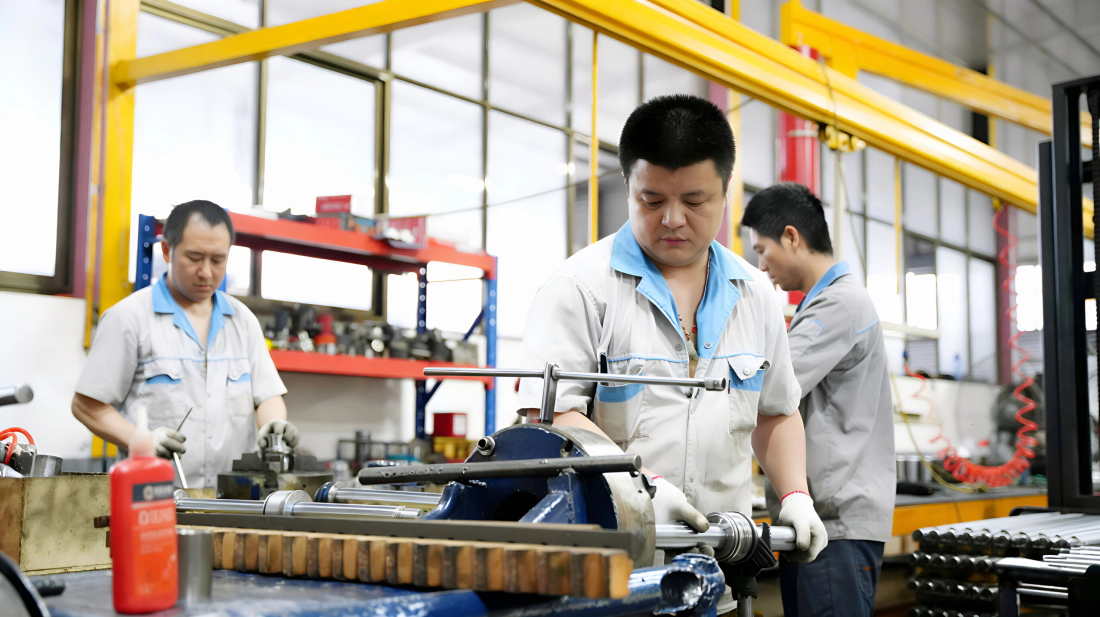
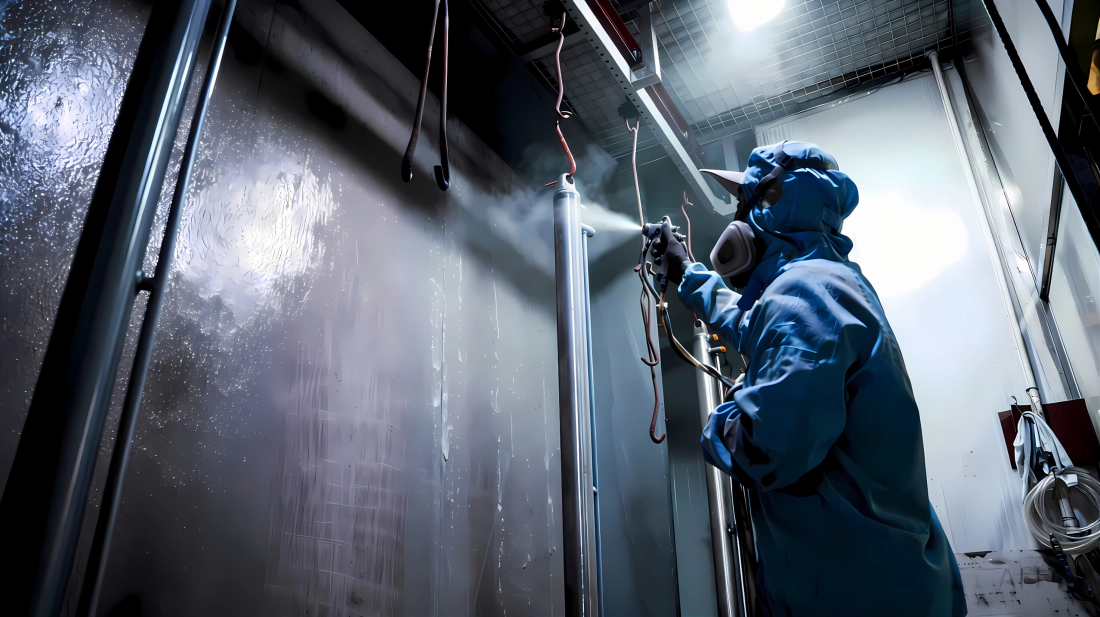
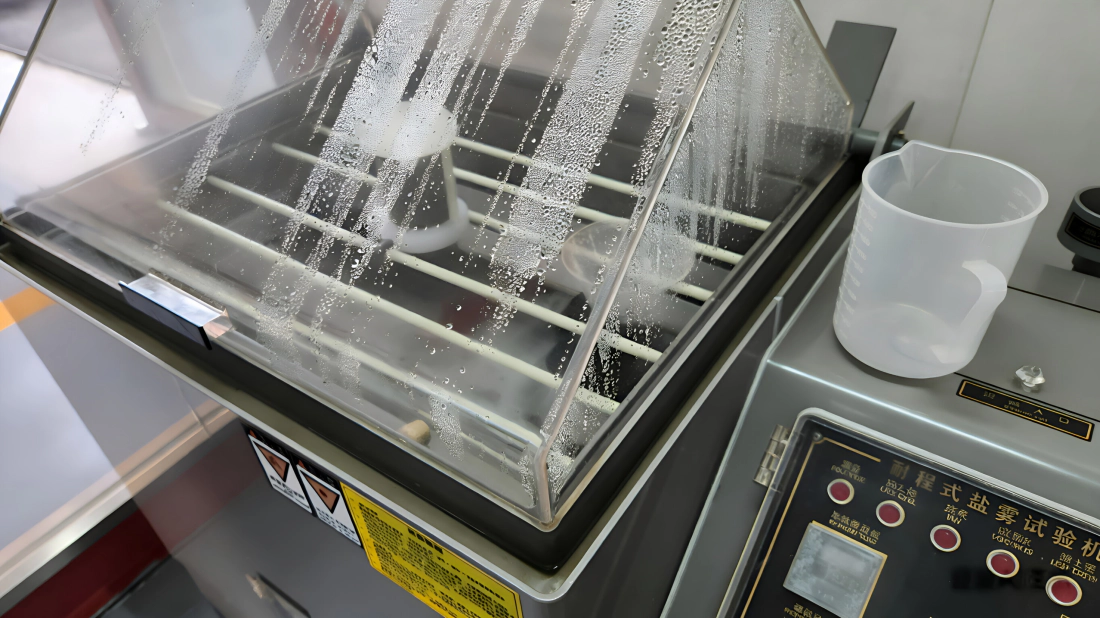
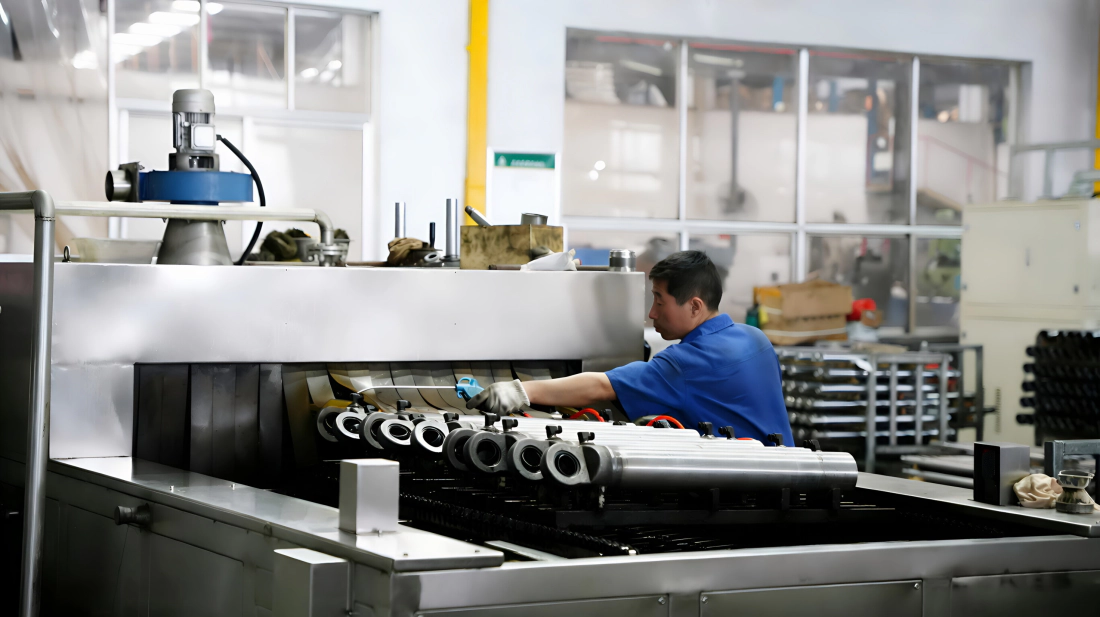
Our manufacturing facility in China operates large-bore cylinder production capability with CNC deep-hole boring centers handling barrel bores from 80 mm, honing lines producing bore surface finishes to H7 tolerance, and chrome plating systems with capacity for rod diameters to 200 mm and lengths to 3,000 mm. The engineering team supporting custom garden boom vehicle main arm cylinder development includes specialists in aerial work platform hydraulics, structural load analysis, and seal system design — professionals who contribute technical input to the cylinder specification process rather than simply processing dimensional requirements. Engineering documentation provided with each order includes 42CrMo material certificates from the steel mill, dimensional inspection records with bore concentricity and honing finish measurements, rod surface hardness test results, chrome plating thickness measurements along the full rod length, and pressure test certificates — a documentation package that supports boom vehicle manufacturers’ CE compliance records, municipal fleet procurement requirements, and quality management system audits. Learn more about our engineering team at our About Us page.
Garden boom vehicle manufacturers at any stage of machine development are encouraged to engage our engineering team early. We can work from conceptual boom arm geometry with estimated payload and working height parameters to produce preliminary cylinder specifications and force-stroke calculations that help designers determine the structural envelope of their boom system before committing to detailed linkage design. As the design progresses to detailed boom arm geometry with finalized linkage kinematics, our team updates the cylinder specification to reflect actual moment arm values at each boom angle, refining the rod diameter, guide sleeve length, and cushion calibration to the real operating conditions of the finished machine. This iterative collaborative process is available at no additional engineering charge — it is part of our standard custom cylinder development service for boom vehicle OEMs who commit to production cylinder sourcing.
Prototype cylinders for custom boom vehicle main arm configurations are available within 30 to 40 working days for most designs. Production lead times of 35 to 55 working days accommodate standard program schedules, with expedited processing available for urgent requirements. We supply cylinders in painted, powder-coated, or bare-metal finish as the customer’s integration process requires, and can coordinate port thread standards and fitting configurations to the customer’s hydraulic circuit connector specification without requiring the customer to specify intermediate adapters. Municipal procurement teams evaluating our cylinders for fleet standardization programs can arrange factory inspection visits at our facility in China to review production processes, quality systems, and test equipment capability before placing fleet supply commitments.
Customer Success Stories — Main Arm Lifting Cylinders in the Field
Municipal Arborist Fleet Operator, Bavaria Region
A municipal tree care contractor operating a fleet of 18 boom vehicles across Bavaria’s urban park and street tree maintenance programs had experienced repeated main arm cylinder rod bending on their largest vehicles — 16-meter working height models with 250-kilogram platform payloads — within 24 months of initial service. The root cause analysis identified the existing cylinders’ rod diameter as sized for static axial load only, without accounting for the bending moment generated at maximum horizontal reach. Our engineering team specified replacement cylinders with 42CrMo construction, rods sized for combined loading, and 100-millimeter reinforced guide sleeves. The replacement cylinders have now completed 38 months of fleet service without rod bending on any vehicle, and the contractor has standardized our specification for all new vehicle purchases.
“Thirty-eight months, 18 vehicles, no rod bending. The engineering analysis that identified the combined loading requirement was exactly what we needed — our previous supplier had never performed it.”
— Fleet Technical Manager, Municipal Arborist Contractor, Bavaria, Germany
Highway Greening Maintenance Authority, Jiangsu Province
A highway infrastructure maintenance authority in Jiangsu Province manages roadside greening along 340 kilometers of national highway corridor using a fleet of 12 large boom vehicles with 18-meter working height and 200-kilogram platform capacity. Their previous cylinder supplier had delivered units that developed visible rod deflection within two seasons of highway maintenance service — attributed to the combination of platform wind loading at full extension height and uneven road shoulder terrain that introduced chassis-level vibration during boom operation. Our replacement cylinders, specified with 110-millimeter reinforced guide sleeves and combined-load-sized 42CrMo rods, completed two full annual maintenance cycles without rod service requirements. The authority subsequently specified our cylinders in their next vehicle procurement tender document as the required standard.
“Two full highway maintenance seasons without a rod service call on any vehicle. We have included this cylinder specification in our next fleet procurement tender as the required standard.”
— Equipment Director, Highway Greening Maintenance Authority, Jiangsu Province, China
Orchard Platform Vehicle Manufacturer, Hawke’s Bay Region
An agricultural machinery manufacturer in New Zealand’s Hawke’s Bay apple and pear growing region was developing a new hillside orchard boom platform vehicle requiring a main arm lifting cylinder with non-standard stroke and a specific port configuration dictated by the vehicle’s hydraulic circuit routing. The cylinder also needed to accommodate sloped-terrain chassis tilt angles that created additional lateral load components beyond the standard boom geometry calculation. Our engineering team modeled the chassis tilt contribution to cylinder bending moment, specified an appropriately oversized rod with a 95-millimeter reinforced guide sleeve, and delivered production-intent prototypes in 32 working days. The manufacturer completed a full harvest season field evaluation and placed production orders for their initial model year volume.
“The team modeled the chassis tilt loading contribution — something we had not quantified ourselves. The cylinder came back in 32 days with complete engineering documentation. Full harvest season, no issues.”
— Chief Engineer, Orchard Platform Vehicle Manufacturer, Hawke’s Bay, New Zealand
Pertanyaan yang Sering Diajukan
+What type of hydraulic cylinder is best suited for the main arm lifting system on a multi-function garden boom vehicle used in Chinese urban park and highway maintenance programs?
A double-acting piston cylinder with welded construction and 42CrMo alloy steel is the recommended specification for garden boom vehicle main arm lifting in urban park and highway maintenance applications. The double-acting design provides full hydraulic authority for both lifting and lowering — essential for controlled descent of a loaded platform in compliance with safety requirements across all markets. For Chinese municipal maintenance programs where vehicles operate at working heights above 12 meters with platform payloads of 150 kilograms or more, the critical performance parameters beyond the basic force capacity are rod bending resistance (addressed through combined-load-analysis sizing rather than axial-load-only sizing) and the guide sleeve bearing length that supports the rod against the lateral load component that boom arm geometry generates. Cylinders lacking these application-specific design features consistently develop rod deflection within two to three years of continuous municipal maintenance service.
+How much does a custom double-acting piston hydraulic cylinder for a garden boom vehicle main arm lifting system typically cost from a Chinese manufacturer, and what factors determine the quoted price?
Custom hydraulic cylinder pricing for garden boom vehicle main arm applications depends on bore diameter (typically 90 to 140 mm for this application), rod diameter (which is larger than axial load calculations alone suggest when combined-load analysis is applied), stroke length, operating pressure rating, and order quantity. For production-volume orders of 20 or more units, Chinese manufacturer pricing for 42CrMo welded cylinders with reinforced guide sleeves is substantially competitive compared to European or North American equivalents, while providing equivalent material specifications and inspection documentation. Prototype pricing for engineering sample quantities reflects setup costs that are amortized across production runs. The most accurate approach to obtaining a representative price is submitting your boom geometry, working height, platform payload, and annual volume estimate to our engineering team — configuration variables make general price ranges less useful than a specification-specific quotation for project planning purposes.
+Which hydraulic cylinder rod diameter is recommended for a garden boom vehicle main arm to prevent rod bending failures during extended horizontal reach operations with a fully loaded operator platform?
The correct rod diameter for a garden boom vehicle main arm cylinder cannot be determined from a general formula without analyzing the specific boom arm geometry, platform payload weight, maximum horizontal reach, and the range of boom angles at which the cylinder operates. The combined bending moment on the rod varies significantly with these parameters — a 14-meter boom arm at 30 degrees elevation with a 250-kilogram platform imposes a fundamentally different loading condition from a 10-meter arm at 60 degrees with a 150-kilogram platform, even if both applications generate the same axial lifting force. As a practical guide, rod diameters for garden boom vehicle main arm cylinders in the 90 to 140 mm bore range typically fall 25 to 40 percent above the diameter a static axial load calculation would suggest, when combined loading is correctly accounted for. Our engineering team provides specific rod diameter recommendations as part of the free quotation process for any customer providing boom geometry data.
+Where can I find a reliable hydraulic cylinder manufacturer in China that provides complete engineering support for custom garden boom vehicle main arm lifting cylinder specifications?
China has a well-established hydraulic cylinder manufacturing sector with significant capacity for large-bore custom cylinder production. Identifying suppliers with genuine application engineering capability — rather than dimensional variation of catalog products — requires attention to whether the supplier performs combined load analysis from boom geometry inputs, whether the supplier offers application-specific features such as reinforced guide sleeves and application-calibrated cushioning, and whether full material certifications and inspection documentation are provided as standard deliverables. Our facility in China exports custom boom vehicle main arm cylinders to equipment manufacturers and municipal fleet operators across more than 40 countries, with engineering documentation standards compatible with CE-marked equipment compliance and international OEM quality requirements. Prototype lead times of 30 to 40 working days and production lead times of 35 to 55 working days apply to most configurations.
+When should the main arm hydraulic cylinder on a multi-function garden boom vehicle be replaced, and what field signs indicate rod bending or seal damage before outright failure occurs?
Early warning signs that a garden boom vehicle main arm cylinder is developing rod bending or seal damage include: a measurable visual bow in the rod when the cylinder is fully retracted — run a straight-edge along the rod to detect deflection greater than 1 to 2 millimeters over the rod length; hydraulic fluid film visible on the rod surface beyond a thin lubricating layer, indicating rod seal bypass has begun; a tendency for the boom arm to drift downward when the control valve is centered and the platform is loaded, indicating seal bypass in the load-holding direction; and increased operating pressure required to achieve normal lift speed, indicating internal friction from rod misalignment causing bore contact. When rod bending is detected early — before permanent deflection exceeds 3 to 4 millimeters — cylinder replacement before catastrophic seal failure prevents the fluid contamination event that occurs when a severely bypassing cylinder pumps hydraulic fluid past the rod seal and into the boom arm structure.
+How does a reinforced guide sleeve prevent hydraulic cylinder rod bending on garden boom vehicle main arm lifting systems operating at maximum horizontal reach with heavy operator platform payloads?
A reinforced guide sleeve prevents rod bending by distributing the lateral load reaction force — the force the cylinder structure exerts on the rod to resist the bending moment applied by boom arm geometry — over a much longer bearing contact length than a standard end-cap rod carrier provides. In a standard cylinder design, the rod seal carrier at the end cap provides the only lateral support for the rod against bending, with a contact length of 20 to 40 mm for the bore sizes used in garden boom vehicle main arms. Under the bending moments that a 14-meter boom arm at significant horizontal reach can impose on the cylinder rod, this short contact length generates high contact pressure that scores the rod surface and high bending stress in the rod immediately inside the end cap — the critical failure zone for rod deflection events. A reinforced guide sleeve with 80 to 120 mm bearing length distributes the same lateral reaction force over two to three times the contact area, reducing both the rod surface contact pressure and the bending stress at the critical end-cap zone by proportional amounts. The result is a cylinder whose rod resists the boom arm’s bending loads at a stress level that is within the material’s long-term fatigue limit rather than approaching yield.
Ready to Specify Your Garden Boom Vehicle Main Arm Cylinder?
Send us your boom arm geometry, working height, maximum platform payload, and operating pressure. Our engineering team will perform a combined load analysis and provide a cylinder specification with rod diameter, guide sleeve length, and cushion calibration recommendations within three working days — at no cost and without obligation. We serve garden equipment OEMs, municipal procurement programs, and fleet operators across China and more than 40 international markets.
Full product range at hydrauliccylindersmanufacturer.com