Low friction. High frequency. Zero compromise. Engineering the heartbeat of closed-loop systems.
We’ve spent the better part of two decades standing on factory floors, watching engineers scratch their heads over why their million-dollar automation rig is jittering like it’s had too much coffee. Nine times out of ten, they are trying to force a standard agricultural-grade cylinder to do a ballerina’s job. It just doesn’t work. The Servo Hydraulic Cylinder is a completely different beast from the brute-force components you see on an excavator. We aren’t just pushing oil here; we are managing fluid dynamics to achieve positioning accuracy often measured in microns. In my experience, the moment you enter the world of closed-loop control, your biggest enemy stops being “load” and starts being “friction.” Stick-slip (that momentary hesitation before the piston moves) will destroy your PID loop tuning faster than anything else. We’ve seen sophisticated controllers blamed for poor performance when the reality was simply that the cylinder seals had too high a breakout friction coefficient.
Designing a proper servo actuator requires a mindset shift. It’s not about how much weight you can lift; it’s about how fast and accurately you can react to a command signal. Most printers and general machine shops don’t realize that the surface finish of the rod and the barrel in a servo cylinder needs to be significantly smoother—and harder—than standard specs. We’re talking about integrating LVDT (Linear Variable Differential Transformer) or magnetostrictive sensors directly into the gut of the cylinder rod. This internal feedback tells the controller exactly where the piston is, thousands of times per second. Without this integration, you’re flying blind. And let’s be honest, trying to bolt an external sensor onto a vibrating test rig is just asking for a mechanical failure (I’ve seen cables sheared off more times than I care to count).
The Engineering Core: Friction is the Enemy
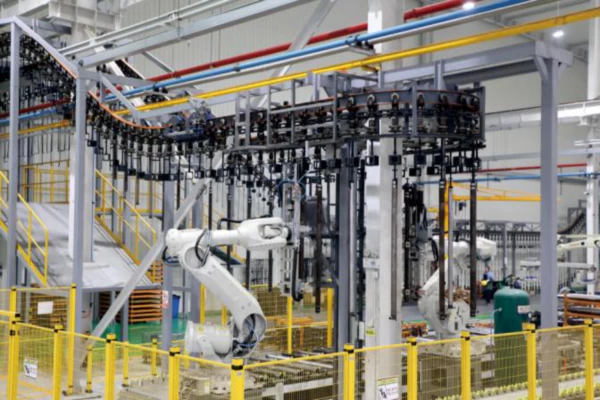
Our clean-room assembly area where servo actuators are calibrated.
When we engineer these units, we focus on what we call “dynamic linearity.” The relationship between the input current to the servo valve and the velocity of the cylinder must be linear. To achieve this, we have to banish standard lip seals. Standard NBR or Polyurethane seals act like brakes—they grab the rod. Instead, we use Teflon (PTFE) based composite seals or, in extreme cases, hydrostatic bearings where the rod literally floats on a film of oil. This reduces the breakout pressure to almost zero. It’s a delicate balance, though. Too much clearance and you lose volumetric efficiency (internal leakage); too little and you get friction. The trick is in the tolerancing—we hold clearances that would make a watchmaker sweat.
| तकनीकी मापदण्ड | Servo Spec (Ever Power) | Why It Matters (The “Inside Scoop”) |
|---|---|---|
| Friction Coefficient | < 0.05 (Low Friction Seals) | If this is high, your control system will oscillate (hunt) trying to find position. |
| Feedback Sensor | Integrated MTS / Balluff / LVDT | Internal mounting protects the sensor from physical damage and EMI noise. |
| रॉड कोटिंग | HVOF / Ceramic / Hard Chrome | Standard chrome wears out in high-frequency dithering. Ceramic lasts forever. |
| Piston Velocity | Up to 4 m/s (Application Dependent) | Servo apps are often fast. We oversize ports to prevent oil starvation. |
| बढ़ते | Spherical Bearings (Zero Backlash) | Any mechanical play in the mounts ruins the accuracy of the hydraulic control. |
SWOT Analysis: Is Servo Technology Right for You?
I always tell my clients: don’t buy a Ferrari to go grocery shopping. Servo cylinders are high-performance components, and they come with demands. Before you upgrade your line, take a look at this strategic breakdown we’ve compiled from years of field retrofits.
ताकत
- शुद्धता: Positioning accuracy down to ±0.01mm is achievable.
- शक्ति घनत्व: Unmatched force in a small package compared to electrics.
- स्थायित्व: No mechanical screws to wear out (unlike ball screws).
कमजोरियों
- लागत: Significantly higher initial investment than standard hydraulics.
- रखरखाव: Requires pristine oil filtration; intolerance to dirt.
- जटिलता: Requires advanced electronic controllers (motion cards).
अवसर
- Industry 4.0: Perfect for smart factories requiring real-time data feedback.
- Energy Saving: Variable speed pump drives combined with servo cylinders reduce waste.
धमकियाँ
- इलेक्ट्रिक एक्चुएटर्स: Heavy-duty electric rams are encroaching on the lower-force hydraulic market.
- Skill Gap: Fewer technicians understand closed-loop hydraulics today.
Where We See Them Shine (Real World Scenarios)

You won’t find these on a log splitter. Servo Hydraulic Cylinders are the unsung heroes of the testing and simulation world. The most common application we service is Fatigue Testing Rigs (automotive and aerospace). Imagine a machine that has to shake a car axle up and down 20 times a second, 24 hours a day, for a month. That’s the environment our cylinders live in. Another massive sector is Plastic Injection Molding. The mold needs to close with massive force but also with delicate speed control to prevent “flashing” (defects). We’ve also seen a huge uptick in entertainment simulators—flight sims and 4D cinema seats—where the motion needs to perfectly sync with the video. If the cylinder lags by even 50 milliseconds, the user gets motion sickness. It’s that critical.
Future Trends: The Cylinder is Getting Smarter
The days of the “dumb” iron component are numbered. We are currently integrating not just position sensors, but also pressure and temperature transducers directly into the cylinder body. This allows for predictive maintenance. Instead of waiting for a seal to fail, the cylinder tells the central PLC, “Hey, my friction levels just increased by 5%, check my oil.” Digital Twins are also big; we provide 3D models with kinematic data so you can simulate the cylinder in your virtual machine design before we even cut the metal.
Factory Direct: Customization is Our Standard
Here’s the thing about sourcing servo cylinders: big catalog brands will charge you a fortune and make you wait 6 months. We operate differently. Because we have our own honing, grinding, and plating facilities, we control the critical tolerances in-house. We can build servo cylinders with integrated valve manifolds (so the servo valve mounts directly on the cylinder for better response) or with custom rod ends to fit your specific load cells. We test every servo cylinder on a dedicated test stand that generates a hysteresis curve report. You get the data sheet with the cylinder proving it meets the spec.
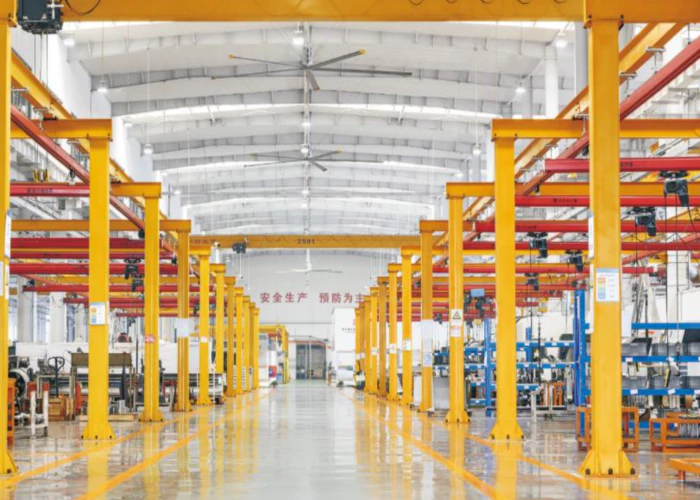
Step Inside Our Facility
We believe in radical transparency. You can virtually walk through our clean assembly room and see where we calibrate these high-precision instruments.
अक्सर पूछे जाने वाले प्रश्न: फील्ड से हमें मिलने वाले प्रश्न
How much does a custom servo hydraulic cylinder cost for a fatigue testing rig in Germany?
Pricing is tricky because it depends heavily on the feedback sensor brand (MTS or Balluff) and the seal technology, but typically, a high-performance servo cylinder ranges from $2,500 to $8,000. If you need hydrostatic bearings for zero friction, that price can double, so it is best to get a specific quote.
What is the primary maintenance difference between a standard cylinder and a servo cylinder?
Fluid cleanliness is the absolute golden rule here. While a standard dump truck cylinder can handle some dirt, a servo cylinder with tight tolerances and sensitive valves will fail if your oil isn’t filtered to ISO 16/13/10 standards. You have to monitor your filtration constantly.
Can you ship replacement servo cylinders to aerospace facilities in California or Washington?
Yes, we ship to the US West Coast weekly. Since aerospace test stands often have unique mounting footprints, we usually just need the drawing or the old unit part number to fabricate a drop-in replacement that meets the original frequency response specs.
Why is my servo system experiencing stick-slip motion even with a new cylinder?
Stick-slip is a nightmare, isn’t it? If the cylinder is new, the issue is likely the seal material choice—standard PU seals have too much breakout friction. You need Teflon-bronze composite seals or a hydrostatic design to get that buttery smooth start-up motion.
Where can I find a supplier for servo cylinders with integrated LVDT sensors?
You are looking at one! We integrate internal linear position sensors (LVDT or magnetostrictive) directly into the rod. This protects the sensor from the harsh outside environment and gives you that precise closed-loop feedback you need.
Ready to Upgrade Your Control Loop?
Don’t let friction compromise your data or your production quality. Let’s talk engineering.