Mill-Type Hydraulic Cylinders: When “Standard” Just Won’t Cut It
Built to ISO 6022 Specs. Engineered for the Toughest Environments on Earth.
We still remember the first time I walked into a hot strip mill in Pittsburgh, back around 2007. The ground was shaking, the heat was enough to singe your eyebrows, and the sound was deafening. I looked at the machinery handling those red-hot slabs of steel and realized something profound: standard hydraulics would last about five minutes in here. That is why the Mill-Type Hydraulic Cylinder exists. In my 18+ years of engineering fluid power systems, I’ve learned that there is a massive divide between “industrial grade” and “mill duty.” Most printers and procurement managers see a cylinder on a schematic and think they are all the same black tubes. They aren’t. When you are dealing with shock loads that would snap a tie-rod cylinder in half, or side loads that would ovalize a standard aluminum gland in a week, you need the brute strength of a mill-type unit. These aren’t just components; they are the backbone of heavy industry.
The distinction really comes down to the philosophy of construction. A standard cylinder is built to be economical and lightweight. A Mill-Type Hydraulic Cylinder (often referred to as a “Roundline” or ISO 6022 cylinder) is built to be indestructible. We’ve seen maintenance crews use these things as accidental steps, drop tools on them, and subject them to pressure spikes of 400 bar, and they just keep working. The trick is in the flanges. Instead of using long tie-rods that stretch and fatigue, mill cylinders use bolted flanges at the head and cap. This design allows for easier maintenance (you don’t have to disassemble the whole unit to change a rod seal) and vastly superior fatigue life. If your application involves a foundry, a scrap baler, or an offshore drilling rig, this is the only viable option.
The Anatomy of a Beast: ISO 6022 Explained
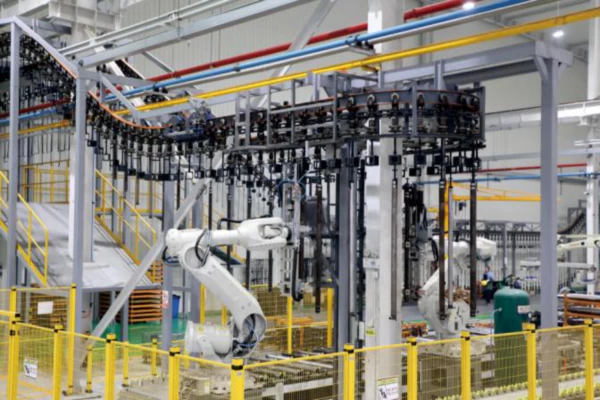
Our dedicated assembly bay for large-bore ISO 6022 cylinders.
Let’s get into the weeds a bit. The gold standard here is ISO 6022 (and its cousin DIN 24333). These aren’t just random numbers; they dictate the mounting dimensions and pressure ratings (typically 250 bar nominal, 400 bar peak) so that you can swap out a Bosch Rexroth or Parker unit with one of ours without redrilling your machine. The barrel is usually a heavy-wall seamless steel tube, honed to a mirror finish. The rod isn’t your standard chrome shaft; in mill applications, we often use induction-hardened steel with a double-chrome layer or even laser cladding to resist the abrasive dust found in factories. The gland—this is crucial—is usually a bolted design with a long bronze or composite bearing. This extra bearing length handles the side loads that occur when a press platen shifts or a crane boom flexes.
| विशेषता | Mill-Type Spec (Heavy Duty) | Why It Matters (The “Old Pro” Insight) |
|---|---|---|
| निर्माण | Bolted Flanges (Head & Cap) | Eliminates “tie-rod stretch.” Easier to service in dirty pits. |
| दाब मूल्यांकन | 250 Bar (Nominal) / 400 Bar (Peak) | Standard cylinders blow seals at 250 Bar. These just wake up. |
| Rod Bearing | Extended Bronze / Composite Guide | Vital for resisting side-loads. Short bearings = scored rods in a week. |
| गद्देदार | Progressive / Adjustable | Heavy loads need soft landings. Prevents hydraulic shock from cracking welds. |
| सील किट | Chevron / V-Packing (often) | V-packs are adjustable and rugged. They tolerate dirt better than lip seals. |
SWOT Analysis: Is Mill-Type Right for Your Rig?
I’m a big believer in using the right tool for the job. You don’t take a sledgehammer to hang a picture frame. Mill-type cylinders are the sledgehammer. Here is the strategic breakdown we use when advising clients on upgrades.
ताकत
- स्थायित्व: Unmatched fatigue life. Built to last 10+ years.
- Serviceability: You can change rod seals without removing the cylinder from the machine (in many designs).
- Standardization: ISO 6022 means parts are interchangeable globally.
कमजोरियों
- वज़न: They are heavy. Installing them usually requires a crane.
- लागत: Significantly more expensive upfront than welded or tie-rod units.
- पदचिह्न: The heavy flanges take up more space.
अवसर
- Smart Mills: Integrating IoT sensors for predictive maintenance (vibration/temp).
- रेट्रोफिट्स: Replacing failing welded cylinders in scrap recycling to reduce downtime.
धमकियाँ
- Electromechanical: Large electric screw jacks are encroaching on lower-force press applications.
- आपूर्ति श्रृंखला: High-grade steel availability can fluctuate, affecting lead times.
जहां हम उन्हें चमकते हुए देखते हैं
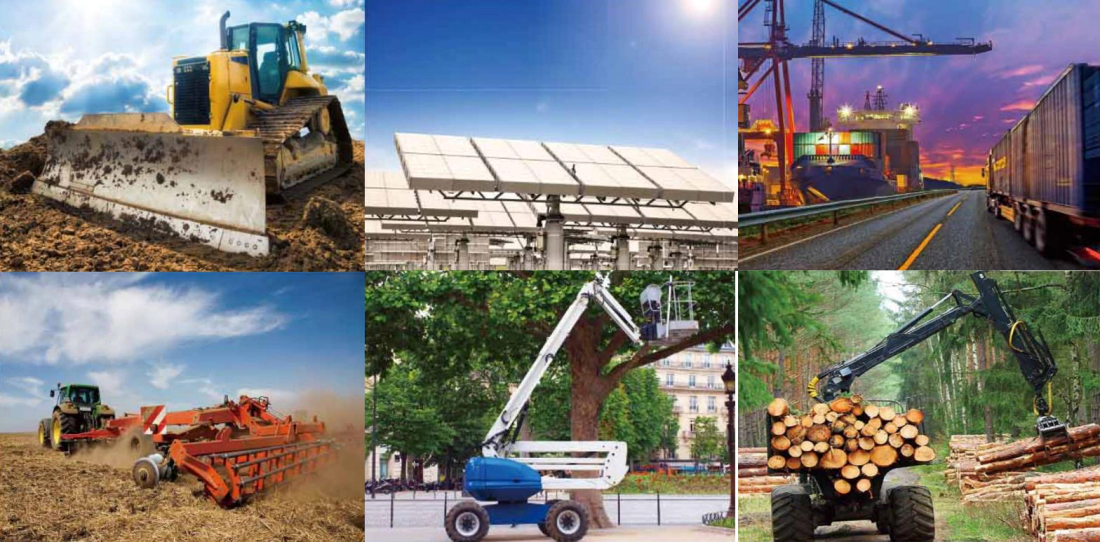
Obviously, the name gives it away: Steel Mills. They operate the ladle turrets, the furnace doors, and the rolling mill adjustments (AGC – Automatic Gauge Control). But it goes beyond that. We see massive adoption in Civil Engineering, specifically for movable bridges and lock gates (where failure is a public safety issue). Offshore Marine applications utilize them for heave compensation systems because the bolted design can withstand the corrosive salt spray better than tie-rods, which tend to rot at the threads. Another huge sector is Metal Forming Presses. When you are stamping car body parts, the cycle rates are high, and the shock is massive. A mill-type cylinder absorbs that energy without blinking.
Trend Analysis: The Smart Cylinder Revolution
The old iron is getting a brain. The biggest trend we are seeing in 2024 and beyond is the integration of “Smart” feedback. We are increasingly drilling the rods to accept internal magnetostrictive position sensors. This allows the mill controller to know the cylinder position to within 0.01mm. Furthermore, we are seeing a shift from hard chrome plating to लेजर क्लैडिंग (like Inconel or ceramic coatings). Chrome is great, but it’s porous. Laser cladding creates a metallurgical bond that is impervious to the nasty acids found in some processing plants. It costs more, but can you afford to change a cylinder every six months?
Case Study: The Rolling Mill Rescue
ग्राहक: RuhrValley Steelworks GmbH | जगह: Duisburg, Germany
चुनौती: This facility produces high-strength structural beams. They were using a standard heavy-duty welded cylinder for their “down-coiler” wrapper rolls. The environment was hellish—high vibration, radiant heat of 120°C, and metallic scale dust everywhere. The cylinders were failing every 8 weeks due to seal burnout and rod scoring from the dust. Each downtime event costs them approximately €15,000 in lost production.
हमारा समाधान: हमने एक कस्टम इंजीनियरिंग की ISO 6022 Mill-Type Cylinder.
1. **Seals:** We ditched the standard PU seals for a high-temp Viton/PTFE mix that can handle up to 200°C.
2. **Rod Protection:** We applied a ceramic coating (Ceramax) to the rod, which is hard enough to resist the steel scale dust.
3. **Bearing:** We doubled the length of the gland bearing to resist the vibration-induced side loading.
परिणाम: The new cylinders have been running for 16 months without a single leak. The maintenance interval went from 2 months to… well, they haven’t touched them yet.
“We were skeptical that a different cylinder design would solve a heat problem. Ever Power proved us wrong. The build quality is German-level, even if the price wasn’t.”
— Hans G., Maintenance Director
“The bolted gland design saved my team 4 hours during the initial install inspection. Much easier to work with than the old welded units.”
— Jürgen K., Lead Technician
“Fast delivery. Usually, custom ISO cylinders take 20 weeks. We got ours in 8. That kept our upgrade schedule on track.”
— Sarah M., Project Manager
Factory Direct: We Build The Heavy Stuff
Look, you can’t just order these off Amazon. A Mill-Type cylinder is almost always a bespoke project. We have the CNC turning centers capable of handling tubes up to 10 meters long and 1 meter in diameter. We have the welding robots that ensure the flange welds are X-ray perfect. But most importantly, we have the engineering team that understands *application*. If you tell us you are pumping phosphate ester fluid, we know exactly which EPDM seals to spec. We pressure test every single unit to 1.5x working pressure before it enters the crate.
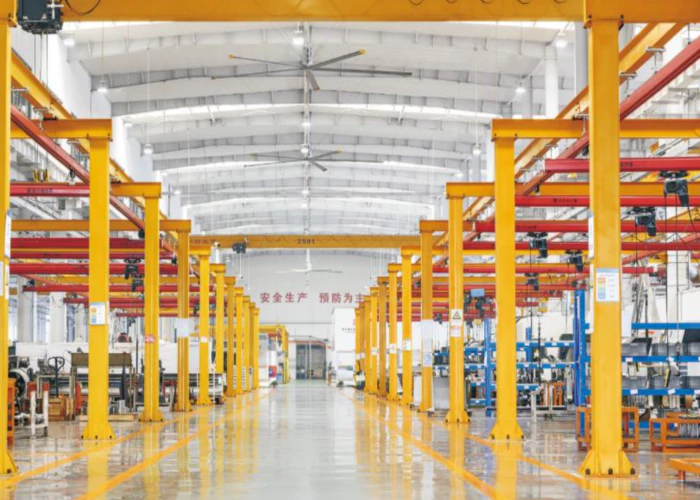
हमारी फैक्ट्री के अंदर (आभासी रूप से) कदम रखें
We believe in total transparency. Don’t take my word for it—walk through our heavy assembly bay right now from your phone.
👉 हमारी VR फ़ैक्टरी पर जाने के लिए यहाँ क्लिक करें
पासपोर्ट की जरूरत नहीं। बस शुद्ध इंजीनियरिंग।
अक्सर पूछे जाने वाले प्रश्न: कारखाने में काम करने वाले कर्मचारियों के वास्तविक प्रश्न
What is the real difference between a standard tie-rod cylinder and a mill-type cylinder?
It comes down to pure structural integrity. A tie-rod cylinder uses four external bolts to hold the ends together, which can stretch under high-cycle shock loads. A mill-type cylinder uses bolted flanges or a threaded body design, typically adhering to ISO 6022 standards, making it infinitely more rigid and capable of handling pressure spikes in steel mills or presses.
How much does a custom heavy-duty mill cylinder cost for a rolling mill in Pennsylvania?
Pricing varies wildly based on bore size and rod coating—standard chrome vs. laser cladding makes a big difference. Generally, for a heavy-duty 200mm bore unit, you are looking at anywhere from $3,000 to $8,000. But given the cost of downtime in a PA steel plant, the investment in a robust unit pays for itself in one shift.
Can you manufacture ISO 6022 cylinders with high-temperature seals for a foundry in India?
Absolutely, we ship to India regularly. For foundry applications where ambient temps hit 80°C+, we swap standard polyurethane for Viton (FKM) or PTFE composites. We also recommend water-cooled jackets for the barrel if the radiant heat is extreme.
Why is my mill-type cylinder leaking from the gland after only three months of operation?
In our experience, premature gland leakage on these big units is rarely a seal defect; it is usually side-loading. If the mounting alignment is off by even a degree, the heavy rod drags against the gland bushing, crushing the seal. Check your trunnion or clevis alignment first.
Where can I find a supplier who builds mill cylinders with integrated linear position sensors?
Right here. Modern automation demands feedback. We can gun-drill the piston rod to accept magnetostrictive sensors (like MTS or Balluff) directly inside the cylinder, protecting the sensor from the harsh mill environment while giving you sub-millimeter precision.
Tired of Replacing Cylinders Every Year?
Let’s engineer a solution that outlasts the machine itself.