Hydraulic Support Pushing Cylinders: Why “Tough” Isn’t Enough in Longwall Mining
There is no darker, louder, or more unforgiving place on earth than the coal face of a longwall mine. When the shearer passes, and it’s time to advance the roof supports, that Hydraulic Support Pushing Cylinder (often called a shifting cylinder or relay bar ram) has to fire instantly. It has to drag a 20-ton shield forward through sludge, rock debris, and corrosive mine water, all while being twisted by the uneven floor. In my eighteen years of troubleshooting underground hydraulics, I’ve learned that the pushing cylinder is the most abused component in the entire system. While the leg cylinders get the glory for holding up the roof, the pushing cylinder is down in the muck, fighting lateral forces it was never really designed for on paper. Most procurement managers look at the push force and price, but they miss the real killer: corrosion-induced seal failure. If the emulsion mix is off by even a few percent, or if the rod plating is too porous, you aren’t just looking at a leak—you are looking at a stalled face and a production manager screaming about lost tonnage.
⚒️ See Where The Heavy Iron Is Made
Don’t just trust a brochure. Walk our production floor virtually and inspect our laser cladding stations right now.
🚀 वीआर फ़ैक्टरी टूर में प्रवेश करें
100% पारदर्शी। हेलमेट की आवश्यकता नहीं है।
The Engineering Reality: Fighting the “Snake” Movement
Let’s talk about the “snake.” When a longwall conveyor (AFC) snakes forward, the geometry gets messy. The Hydraulic Support Pushing Cylinder connects the base of the shield to the conveyor pan. As the conveyor pushes, the connection point angles change. A rigid cylinder would snap the piston rod in a week. That’s why we engineer our cylinders with “floating” capabilities. We use spherical bearings on the rod eye, but more importantly, we design the internal gland bushing with a specific tolerance that allows for slight rod deflection without crushing the wiper seal. In our experience, many aftermarket shops make these tolerances too tight, thinking precision is better. It’s not. In a mine, you need a little “slop” (controlled clearance) to handle the bending moments. Furthermore, the relay bar itself often gets buried in coal fines. If the rod plating isn’t impact-resistant, a falling chunk of roof rock will dent it. That dent destroys the seal on the retraction stroke. This is why we’ve moved almost exclusively to Laser Cladding for our high-end mining line—it creates a metallurgical bond that is far tougher than standard chrome.
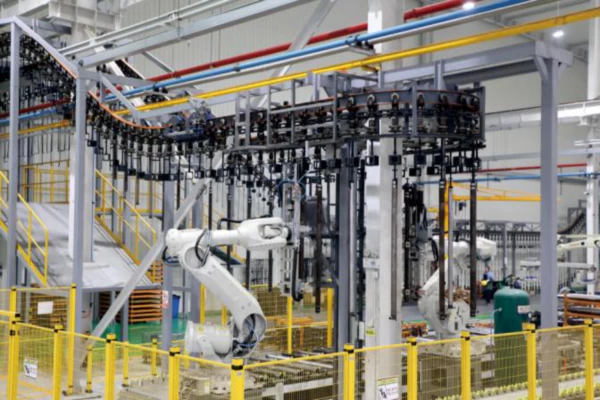
Our dedicated laser cladding facility ensures rods can withstand the abrasive underground environment.
Technical Specs: Built for the Underground War
When you are ordering a replacement shifting cylinder, the emulsion compatibility is just as critical as the steel grade. Most mines run a 95/5 water-to-oil emulsion, which is essentially water with a bit of soap. It offers terrible lubricity compared to hydraulic oil. Standard polyurethane seals will wear out prematurely due to high friction. We utilize a proprietary PTFE-Bronze composite for our piston rings and guide bands. This material is self-lubricating, which is a lifesaver when the emulsion mix gets diluted (and we all know it does). Below is a comparison of a standard industrial cylinder versus what we build for the coal face.
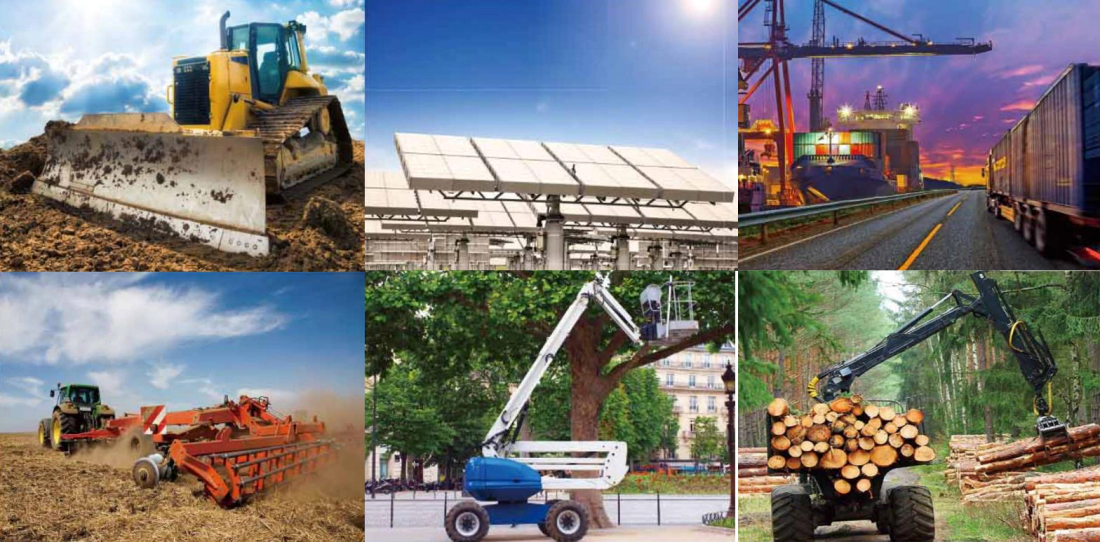
At the face, the pushing cylinder is the muscle that advances the entire mining system.
Application Scenarios: From Thin Seams to Mega-Heights
Not all coal faces are created equal. In thin seam mining (under 1.5 meters), the Hydraulic Support Pushing Cylinder is virtually dragging on the floor. The wear on the cylinder barrel’s underside is extreme. For these applications, we weld a sacrificial wear plate or apply a tungsten carbide coating to the bottom of the cylinder tube. In high-reach faces (6 meters+), the issue is speed. To keep up with high-speed shearers, the push cylinder needs to extend fast. This creates a “water hammer” effect when the valve closes. We combat this by integrating internal cushioning or using flow control valves that dampen the shock without sacrificing cycle time. The goal is always the same: keep the AFC moving without breaking the connection.
Case Study: The “Corrosion” Crisis in Queensland
Client: Red Earth Coal Operations (Australia)
The Nightmare: A high-production longwall mine in Queensland was struggling with highly acidic mine water (pH 4.5). Their OEM shifting cylinders were pitting within 3 months. The rust on the rods was tearing the seals, leading to massive emulsion consumption—they were losing 2,000 liters a day. The cost of the fluid alone was eating their profit, not to mention the environmental headache.
The Fix: We proposed a complete material overhaul. We replaced the standard chrome rods with Inconel-clad rods (Laser Cladding). It was an expensive upfront investment, costing about 40% more than the standard unit. We also switched the cylinder port blocks to stainless steel to prevent thread corrosion.
परिणाम: The new cylinders have been running for 18 months without a single rod-related failure. The mine manager, Steve, reported that their emulsion usage dropped by 85%. The cylinders paid for themselves in fluid savings alone within the first 6 months.
SWOT विश्लेषण: खनन हाइड्रोलिक्स की वर्तमान स्थिति
ताकत
Our laser cladding technology is a game-changer for longevity. We understand the specific chemistry of mine water emulsions better than generalist hydraulic shops.
कमजोरियों
High-end cladding takes time. Our lead times are longer than off-the-shelf disposable cylinders because we build them to last years, not months.
अवसर
Smart Mining. We are integrating pressure sensors into the cylinder ports to give real-time feedback on face alignment, preventing “snake” errors before they happen.
धमकियाँ
The influx of cheap, “disposable” cylinders that use inferior steel (Q345 instead of 27SiMn), puts miners at risk of catastrophic structural failure.
Trend Watch: Automation and Feedback
The biggest trend in longwall mining right now is LASC (Longwall Automation Steering Committee) technology. The Hydraulic Support Pushing Cylinder is becoming a data point. Modern systems require the cylinder to have an integrated Linear Displacement Transducer (LDT), usually a Reed Rod or a magnetostrictive probe inside the cylinder. This tells the central computer exactly how far the face has advanced. We are seeing fewer requests for “dumb” cylinders and more for these smart units. However, putting sensitive electronics inside a vibrating cylinder 1km underground is tricky. We’ve developed a shock-mounted sensor housing that protects the electronics from the brutal vibration of the shearer cutting rock.
Factory & Customization: We Rebuild the Unbuildable
Mining equipment is expensive, and throwing away a 500kg cylinder just because the bore is scored is a waste. We run a massive remanufacturing program. We can take your old Joy, CAT, or DBT cylinders, bore them out oversized, and manufacture a new piston to fit. It’s often 40% cheaper than buying new. But if you need new, we can reverse engineer from a sample. If you are finding that the factory mountings are cracking, we can redesign the trunnion or clevis with thicker steel or a different geometry to handle the stress better. We don’t just copy; we improve.
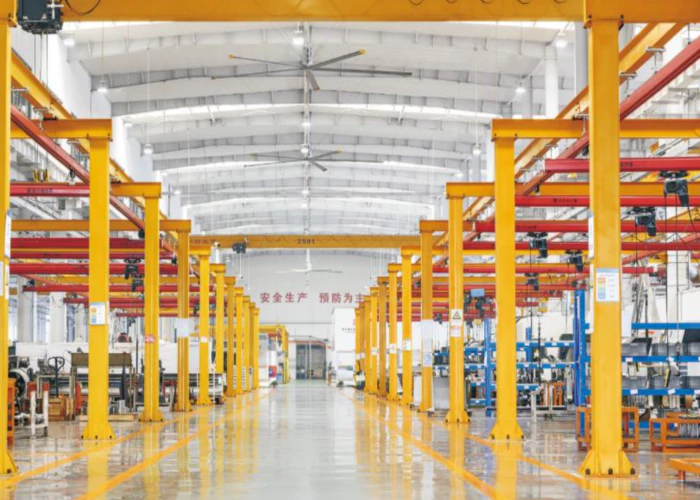
Robotic welding ensures deep penetration on the clevis mounts—critical when you’re pulling 30 tons.
Voices from the Coal Face
“We were changing relay bar rams every 6 weeks on the tailgate side. Ever Power suggested a heavier rod and a better wiper seal. We haven’t touched them in 6 months.”
— Mike D., Longwall Coordinator, West Virginia
“The laser-clad rods are the real deal. Our water is super corrosive, but these rods just don’t pit. It saved us a fortune in seal kits.”
— Zhang Wei, Maintenance Lead, Shanxi, China
“Good communication. I needed a custom stroke length for a retrofitted face. They sent the drawings in 2 days and the parts fit perfectly.”
— Piet V., Procurement, South Africa
FAQ: Questions From the Shift Boss
Why are my pushing cylinders leaking emulsion fluid?
Leaks usually mean the rod surface is damaged (pitting or scoring) or the seal material isn’t compatible with your emulsion mix. If the fluid concentration is too low, friction increases, burning the seals.
What is the price of a replacement longwall shifting cylinder?
It depends on the bore size and plating technology. A standard chrome cylinder might be $800, but a laser-clad heavy-duty unit could be $1,500. The cheaper one costs more in the long run.
Can you ship hydraulic cylinders to mines in remote areas?
Yes. We ship DDP (Delivered Duty Paid) to mining sites globally, from the Australian outback to the Andes. We handle the crates and customs so you don’t have to.
How do I measure a cylinder for a replacement quote?
We need the closed center-to-center length, stroke, bore diameter, rod diameter, and the type of staple-lock port (DN10, DN20, etc.). A photo of the ID tag helps too.
What is the advantage of laser cladding over chrome plating?
Laser cladding creates a metallurgical bond with the steel, meaning it won’t flake off like chrome. It is also much harder and corrosion-resistant, perfect for acidic mine water.
Do you repair existing mining cylinders?
Yes, we run a full remanufacturing service. We can strip, hone, and re-seal your old cylinders, often upgrading them with better seals than the original factory parts.
Production Stopped? We Move Fast.
Don’t let a $1,000 cylinder halt a $1,000,000 shift. Talk to our engineers now.