You are 500 meters into a drive, the ground conditions have just shifted from clay to abrasive granite, and suddenly the operator reports a pressure drop in Zone B. You check the propulsion system and see it: the trunnion ear on the number 12 cylinder has cracked, or worse, the mounting pin hole has stretched into an oval. In my 18 years of troubleshooting hydraulic systems for tunneling projects, nothing stops a project faster—and more expensively—than a failure in the propulsion array. These cylinders are the legs of the TBM; if they can’t push against the segments, that multi-million dollar machine is just a very heavy cork in a bottle.
Most procurement managers see a hydraulic cylinder as a commodity. They look at the bore size, the stroke, and the price tag. But in the tunneling world, we know that the devil is in the lateral loads. When you steer that shield, you aren’t just pushing forward; you are introducing massive side-loading forces that try to snap the cylinder mounts off. That is why we stopped using standard welded or cast trunnions years ago. For TBM segment propulsion, the only way to sleep at night is using Integrally Forged Trunnions combined with high-strength alloy steel barrels. It’s a bit heavier, yes, but it handles the shear forces that eat standard cylinders for breakfast.
👀 Step Inside Our Heavy-Duty Workshop
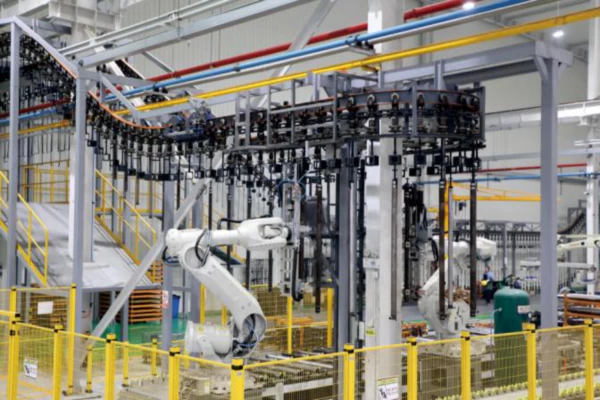
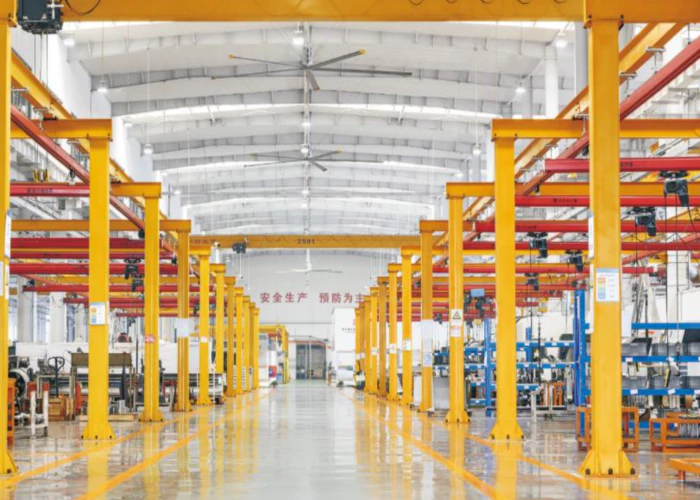
I could write technical specs all day, but seeing the steel is better. We’ve set up a Virtual Reality tour of our factory. You can see the large-scale forging press and the precision honing machines we use to build these beasts.
The “Ovalization” Nightmare: Why Materials Matter
Let’s get technical for a moment about why these things fail. The propulsion cylinder connects to the shield structure, usually via a trunnion (gimbal) mount. As the TBM articulates to follow the tunnel curve, the cylinder pivots. If the trunnion material is standard cast steel (or worse, a simple welded lug), the contact stress from the pin exceeds the yield strength of the material. Over a few hundred rings, that round hole becomes an oval. Once it’s oval, you get “slop” or backlash. That backlash creates a hammer effect every time the pressure kicks in. Snap. That’s your trunnion gone.
The trick we use is moving to Forged 42CrMo (Chromium-Molybdenum) steel for the mounting ears. Forging aligns the grain structure of the metal, making it incredibly resistant to fatigue and impact. We weld these forged components to the barrel using a specialized pre-heat and post-heat process that ensures the weld zone is actually stronger than the base metal. We’ve seen these cylinders come back for refurbishment after 10km drives, and the mounting holes are still perfectly round. It’s the difference between a part designed for a catalog and a part designed for the mud.
Technical Specifications: Built for the Push
We don’t deal in “standard” sizes because no two TBMs are exactly alike, but we do have a standard for *quality*. Below is the specification baseline we use for high-load propulsion cylinders. Note the rod plating thickness; standard industrial is 20 microns, but for tunneling, where cement grout and rock dust are everywhere, we push that to 50 microns minimum.
| Fonctionnalité | Détails techniques |
|---|---|
| Type de cylindre | Double-Acting Piston / Heavy Wall Welded |
| Matériau du fût | Alloy Steel (27SiMn or 30CrMnSiA) |
| Style de montage | Forged Trunnion (Middle or Rear) |
| Placage de tiges | Hard Chrome (>50μm), Salt Spray > 96h |
| Pression de service | Rated 35 MPa / Peak 42 MPa |
| Système d'étanchéité | Parker/Merkel (Grout-resistant wipers) |
| Plage d'alésage | 160mm – 400mm (Customizable) |
Application Scenarios: From EPB to Hard Rock
These cylinders are the heart of the “advance” cycle. In an EPB (Earth Pressure Balance) machine, they are pushing against the concrete segments to shove the entire shield forward into the soft soil. The challenge here is the grout backfill; it sprays everywhere. We use specialized scraper seals to ensure that curing cement doesn’t get dragged into the cylinder gland.
In Hard Rock TBMs (Gripper type), the propulsion cylinders sometimes have a different configuration, acting against the gripper shoes. Here, the vibration is the killer. The rock-breaking process sends shockwaves through the frame. Our forged trunnion design acts as a dampener of sorts—it has the ductility to absorb that shock without cracking, where a cast iron part would shatter like glass.
SWOT Analysis: The Forged Trunnion Advantage
To give you a balanced view—because I believe an informed engineer is a better customer—here is how our product stacks up against the competition.
Points forts
- Durabilité: Forged trunnions eliminate ovalization and cracking.
- Pression: Rated for 350+ Bar continuous use.
- Personnalisation: We match OEM mounting dimensions exactly.
Faiblesses
- Poids: Plus lourds que les cylindres agricoles standard.
- Coût: The forging process is more expensive than casting.
Opportunités
- Retrofitting older machines to extend service life.
- Pipe jacking applications require high thrust in small spaces.
Menaces
- Low-cost competitors use recycled steel.
- Supply chain delays for high-grade alloy raw materials.
Customer Success Story: The Granite Drive in Mumbai
Let me tell you about a project we supplied for a metro line expansion in Mumbai, India. The contractor was using two refurbished TBMs. The geology was mixed—hard basalt transitioning into soft clay. The uneven face pressure meant they were constantly steering the shield to stay on grade. The original cylinders (from a different supplier) started failing at the trunnion welds. They were snapping off due to the side load.
They were facing a 6-week delay to get OEM parts. We flew in, measured the broken units, and expedited the production of 30 custom cylinders featuring our Forged 42CrMo Trunnions. We delivered them in 20 days. They installed them and finished the remaining 3km of the tunnel without a single propulsion failure. The Project Director told us later that the rigidity of our cylinders actually improved their steering accuracy because there was no “slop” in the mounts.
La voix du client
“We were changing a cylinder every three days before we switched to Ever Power. Since the swap, we haven’t touched them. The forged mounts are a game changer.”
– Rajesh K., TBM Maintenance Manager
“I appreciated that they didn’t just sell us a part; they asked about the geology. They adjusted the seal kit to handle the fine granite dust we were dealing with.”
– Liam D., Senior Mechanical Engineer, UK Tunneling Corp
“The fitment was perfect. No grinding, no modifying the brackets. Slide the pin in and go.”
– Chen W., Site Foreman
Trend Analysis: Smarter, Deeper, Faster
The tunnels are getting deeper, which means the water pressure and ground pressure are higher. We are seeing a trend towards higher pressure systems (moving from 350 bar to 400+ bar) to keep the cylinder diameter compact while delivering more force. Also, “Smart Cylinders” are becoming standard. We now offer integration for linear position sensors (LDTs) directly inside the cylinder rod. This gives the TBM pilot real-time feedback on exactly how far each cylinder is extended, allowing for automated curve navigation that human operators can’t match.
Customization: We Build What You Draw
Whether you are running a Herrenknecht, a Robbins, a Komatsu, or a CRCHI machine, we can build the propulsion cylinder to match. In fact, we often improve on the original design. If you have a drawing, great. If you only have a broken cylinder and a tape measure, we can work with that, too. Our engineering team specializes in reverse engineering worn-out parts to create a “Drop-in Replacement” that performs better than new.
Foire aux questions (FAQ)
Tunneling is a niche industry, and the questions are always specific. Here are the answers to the things we get asked most often.
Why do the mounting eyes on my TBM cylinders ovalize so quickly?
It usually comes down to the material quality of the trunnion. If the cylinder uses a cast ear rather than a forged one, the lateral forces during shield steering will compress the metal, causing that dreaded oval shape. Forged steel is denser and resists this deformation.
Can you manufacture replacement cylinders for Robbins or Herrenknecht machines?
Absolutely. We reverse-engineer the dimensions to match the OEM fitment exactly, but we often upgrade the material specs to 42CrMo to give you a longer service life than the original parts.
What is the lead time for a custom set of propulsion cylinders?
For a full ship-set or a large batch of custom specs, we generally look at 25 to 35 days. However, if you have a machine down, we can expedite emergency replacements much faster.
Do you ship heavy TBM hydraulic components to construction sites in Europe?
We do. We handle the heavy logistics, crating, and export paperwork to get the cylinders directly to your job site in Europe, Asia, or the Americas without you needing to hire a broker.
How does the forged trunnion improve safety underground?
A forged trunnion has a continuous grain flow in the steel structure, making it virtually impossible to crack under shock loads. No cracks mean no catastrophic failure during the push cycle, keeping your crew safe.
Keep The Drive Alive
Don’t let weak steel stop your progress. Upgrade to forged strength.