Segment Adjustment Cylinders: Mastering “Soft Reduction” in the Inferno
There is absolutely no margin for error when you are clamping a glowing steel slab that still has a liquid core. In my eighteen years of engineering hydraulic systems for the metallurgical industry—from the blast furnaces of the Ruhr Valley to the electric arc mini-mills of the American Midwest—I have learned that the Segment Adjustment Cylinder is the single most critical component for internal slab quality. It’s not just about clamping force; it’s about Dynamic Soft Reduction. These cylinders have to squeeze the strand with micron-level precision to compensate for thermal shrinkage and prevent centerline segregation. Most printers (and even some maintenance managers) look at a hydraulic schematic and see a standard double-acting cylinder. They don’t see the reality: a component that must operate in 800°C ambient heat, showered in scale and steam, while dithering constantly to maintain the roll gap. If the position sensor (LDT) fries or the seals swell due to water-glycol incompatibility, you aren’t just losing a cylinder; you are downgrading an entire heat of steel from automotive grade to construction rebar.
👀 Walk The Production Line (Virtually)
Don’t rely on a brochure. Step inside our specialized honing workshop and clean-room assembly area right now to see how we build heat-resistant cylinders.
🚀 VISITE DE L'USINE EN RÉALITÉ VIRTUELLE
100% Transparent. No appointment needed.
The Engineering Reality: Why Water Glycol Destroys Standard Seals
Let’s talk about the fluid. In a continuous caster, fire safety is paramount, so 99% of machines run on Water Glycol (HFC) fluids. While this prevents the mill from burning down, it is a nightmare for tribology. Water glycol has the viscosity of water (almost) and aggressively attacks standard polyurethane seals. We’ve seen standard “off-the-shelf” cylinders installed in casters where the seals turned into a jelly-like substance within three weeks. This happens due to hydrolysis. To combat this, our Segment Adjustment Cylinders utilize specific seal profiles made from FKM (Viton) or specialized PTFE-Bronze composites that are chemically inert to HFC fluids.
Furthermore, thermal expansion is the silent killer. When a cylinder sits next to a glowing slab, the barrel expands. If the internal tolerances aren’t calculated for that specific thermal gradient, you lose pressure holding capability. We often design these cylinders with integrated water-cooling jackets—essentially a cylinder within a cylinder—to maintain a stable operating temperature for the seals and the electronic sensors. It adds complexity to the weld, sure, but it triples the service life.
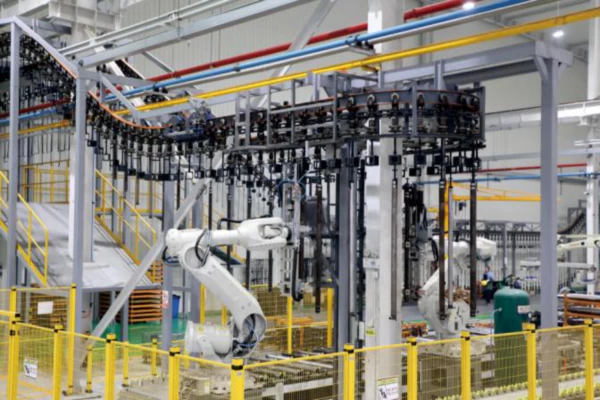
Our specialized testing rig simulates HFC fluid conditions and high temperatures to ensure zero leakage before shipping.
Technical Specs: Built to Survive the Segment
When you are spec’ing a replacement cylinder for a segment, you are looking for rigidity and sensor protection. We don’t use standard chrome rods here; the steam environment in the secondary cooling zone causes “chrome peeling” faster than you’d believe. We typically spec 17-4PH Stainless Steel for the rods or a high-grade Laser Cladding overlay. The position sensor (LDT) is the brain of the operation. We install these deep inside the gun-drilled piston rod, often with a specialized thermal barrier to protect the electronics head. Below is a comparison of what you might get from a generic hydraulic shop versus a dedicated mill-duty unit.

Whether it’s the bender segment or the straightener, gap control determines steel quality.
Application Scenarios: Benders, Bows, and Straighteners
The life of a cylinder varies depending on where it sits in the caster radius. The Bender Segment Cylinders (Segment 0) take the most abuse. They are closest to the mold, facing the highest heat and the most aggressive ferrostatic pressure. If these fail, you get a breakout. Moving down the strand to the Bow and Straightener segments, the focus shifts to extreme precision for “Soft Reduction.” This is where the cylinders squeeze the slab by just a few millimeters to close up internal porosity. For these applications, stick-slip is the enemy. We use low-friction seals to ensure that when the PLC commands a 0.5mm movement, the cylinder moves exactly 0.5mm, not 0.8mm, because it jumped.
Case Study: The “Steam Room” in Brazil
Client: Fortaleza Steel Corp (Brazil)
Le cauchemar : A high-speed slab caster operating in a tropical climate. The secondary cooling chamber was essentially a pressurized steam room. The OEM cylinders on Segment 1 were corroding at the rod threads, and water ingress into the sensor housing was causing signal faults daily. Every signal fault meant stopping the cast, costing them roughly $25,000 per hour.
La solution : Nous avons conçu un système sur mesure Segment Adjustment Cylinder. We replaced the carbon steel rods with 17-4PH Stainless Steel to stop the corrosion dead. For the sensors, we designed a custom “Cool-Cap” housing—a protective steel enclosure for the sensor head that was purged with instrument air to keep it cool and positive-pressured against steam ingress.
Le résultat : The sensor failures stopped immediately. The cylinder service life went from an average of 4 months to over 18 months. The maintenance manager, Carlos, told us, “It’s the first time in three years I haven’t had to change a cylinder during a turnaround.” That’s the power of application-specific engineering.
SWOT Analysis: The State of Mill Hydraulics
Points forts
Our in-house ability to manufacture water-cooled barrels sets us apart. We don’t outsource the welding of cooling jackets, ensuring integrity.
Faiblesses
Stainless steel rods and complex sensor integration increase initial cost. We lose bids to “lowest price” competitors who use standard chrome.
Opportunités
Industry 4.0: Mills are demanding cylinders with integrated pressure sensors to monitor “Roll Separating Force” in real-time.
Menaces
Poor filtration in mills. Even the best cylinder will fail if the HFC fluid is dirty. We constantly educate clients on ISO 4406 cleanliness.
Trend Watch: The “Smart” Cylinder Revolution
The steel industry is moving towards fully automated quality control. The Segment Adjustment Cylinder is becoming a data node. We are seeing a massive shift towards redundant position sensing (two sensors per cylinder) and integrated pressure transducers. This allows the caster’s control system to map the exact force profile of the slab as it moves down the strand. If the force spikes, it implies a cold spot or a blockage. Our cylinders are now being built with “multi-pin” connectors that transmit temperature, pressure, and position data simultaneously. It’s not just a muscle anymore; it’s a nervous system.
Factory & Customization: We Rebuild the Giants
Steel mills don’t throw away heavy equipment. They rebuild it. We run a dedicated remanufacturing line specifically for caster cylinders. We can take your old, scale-encrusted SMS, Danieli, or Primetals cylinders, strip them down, acid clean them, re-hone the barrels, and upgrade the internals. We can retrofit old cylinders with modern water-cooling jackets or internal sensors. It’s often 40% cheaper than buying new, with a faster turnaround time. We understand that a caster shutdown is a race against the clock, so we stock the raw 17-4PH stainless bar stock to react instantly.
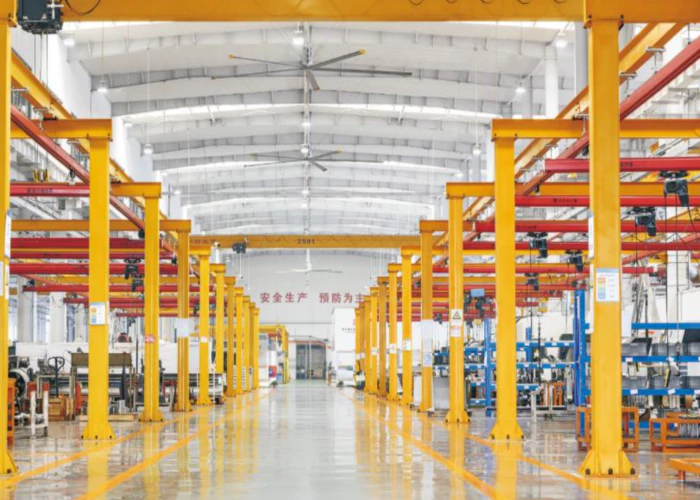
Precision TIG welding of cooling ports ensures leak-free operation in the harshest environments.
Voices from the Mill Floor
“We were changing Segment 0 cylinders every 4 months. Ever Power suggested water-cooled jackets. We installed them and haven’t touched them in 18 months. Game changer.”
— Klaus D., Maintenance Lead, Germany
“They understand Water Glycol. Other suppliers just gave us standard seals that turned to mush. Ever Power’s seal kit is the only one that lasts.”
— Rajesh K., Mill Superintendent, India
“We needed a rush rebuild on a bank of 4 cylinders during a shutdown. They worked through the weekend and got them back to us. Reliable partners.”
— Bill S., Procurement, USA
FAQ: Tough Questions We Get Daily
Why are my segment cylinders jerky (stick-slip)?
Stick-slip is usually caused by high seal friction or lack of lubrication. If you are running Water Glycol, standard seals swell and grab the rod. You need low-friction PTFE-composite seals designed for HFC fluids.
How much does a water-cooled caster cylinder cost?
It varies by size, but a custom water-cooled cylinder with internal sensors typically ranges from $3,500 to $8,000. It is an investment, but the reduction in downtime pays for it quickly.
Can you repair cylinders from SMS, Danieli, or Primetals?
Yes, we specialize in repairing and upgrading OEM cylinders. We can reverse engineer the specs and often improve the sealing technology during the rebuild.
How do you protect the position sensor from the heat?
We install the sensor inside the gun-drilled piston rod for physical protection. We also use specialized air-purged or water-cooled housings for the sensor electronics head.
What is the best rod material for steam environments?
17-4PH Stainless Steel is the gold standard. It offers high strength and excellent corrosion resistance. Laser Cladding is also a great option for larger diameters.
Can you ship heavy cylinders to steel mills globally?
Yes. We ship DDP (Delivered Duty Paid) to mills worldwide. We use reinforced crates and handle all customs logistics to deliver directly to your spares warehouse.
Your Strand Quality Depends on Precision
Stop segment drift and seal failures. Upgrade to mill-duty cylinders.