You know the feeling. You are operating a 14-ton tandem roller, trying to keep a straight line on a fresh asphalt mat, but the machine feels… loose. You turn the wheel left, and it snaps; you turn it right, and it lags. It’s like driving a car with a flat tire. In my 18 years of troubleshooting hydraulic systems for heavy construction machinery, the articulation joint (the pivot point connecting the front and rear frames) is where I see the most catastrophic, yet preventable, failures. This isn’t just about steering; it’s about the structural integrity of the machine.
The culprit? Side Loading (or eccentric loading). Most printers—and even some junior engineers—don’t realize that when a roller articulates over uneven ground, the cylinder isn’t just pushing linearly; it’s being twisted. Standard single-rod cylinders often fail here because the rod flexes, destroying the gland seals in record time. That is why, for the heavyweights of the road-building world, we swear by the Double-Rod Double-Acting Articulation Cylinder. By having a rod extend through both ends, we support the piston more effectively and, crucially, provide identical steering force and speed in both directions. It’s a game of balance, and if you are using standard cylinders, you are losing.
👀 Step Inside Our Heavy-Duty Workshop
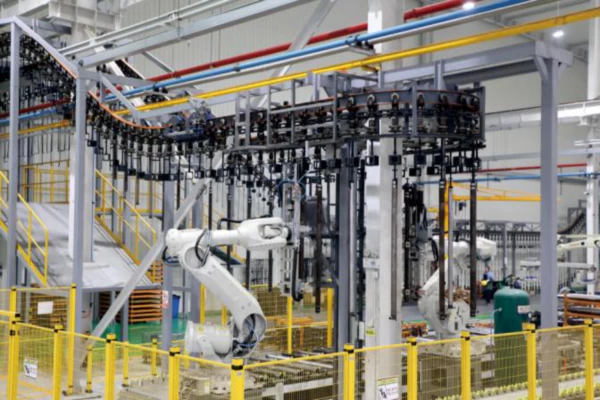
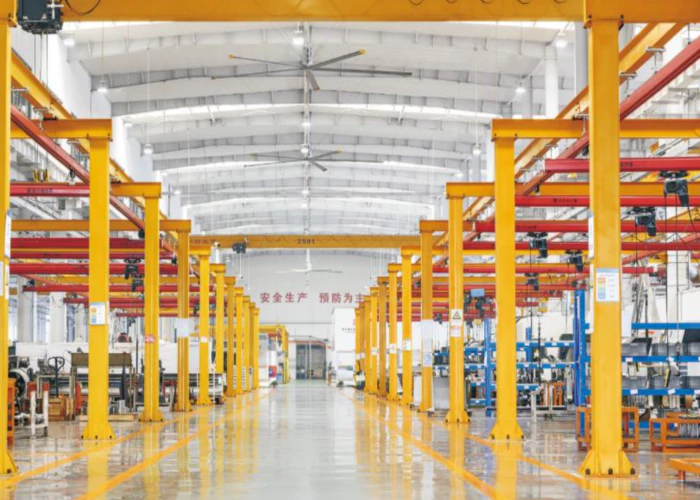
I can describe our welding robots and honing machines all day, but seeing is believing. We’ve digitized our factory floor. Take a virtual walk through our facility and see exactly how we machine these alloy steel beasts to withstand the vibration of a compaction site.
The “Rod Flex” Phenomenon: Why Standard Cylinders Leak
Let’s get into the weeds a bit. In a typical articulated steering setup, the cylinder is subjected to massive radial forces every time the machine oscillates (twists) while turning. If the cylinder rod is made of standard 45# carbon steel, it will deflect (bend slightly) under this load. It might be microscopic, but it’s enough. That deflection compresses the seal on one side and opens a gap on the other. Result? A leak that no amount of seal replacement will fix because the geometry is wrong.
We tackle this by upgrading to high-strength Alloy Steel (42CrMo or Q355D) for the rods and using a “Wide Guide Ring” design. Instead of a standard 15mm wear band on the piston, we use extra-wide, glass-filled nylon or phenolic composite guide rings—sometimes up to 50mm wide. These rings absorb the side load, keeping the rod perfectly centered so the main pressure seals can do their job without being crushed. It’s the difference between a cylinder that lasts 500 hours and one that lasts 5,000.
Material Science: Welding the Unweldable
For articulation cylinders, the mounting points (trunnions or clevises) take a beating. We use a construction entièrement soudée rather than tie-rods, which can rattle loose under the constant vibration of the compaction drum. But welding alloy steel requires precise heat treatment to avoid brittle zones.
We employ a specialized pre-heat and post-weld heat treatment process. This ensures that the weld holding the mounting eye is actually stronger than the base metal. Plus, we chrome plate the rods to a thickness exceeding 30 microns. Why so thick? Road rollers live in dust and gravel. A thin layer of chrome will get sandblasted off in a month. Thick chrome, polished to a mirror finish (Ra < 0.2), sheds the dirt and protects the expensive seals inside.
Technical Specifications: Built for the Turn
We don’t believe in “generic” specs for heavy machinery. However, based on our work with Sany, XCMG, and Caterpillar aftermarket replacements, here is the “Gold Standard” configuration for a reliable articulation cylinder.
| Fonctionnalité | Détails techniques |
|---|---|
| Type de cylindre | Double-Acting / Double-Rod (Through Rod) Piston |
| Matériau du fût | Q355D or 27SiMn (High Tensile Alloy Steel) |
| Matériau de la tige | 42CrMo (Quenched & Tempered), Hard Chrome >30μm |
| Système d'étanchéité | Parker / Hallite (Composite Wide Guide Rings + Step Seals) |
| Side Load Handling | Engineered for high radial forces (Articulation + Oscillation) |
| Pression de travail | 21 MPa – 35 MPa (High Pressure capable) |
| Montage | Spherical Plain Bearings (Self-aligning, maintenance-free options) |
Application Scenarios: The Pivot Point
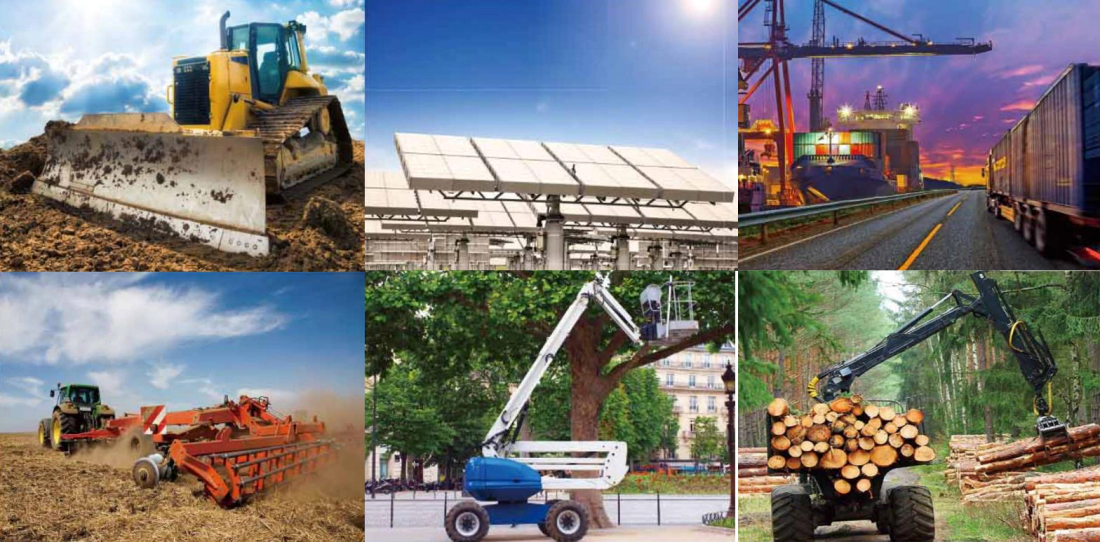
These cylinders reside in the “waist” of the machine. Whether it is a single-drum soil compactor working on a 15% grade or a tandem asphalt roller finishing a highway, the articulation cylinder controls the steering angle. The Double-Rod design is particularly favored in high-end asphalt rollers because it offers identical displacement volumes on extension and retraction.
This means the operator gets a symmetrical steering response—turning left feels the same as turning right. In standard single-rod cylinders, one direction is faster (less force), and the other is slower (more force) due to the rod volume occupying space. For precision paving, that asymmetry is a headache. The double-rod eliminates it.
SWOT Analysis: The Double-Rod Advantage
To give you a balanced perspective—because engineering is always about trade-offs—here is how this product stacks up.
Points forts
- Symmetrical Steering: Equal force/speed in both directions.
- Stability: Two rod bearings provide better support against side loads.
- Durability: Alloy steel construction resists fatigue cracking.
Faiblesses
- Space: Requires more physical length to accommodate the second rod.
- Cost: More expensive to manufacture than single-rod units.
Opportunités
- Retrofitting older rollers to improve steering precision.
- Integration with autonomous steering systems (needs symmetry).
Menaces
- Electric linear actuators (though still too weak for heavy rollers).
- Budget constraints favor cheap single-rod replacements.
Customer Success Story: Conquering the Andes
We had a client, Andean Road Builders, working on a high-altitude highway project in Peru. The terrain was brutal—steep gradients and constant switchbacks. Their existing fleet of rollers (using standard single-rod steering cylinders) was failing every 300 hours. The steep banking turns put immense side load on the rods, causing the glands to ovalize and leak hydraulic fluid onto the fresh asphalt (a huge no-no).
We engineered a custom Double-Rod Articulation Cylinder with a 42CrMo body and extra-wide phenolic guide rings. We also added a specialized wiper seal to handle the volcanic dust. They retrofitted three machines as a test. Those machines ran for over 1,500 hours without a single leak or steering drift issue. The consistent steering force also allowed their operators to navigate the switchbacks with more confidence. They’ve since upgraded their entire fleet.
Ce que dit le terrain
“The steering feel is completely different. It’s firm, predictable, and doesn’t wander. Makes finishing the edges much less stressful.”
– Carlos M., Senior Operator, Peru
“We used to change seal kits monthly. I haven’t opened these Ever Power cylinders in six months. That saves me a lot of grease time.”
– Jonas K., Fleet Mechanic, Germany
“Heavy duty is an understatement. The welds on the trunnions are massive compared to the OEM parts.”
– Li Wei, Project Manager, China
Trend Analysis: The Smart Articulation
The future of road rollers is autonomous driving. You can’t have a robot driving a machine with sloppy steering. We are seeing a huge uptick in demand for articulation cylinders with **Integrated Linear Position Sensors**. These sensors tell the machine’s computer exactly what the steering angle is, down to the degree. Our double-rod design is perfect for this, as the through-rod allows for easy installation of magnetostrictive sensors without increasing the installation length significantly.
Customization: If It Pivots, We Can Build It
Standard off-the-shelf parts are great for changing a lightbulb, not for fixing a 15-ton machine that steers the wrong way. We specialize in custom solutions. Do you need a specific pin diameter? A particular port orientation to clear a hydraulic hose? Or maybe you want to upgrade from a single rod to a double rod system?
Send us a photo, a rough sketch, or the broken part itself. Our engineers will reverse engineer it, improve the materials (upgrade to alloy steel), and send you a drawing for approval. We handle the entire process from raw steel to the final pressure test.
Foire aux questions (FAQ)
We get asked these questions every day. Here is the straight talk on articulation hydraulics.
Why does my road roller steering feel loose even with new seals?
It is often not the seals; it is the rod guide bushings. If the guide rings are worn, the rod deflects under side loads, causing “play” in the articulation joint that new seals can’t fix. You need wider, tighter tolerance guides.
What is the advantage of a double-rod cylinder for steering?
A double-rod cylinder has equal piston area on both sides. This means your steering speed and force are identical whether turning left or right, giving the operator consistent feedback and smoother control.
Can you manufacture a custom replacement for a Dynapac or Volvo roller?
Yes, we specialize in reverse engineering. We can build a drop-in replacement that matches the mounting points but features upgraded alloy steel and wider guide rings for better longevity.
How long does it take to ship a custom articulation cylinder to the USA?
For custom manufacturing, we usually need 20-25 days for production. Shipping via sea freight takes about 30 days, or we can air freight urgent breakdown parts in 5-7 days.
Why is the chrome plating peeling on my current cylinder rod?
This is usually due to rod deflection. If the rod bends slightly under load, it rubs hard against the gland nut, cracking the chrome. Our alloy steel rods are stiffer to prevent this flex.
Stop Fighting The Steering Wheel.
Upgrade to Double-Rod Stability and keep your lines straight.