Reaching New Heights: The Engineering Behind Multi-Stage Telescopic Cylinders for Long-Reach Boom Lifts
You know, looking back over the last 18 years in the hydraulic game, I’ve seen the aerial work platform (AWP) industry go through a massive transformation. It used to be that reaching 20 meters was a big deal. Now? If you aren’t hitting 40 or 50 meters with a telescopic boom, you aren’t even in the conversation. But here is the thing that keeps us engineers up at night: as those booms get longer, the physics gets exponentially harder. The vérin hydraulique télescopique buried inside that boom is doing some of the heaviest lifting in the mechanical world, often quite literally. It’s not just a tube with oil in it; it’s a high-precision, multi-stage actuator that has to act like a rigid structural beam while extending 30 feet out into thin air.
In our experience, the most common headache for fleet managers isn’t the engine or the tires—it’s the cylinder drift and the dreaded “stick-slip” shudder. When you have a human being in a basket 120 feet off the ground, a jerky cylinder feels like an earthquake. Most printers and catalog designers don’t realize that the internal sealing system of a double-acting telescopic cylinder is a work of art. You have to route hydraulic fluid through the center of the rod to retract the smallest stage, then the next, and the next, all while keeping the pressure balanced so the stages don’t crash into each other. We’ve seen plenty of cheap knock-offs fail because they used standard steel instead of impact-tested structural alloys, leading to disastrous bending issues under load.
👀 Découvrez notre chaîne de production
It’s one thing for me to tell you about our welding precision, but it’s another thing to see the robots in action. We’ve set up a full Virtual Reality tour of the plant.
See the sparks fly here: Bienvenue dans notre usine de réalité virtuelle
The Challenge of the “Double-Acting” Long Stroke
Let’s talk about the specific beast we are dealing with here: the Double-Acting Multi-Stage Telescopic Cylinder. Unlike a dump truck cylinder that lifts and lets gravity bring it down (single-acting), a boom lift cylinder needs to power both out et in. Gravity doesn’t help you when the boom is horizontal. This requires a complex network of internal oil porting. We design our cylinders with nested tubes where the oil for the return stroke actually travels through the hollow walls or internal feed tubes of the piston rods. The trick is maintaining seal integrity across 3, 4, or even 5 stages of movement.
Another critical factor is the material. For long-stroke applications, standard ST52 steel often doesn’t cut it. It’s too heavy for the strength it offers. That is why we pivoted years ago to Acier Q345D (equivalent to S355J2). The “D” is crucial—it means the steel is impact tested at -20°C. Why does this matter? Because we send cylinders to Canada, Norway, and Northern China. If the steel becomes brittle in the cold, the microscopic flexing of the long barrel can turn into a catastrophic crack. By using Q345D and advanced welding techniques, we reduce the weight of the cylinder (which helps the machine’s stability) while increasing its safety factor.

Spécifications techniques et indicateurs de performance
| Fonctionnalité | Spécifications standard de l'industrie | Our Enhanced Spec |
|---|---|---|
| Steel Grade | ST52 / 1045 | Q345D (Low Temp Impact Tested) |
| Placage | Chrome standard (20 μm) | Double Chrome + Polishing (30-50μm) |
| Type d'action | Single or Double | Double-Acting with Sequencing Valve |
| Système d'étanchéité | Standard PU U-Cup | Multi-stage Low Friction (Hallite/Merkel) |
| Longueur de course | Jusqu'à 3000 mm | Custom up to 12,000mm (12 meters) |
Real World Success: The Nordic Winter Challenge
Let me give you a concrete example of why these specs matter. We were approached by “NordicAccess,” a large equipment rental firm based in Stockholm, Sweden (name changed for confidentiality). They were running a fleet of 85ft boom lifts that were plaguing them with downtime. Every winter, as temperatures dropped below -15°C, their telescopic cylinders would start leaking internally. The booms would “creep” inwards when the machine was shut off overnight. Not only is this annoying, but it’s also a massive safety violation.
They sent us a sample of the failed cylinder (from a different supplier). We cut it open and found two things: the seals had hardened into plastic-like rings, and the chrome on the second-stage rod had micro-cracks from the steel flexing. We re-engineered the solution for them. We built 50 replacement units using Q345D tubes to handle the flex and installed a customized “Arctic Kit” sealing system using specialized low-temp polyurethane compounds. We also adjusted the guide ring tolerances to account for thermal contraction. The result? NordicAccess ran those lifts through the entire winter of 2023 without a single seal failure. They saved an estimated €120,000 in repair costs and lost rentals.
La voix du client
“The synchronization on these cylinders is perfect. No more ‘clunk’ when the stages transition. My operators feel much safer at 60 feet.”
— Mike R., Fleet Operations, USA
“Sourcing custom telescopic cylinders used to be a 6-month nightmare. Ever-Power delivered the prototypes in 45 days, and they fit perfectly.”
— Elias K., Procurement Lead, Germany
“The chrome finish is noticeably better than the stock parts we were buying. We work near the coast, and rust has been zero issue so far.”
— Tanaka S., Maintenance Manager, Japan
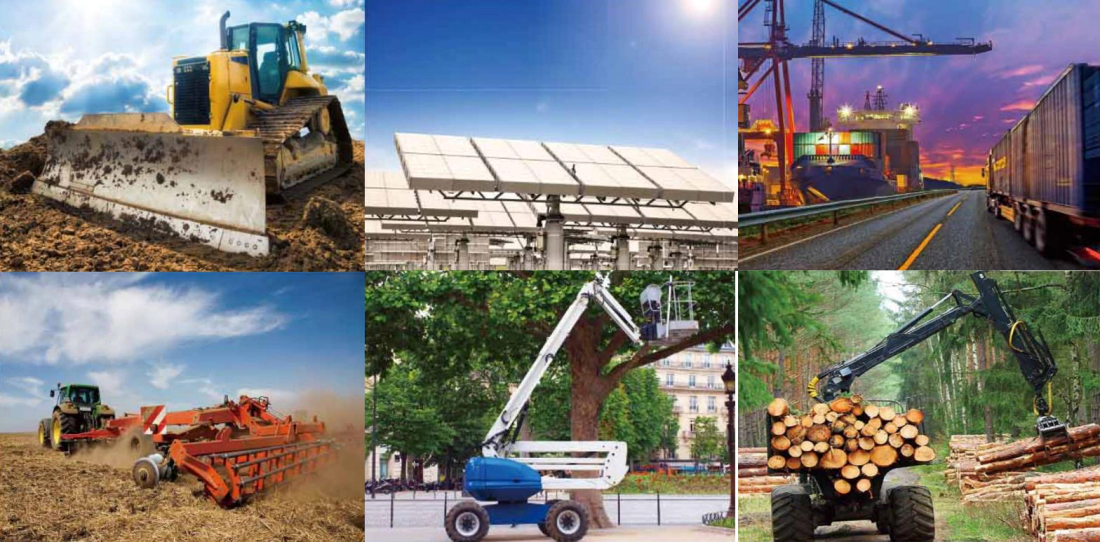
Where These Giants Do Their Work
Our telescopic cylinders are the unsung heroes in a variety of sectors. It’s not just about construction sites.
- Shipyard Maintenance: Reaching over the hull of a supertanker requires immense horizontal reach. The side-load resistance of our welded design is critical here.
- Utility & Power Line Work: These trucks need to be stabilized and extended quickly. Reliability is key because downtime means power outages.
- Aviation Ground Support: De-icing trucks use our cylinders to position the spray nozzle right over the aircraft wing. Precision control is mandatory to avoid hitting the fuselage.
Trend Analysis: Smarter, Lighter, Stronger
The industry isn’t standing still. We are seeing a huge shift towards smart sensing cylinders. In the old days, you had external limit switches that would get knocked off or damaged. Now, we are integrating linear transducers (like magnetostrictive sensors) directly inside the cylinder rod. This gives the machine’s computer real-time feedback on exactly how far extended the boom is, allowing for much safer “load moment” calculations.
Also, Electro-Hydraulic Actuation (EHA) is coming. This eliminates the long hydraulic hoses running up the boom (which are prone to bursting). Instead, the pump is integrated right next to the cylinder. Our cylinders are being adapted with optimized mounting points to accept these compact power packs. If you are designing a new machine, you need to be thinking about these integrations now.
Strategic SWOT Analysis: Custom vs. Off-the-Shelf
When you are deciding on a partner for critical components like this, it helps to see the full picture.
Points forts (internes)
- Full control over the chrome plating and honing process.
- Ability to produce ultra-long strokes (up to 12m) that most shops can’t handle.
- Rigorous X-ray testing of all welds.
Faiblesses (internes)
- Lead times are longer than buying a generic stock cylinder.
- Higher initial engineering cost for one-off prototypes.
Opportunités (Externes)
- Growing market for the refurbishment of older high-value AWP units.
- Expansion into high-capacity spider cranes.
Menaces (externes)
- Fluctuations in the global price of molybdenum (used in Q345D).
- Increasing shipping costs for heavy, over-length freight.
Factory Capabilities: We Build What Others Can’t
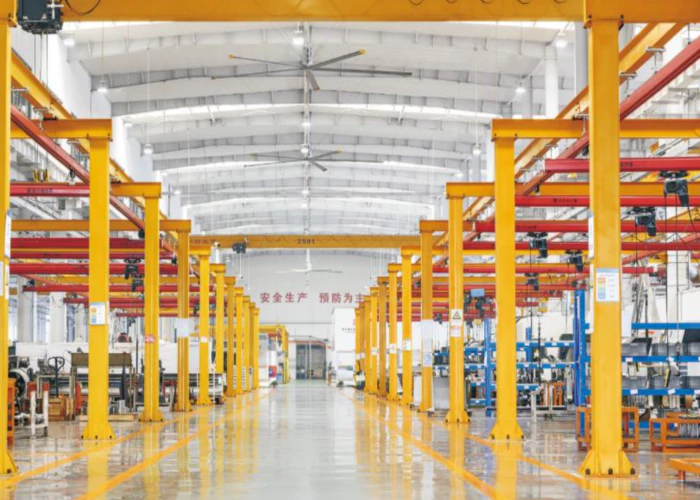
We pride ourselves on our “Design for Application” approach. We don’t just ask for the dimensions; we ask about the wind load, the duty cycle, and the temperature range. Our factory is equipped with deep-hole boring machines and automated welding stations that ensure the cylinder tube is perfectly concentric. This is vital for multi-stage cylinders—if the tube is even slightly oval, the stages will bind. We perform 100% pressure testing on every single unit before it gets painted. No sampling, no skipping.
Foire aux questions (FAQ)
Why is my telescopic boom lift cylinder drifting down when the machine is turned off?
How long does it take to manufacture a custom long-stroke telescopic cylinder for a project in Canada?
What is the price difference between a single-acting and a double-acting telescopic cylinder?
Can you use Q345D steel for cylinders operating in extreme cold environments like Russia or Alaska?
Where can I find a supplier who can reverse engineer an obsolete telescopic cylinder for an old JLG lift?
Don’t Let Leaks Slow Down Your Fleet
Upgrade to precision-welded, multi-stage cylinders designed for the long haul.