Reinforced for the Polder: Why Scraper Bucket Lift Cylinders Need More Than Standard Steel
You know the feeling—you’re running a scraper train on a dyke reinforcement project near Zeeland, cutting into that dense, heavy clay. The operator hits a hidden patch of concrete debris or a hard rock shelf, and the whole machine shudders. That sickening “clunk” isn’t just noise; it’s a massive shock wave traveling straight through the bucket linkage and slamming into your hydraulic cylinders. In my 18 years of engineering hydraulic solutions, mostly dealing with guys who break things for a living, I’ve seen more bent piston rods on scrapers than on any other machine. It’s a brutal application.
Most printers (and let’s be honest, many procurement managers) look at a hydraulic cylinder and just see a tube and a rod. They think, “If the dimensions fit, it works.” But when you are dealing with the wet, heavy soil conditions we have here in the Netherlands, a standard ST52 rod is basically a fuse waiting to blow. It’s not a matter of if it bends, but when. That is why we shifted our focus years ago to using acier allié 42CrMo (chrome-molybdène) for our scraper bucket lift cylinders. It’s about yield strength. You need a rod that can take a punch, flex slightly, and spring back, rather than staying bent and destroying your gland seals on the next stroke.
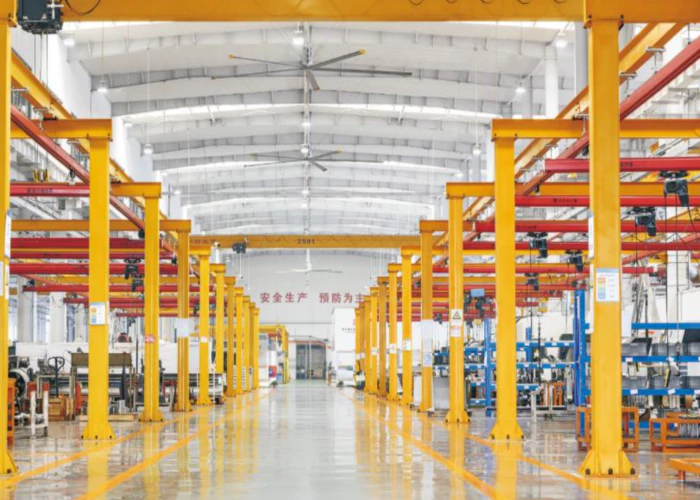
Don’t just take my word for it—step onto our production floor.
We believe in total transparency. I invite you to take a virtual walk through our facility to see exactly how we heat-treat our 42CrMo rods and weld our reinforced barrels.
The trick isn’t just the material; it’s the design of the barrel itself. Scrapers are notorious for side-loading. When the bucket is cutting unevenly, the cylinder isn’t just pushing up and down; it’s being twisted. We use a thick-walled, welded barrel construction with a specialized “wide-guide” internal bushing system. This distributes that lateral force over a larger area, preventing the piston from digging into the cylinder wall. We’ve seen OEM cylinders fail in 6 months in the muddy conditions of Flevoland, while our reinforced units are still running dry and clean two years later.
Engineering the “Unbreakable” Rod: Material Science Meets Dutch Mud
Let’s talk a bit of shop about metallurgy. The standard for most hydraulic rods is C45 or ST52 steel. It’s cheap, it machines easily, and it works fine for a forklift. But a scraper bucket lift cylinder is subjected to massive “column buckling” forces. When that bucket is fully loaded with wet sand and hits a bump, the inertia tries to fold the rod in half.
By upgrading to 42CrMo4, quenched and tempered, we increase the yield strength by nearly 50% compared to standard carbon steel. But strength is only half the battle. In the Netherlands, corrosion is the silent killer. The moist, salty air eats through porous chrome plating. We apply a multi-layer hard chrome plating (minimum 30 microns) and polish it to a mirror finish. This ensures that even if the machine sits idle over a rainy weekend, the rod doesn’t pit. Smooth rod = long seal life. It’s simple math.

Strategic Analysis: The Scraper Cylinder Landscape
We don’t operate in a vacuum. We know you have options, from cheap imports to expensive OEM replacements. Here is a SWOT analysis of why our reinforced cylinders are the smart play for the European market:
Points forts
- Supériorité matérielle : 42CrMo rod withstands shock loads that bend standard steel.
- Weld Integrity: Deep penetration welds prevent base separation.
- Seal Logic: High-performance Parker/Merkel seals designed for dirty environments.
Faiblesses
- Poids: Reinforced barrels add weight (though negligible for a scraper).
- Délai de mise en œuvre: Custom 42CrMo forging takes slightly longer than off-the-shelf mild steel.
Opportunités
- Infrastructure Boom: High demand for reliable earthmoving gear in Dutch port expansions.
- Marché de la rénovation : Upgrading older Cat or Komatsu fleets to extend service life.
Menaces
- Importations à bas prix : Generic cylinders with hidden porosity in the steel.
- Coûts des matières premières : Fluctuations in global alloy markets.
Case Study: The “Maasvlakte” Challenge
Let me share a story about a client of ours, “Van Dijk Grondverzet” (name changed for privacy), a major contractor involved in the port expansion near Rotterdam. They were running a fleet of elevating scrapers, moving millions of cubic meters of sand mixed with jagged sea stone.
They were blowing through bucket lift cylinders every 400 hours. The rods were getting scored by the sand, seals were failing, and eventually, the rods would bend when hitting the buried stone layers. The downtime was costing them roughly €2,500 per hour in lost production chain efficiency.
La solution :
We analyzed the failure mode and proposed a retrofit. We supplied Double-Acting 42CrMo Lift Cylinders with an oversized rod diameter (+5mm over stock) and our “Sand-Shield” wiper seal configuration. We also applied a Nickel-Chrome plating.
Le résultat :
The fleet has now run for over 2,000 hours without a single cylinder failure. The maintenance manager called me personally to say, “The rods still look like mirrors.” They saved an estimated €150,000 in parts and labor in just one season.
Ce que dit l'industrie
“We deal with heavy clay in the North. Standard cylinders just fold. These Ever Power units are built like tanks. The welding quality is visibly better.”
– Hendrik V., Fleet Manager, Groningen
“I was skeptical about the price vs. OEM, but after a year of abuse, I’m sold. The chrome plating holds up against the salt air remarkably well.”
– Bram d. J., Heavy Equipment Mechanic
“Fast delivery to Eindhoven. They actually checked the pin dimensions with me before shipping, which saved us a huge headache. Top service.”
– Lucas M., Procurement Lead
Technical Specifications: Beneath the Surface
We don’t hide our specs. Here is exactly what you get when you order a heavy-duty lift cylinder from us. It’s designed to meet or exceed the rigorous demands of the Benelux earthmoving sector.
| Fonctionnalité | Détails techniques |
|---|---|
| Type de cylindre | Double-Acting Piston (Bucket Lift) |
| Matériau de la tige | 42CrMo4 (Quenched & Tempered) |
| Traitement de surface | Hard Chrome (>30µm) / Optional Ni-Cr |
| Matériau du fût | St52 / 27SiMn (Thickened Wall) |
| Pression de travail | 250 Bar (Nominal) / 350 Bar (Shock) |
| Système d'étanchéité | Parker / Merkel (Heavy Duty Wipers) |
| Plage de température | -30°C to +110°C (All-Season) |
Beyond the Scraper: Where Else Do These Fit?
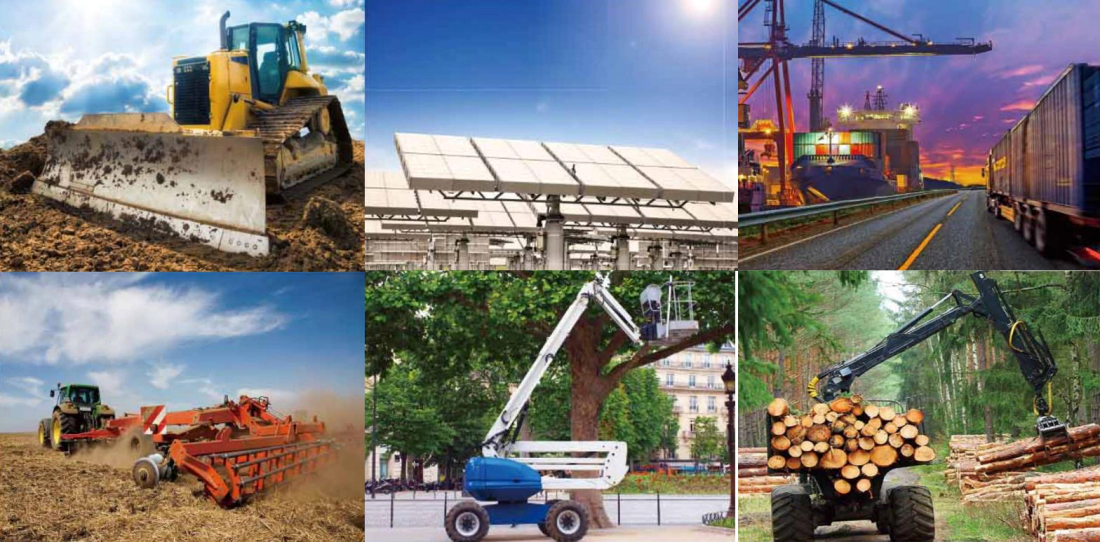
The technology we developed for the scraper bucket—high shock resistance and side-load tolerance—is perfect for other abusive environments we see across Europe.
- ✔
Mining Loaders: Bucket tilt cylinders face similar breakout forces.
- ✔
Articulated Dump Trucks (ADTs): Hoist cylinders that need to handle uneven dumping loads.
- ✔
Waste Compactors: The rams in waste management facilities take a beating from foreign objects.
Customization: The “Secret Sauce”
Here is the thing: off-the-shelf parts are great until you modify your machine or need a slight upgrade. Maybe you need a slightly larger pin hole, or you want the ports rotated 90 degrees to clear a new hose routing. This is where we shine.
We don’t just pull from stock; we manufacture. If you can sketch it (or send us the old broken unit), we can build it. We can adjust the stroke length, upgrade the seals to Viton for high-heat applications, or add integrated counterbalance valves for safety.
Straight Talk: Frequently Asked Questions
Why do my scraper bucket cylinders keep bending during heavy loading cycles?
It is usually a material issue. Standard ST52 rods lack the yield strength to handle the sudden shock loads when a scraper hits a buried rock or hard clay. We switch to 42CrMo quenched and tempered steel, which offers significantly higher elasticity and resistance to permanent deformation.
How fast can you ship custom lift cylinders to the Rotterdam port area?
We know downtime is expensive. For custom orders, our production cycle is tight, and we offer expedited DDP shipping directly to Rotterdam or anywhere in the Netherlands, typically landing at your workshop within 3 to 4 weeks from drawing approval.
Can these cylinders withstand the salt air environment of coastal dyke projects?
Absolutely. We offer an optional Nickel-Chrome plating process. This dual-layer approach seals the underlying steel from the moist, salty Dutch air, preventing the pitting corrosion that kills seals on standard cylinders.
Do you provide seal kits for maintenance or do we have to buy a whole new unit?
We believe in maintainability. We use standard, high-quality profiles from brands like Hallite or Merkel. We supply comprehensive seal kits for all our cylinders, so your maintenance team can refresh the unit easily.
What is the price difference between your 42CrMo cylinder and a standard OEM replacement?
While our material costs are higher due to the premium alloy, our direct-from-factory model usually makes us 15-20% more cost-effective than buying branded OEM parts, with often superior durability specs.
Are bent rods slowing down your earthmoving?
Upgrade to 42CrMo durability and keep the scraper moving.