Dump Truck Telescopic Hoist Cylinders: Why “Good Enough” Will Cost You Thousands
You know the sound. That low-frequency groan of the hydraulic pump as the bed starts to rise, 40 tons of wet gravel shifting its weight backward. It is the moment of truth for any hauler. In my eighteen years dealing with hydraulics—from the dusty quarries of Texas to the freezing mines of Northern Canada—I have seen more hoist failures than I care to count, and frankly, 90% of them were preventable. When we talk about a Vérin télescopique pour camion-benne, we aren’t just talking about a lifting device; we are talking about the structural stability of your entire rig during that critical tipping cycle. Most printers and fleet managers focus purely on the tonnage rating, which is important, but they miss the subtle engineering details that prevent side-loading catastrophes. The trick is in the overlap between stages and the quality of the guide bands. If those tolerances are off by even a fraction of a millimeter, you get what we call “dog-legging,” and once a cylinder starts to bow at full extension, it’s not a repair job anymore—it’s an insurance claim.
👀 Ne vous fiez pas seulement à mes paroles
See the precision for yourself. Walk through our honing workshop and assembly line right now—no flight ticket needed.
🚀 VISITE DE L'USINE EN RÉALITÉ VIRTUELLE
Experience our production line firsthand.
The Anatomy of a Reliable Lift: It’s Inside the Tube
Let’s get technical for a minute (but keep it practical). A telescopic cylinder is essentially a series of nested tubes, or “stages.” The nightmare scenario for any dump truck operator is a stage sticking or dropping out of sequence. In our experience, this usually comes down to two things: seal friction and tube concentricity. If the tubes aren’t perfectly round—and I mean perfectly—the seal will grab on one side and leak on the other. We use a proprietary honing process that achieves a surface finish of Ra 0.2µm. Why does this matter? It holds just enough oil to lubricate the wiper seals without leaking. Furthermore, the material selection for the stages is critical. We’ve seen cheap imports use standard Q345 steel that balloons under high pressure. We insist on 27SiMn or cold-drawn ST52 for our high-pressure telescopic units. It stays rigid, ensuring that when you are dumping a sticky clay load that won’t slide out immediately, the cylinder doesn’t buckle under the immense back-pressure.
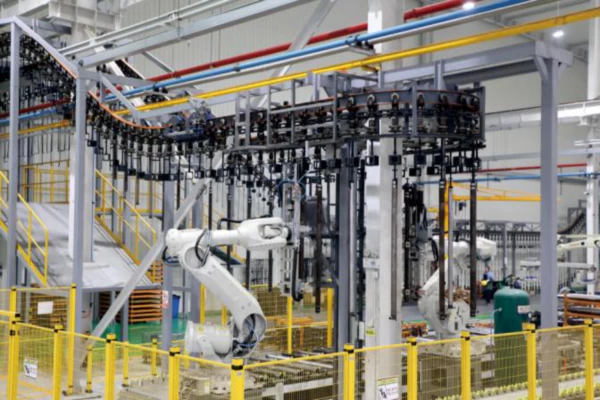
Our multi-stage assembly bay, where every stage is pressure tested individually before final assembly.
Technical Specifications: What You Should Be Asking For
When you are looking for a replacement Vérin télescopique pour camion-benne, don’t just ask for the stroke length and pin diameter. You need to know what’s keeping the dirt out and the oil in. The greatest killer of these cylinders is contamination. We use a dual-lip wiper system that is aggressive on mud but gentle on the chrome. Speaking of chrome, standard 20-micron plating is fine for a forklift indoors, but for a dump truck doing 20 cycles a day in a gravel pit? It’s insufficient. We engineer our stages with a minimum 30-micron hard chrome layer, often polished to a mirror finish to reduce friction. Below is a breakdown of the specs that separate a “3-month cylinder” from a “5-year cylinder.”
| Composant / Fonctionnalité | Spécifications standard du marché | Spécifications robustes Ever Power |
|---|---|---|
| Matériau du tube | Q345 / 1020 Steel | 27SiMn / ST52 Cold Drawn |
| Plating Thickness | 15 – 20 microns | 30 – 50 microns (Multi-layer) |
| Configuration du joint | Single PU Wiper | Double Lip Metal-Cased Wiper (Hallite/Parker) |
| Pression de travail | 160 Bar (2300 PSI) | 210 Bar (3000 PSI) Rated |
| Guide Rings | Nylon / Plastic | Bronze-Filled PTFE / Copper Alloy |
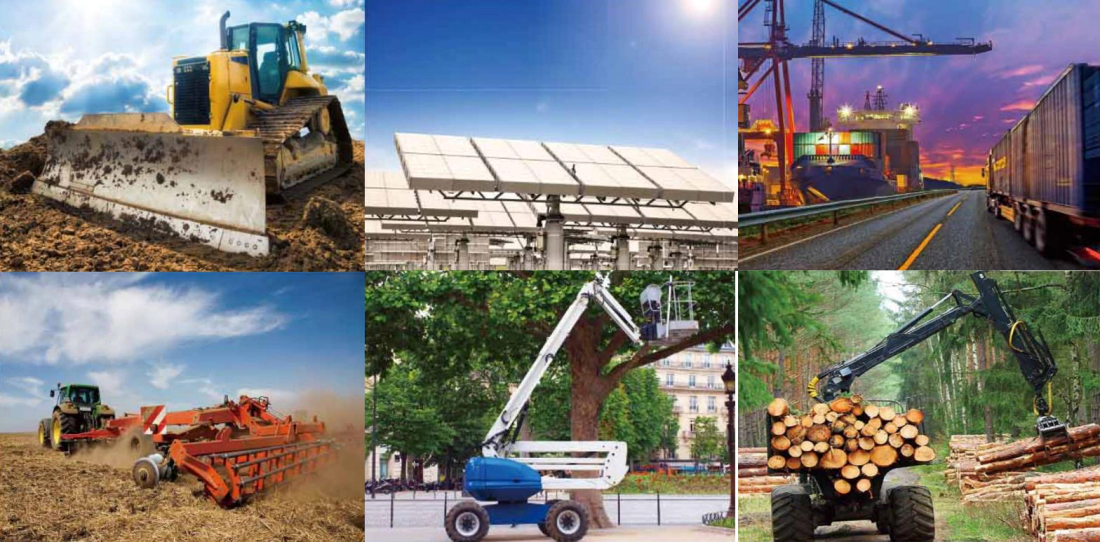
From front-end hoists to underbody trunnion mounts, we cover every configuration.
Where We Work: Application Scenarios
You will find our cylinders in places where downtime costs thousands of dollars an hour. In the Agricultural sector, grain haulers need cylinders that can sit idle for months and then perform flawlessly during harvest without leaking seal fluid onto the crops. In Mining, the Vérin télescopique pour camion-benne faces a different beast: constant vibration and shock loading. We often use trunnion mounts with spherical bearings for these off-road giants to absorb the frame twist that occurs on uneven terrain. And then there is Construction and Demolition. This is where debris is the enemy. A piece of rebar hitting an exposed cylinder stage can score it instantly. We offer optional protective bellows and hardened chrome treatments specifically for demolition trailers to mitigate this risk.
Case Study: The “Salt Belt” Survivor
Client: Midwest Municipal Services (Ohio, USA)
Le défi : This municipal fleet manages road salt distribution. Their dump trucks operate in the most corrosive environment imaginable—salt spray, slush, and freezing temperatures. Their OEM cylinders were pitting after just two winters. The pitting would tear the seals, causing hydraulic fluid to leak onto the road (a major EPA violation risk) and rendering the trucks useless mid-season.
Notre solution : We didn’t just sell them a standard replacement. We engineered a custom Vérin télescopique pour camion-benne featuring a “Nickel-Chrome” plating process. We applied a base layer of electroless nickel for corrosion resistance, followed by a hard chrome top layer for wear resistance. We also upgraded the seals to a low-temperature polyurethane compound that remains flexible down to -40°F.
Le résultat : The test cylinders have now completed their fifth winter with zero signs of pitting or leakage. The fleet manager, Dave, reported a 300% increase in component lifespan and estimated they saved over $40,000 in replacement labor and parts in the first two years alone.
Strategic Analysis: The State of Hydraulic Tech (SWOT)
Points forts (internes)
We control the entire manufacturing chain, from tube honing to final chroming. This allows us to guarantee tolerances that assemblers (who just buy parts) cannot match.
Faiblesses (internes)
Our commitment to high-grade steel and multi-layer plating means we are rarely the “cheapest” option on the market. We fight the “lowest bidder” mentality daily.
Opportunités (Externes)
The trend toward lighter dump bodies creates a need for cylinders that are lighter yet stronger. We are pioneering the use of hollow piston rods to save weight.
Menaces (externes)
The influx of low-quality, disposable cylinders from generic suppliers confuses the market. They look the same on the outside but fail internally.
Trend Watch: Lighter, Faster, Smarter
We are seeing a definitive shift in the industry. Ten years ago, everyone just wanted “big heavy iron.” Today, payload is king. Every pound we can shave off the hydraulic system is an extra pound of gravel you can haul legally. We are achieving this by using higher tensile strength alloys that allow for thinner cylinder walls without compromising burst pressure. Additionally, “Smart Cylinders” are starting to make waves. We are prototyping hoist cylinders with integrated linear position sensors. This allows the truck’s ECU to know exactly how high the bed is, preventing accidents where drivers hit overhead bridges or power lines. It’s not standard yet, but it’s coming fast.
Factory & Customization: We Build What You Need
Got a vintage Mack truck with a hoist that hasn’t been manufactured since 1995? Or a custom-built side-dump trailer with weird mounting angles? That is our bread and butter. While we have shelves full of standard front-end and underbody cylinders, our custom shop is where the magic happens. We can reverse engineer from a physical sample or a simple drawing. We can adjust the port locations to fit your new hose routing. We can change the pin size. We treat every order as a partnership, not just a transaction.
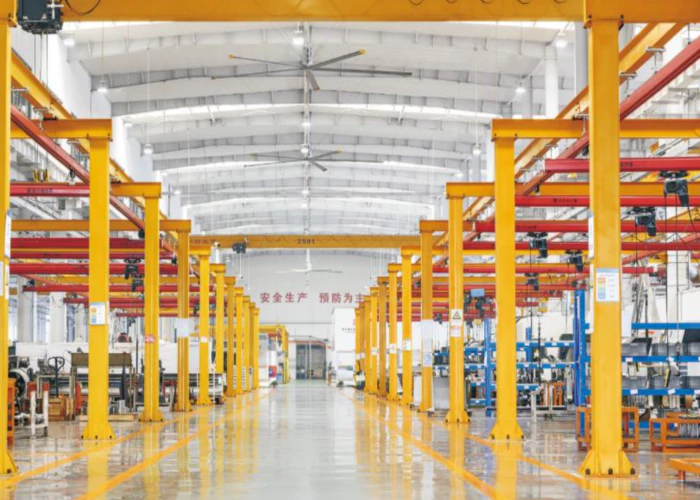
Precision welding is critical—especially on the trunnion mounts where the stress is highest.
What the Fleet Managers Say
“I was tired of replacing seals every 6 months on my grain trailers. Ever Power suggested their upgraded dust wipers. It’s been two years, dry as a bone. These guys know their stuff.”
— Mark S., Agriculture Logistics, Kansas
“We needed a custom stroke length for a modified mining dumper. They sent me a drawing in 24 hours and the cylinder arrived perfectly spec’d. Fits like a glove.”
— Roberto G., Mining Operations, Chile
“Price was competitive, but the weld quality was what sold me. You can tell they don’t rush the production. Solid, heavy-duty gear.”
— Liam T., Construction Fleet, Australia
FAQ: Tough Questions We Get Asked
No marketing fluff here. Just straight answers to the questions mechanics ask us on the phone.
Why is my dump truck hoist cylinder leaking from the top stage?
Top-stage leaks usually mean the wiper seal has failed, letting dirt into the system, which damages the main rod seal. It can also happen if the top stage is bent due to uneven loading. Check your seals first.
How do I bleed air out of a telescopic hydraulic cylinder?
Ideally, loosen the bleed screw (if equipped) at the top while the cylinder is extended, but be careful of pressure! Alternatively, cycle the cylinder fully up and down 5-10 times with no load; the air usually works its way back to the tank.
What is the cost of a replacement telescopic cylinder for a dump trailer?
It depends on the stroke and tonnage, but typically ranges from $1,500 to $4,500. Be wary of anything cheaper; they likely cut corners on chrome plating thickness, which will cost you more later.
Can you repair a scored telescopic cylinder stage?
Deep scores are hard to fix. You can re-chrome it, but often it’s cheaper and safer to replace the specific stage tube. We sell individual stages if the rest of the cylinder is good.
Where can I find a hydraulic cylinder supplier near me?
We ship globally from our factory directly to your shop. We handle the logistics so it arrives at your door, often faster than waiting for a local shop to machine a custom part from scratch.
Which hydraulic oil is best for dump trucks in winter?
In freezing temps, standard AW46 becomes like molasses. You should switch to a lower viscosity oil like AW32 or a dedicated multi-grade cold-weather hydraulic fluid to prevent pump cavitation.
Still Guessing on Specs?
Don’t risk a bent frame. Let our engineers review your hoist requirements.