Discharge Adjustment Cylinders: The “Gatekeepers” of Your Crushing Plant
There is a specific rhythm to a cone crusher operating at peak efficiency—a deep, consistent hum that every plant manager loves to hear. But when that tone changes, when the rock starts coming out oversized, or the amp draw fluctuates wildly, you know you have a problem. In my eighteen years of troubleshooting mineral processing circuits from the copper belts of Chile to the iron mines of Pilbara, the culprit is often the one component people ignore until it fails: the Discharge Adjustment Cylinder. Whether you call it a tramp release cylinder, a CSS (Closed Side Setting) adjustment ram, or a clearing jack, this hydraulic muscle is what determines your product size and, ultimately, your profitability. Most printers and procurement folks see a part number, but I see a critical control point fighting against thousands of tons of crushing force. The trick isn’t just generating the force to hold the setting; it’s about micro-precision under extreme vibration. If your cylinder creeps back by even 2mm, you are recirculating tons of oversize material, burning diese,l and wearing out liners for zero revenue.
👀 Don’t Guess—Inspect Our Quality Directly
We believe in radical transparency. Walk our production floor virtually and inspect our honing machines and pressure test bays right now.
🚀 وارد تور واقعیت مجازی کارخانه شوید
100% Transparent. No hard hat required.
The Engineering Reality: Holding the Line Against “Tramp Iron”
Let’s get real about the operating environment. A Discharge Adjustment Cylinder isn’t just pushing; it’s holding. It acts as a solid strut for 99% of its life. But then comes the “tramp iron” event—an excavator tooth or a drill bit gets into the feed. Suddenly, the system pressure spikes from 200 bar to 400 bar in milliseconds. The cylinder has to relieve (retract) instantly to let the uncrushable object pass, and then reset immediately to the exact previous position. Standard industrial cylinders just aren’t fast enough or robust enough for this. We’ve seen cheap aftermarket replacements balloon or blow their gland nuts because the threads weren’t calculated for shock loading. We engineer ours with integrated accumulators and oversized ports to handle that rapid oil dump. Furthermore, vibration is the silent killer here. It works on the threaded connections and the position sensors. We use specific thread-locking compounds and shock-mounted sensors to ensure that the “brain” of the cylinder doesn’t get rattled to death.
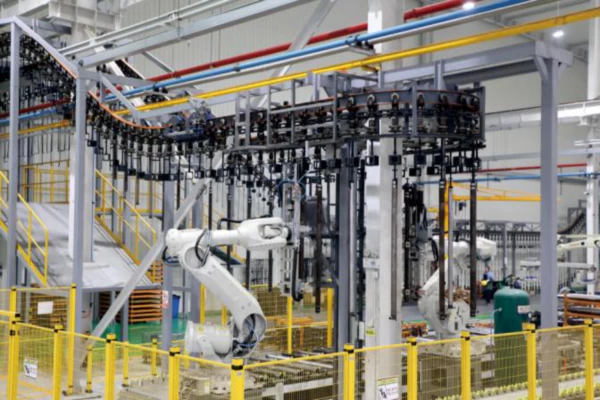
Our precision honing process ensures the barrel finish (Ra 0.4) holds just enough oil to lubricate the seals during those high-speed tramp relief events.
Technical Specs: What Separates a “Part” from a “Solution”
When you are looking for a replacement, don’t just match the pin-to-pin length. You need to look at the metallurgy. For mining applications, we don’t mess around with standard carbon steel for the rods. We typically specify 42CrMo4 (AISI 4140) induction hardened steel. Why? Because rock dust is abrasive. If the rod gets scratched, the seal fails. If the seal fails, the crusher drifts. It’s a domino effect. Also, look at the position sensing. We are moving away from external linear potentiometers (which break easily) to integrated magnetostrictive sensors protected inside the cylinder rod.

Whether it’s a Symons cone or a modern gyratory crusher, the adjustment cylinder controls the output.
Application Scenarios: Where These Cylinders Live
The primary home for a Discharge Adjustment Cylinder is on Cone Crushers (both secondary and tertiary). They adjust the bowl or the main shaft to change the Closed Side Setting (CSS). But we also see variants of these on large Gyratory Crushers for the main shaft positioning. Another interesting application is in Drilling Mud Pumps, where similar cylinders are used to adjust the discharge pressure or dampeners. However, the most punishing environment is undoubtedly the mobile impact crusher. Here, the cylinder isn’t just dealing with crushing forces; it’s dealing with the vibration of the tracks and the diesel engine. The heat generation in these mobile units can cook standard nitrile seals in a month. We switch to high-temp Viton (FKM) seals for any mobile crushing application for this exact reason.
Case Study: The “Atacama Dust” Problem
مشتری: شرکت معدنکاری کاپر ریج (شیلی)
چالش: A large copper mine in the Atacama Desert was struggling with its tertiary cone crushers. The dust in this region is incredibly fine and abrasive—like grinding powder. Their OEM adjustment cylinders were failing every 8 weeks due to rod scoring. The dust was getting past the wipers, mixing with the oil, and creating a slurry that ate the seals. They were losing setting accuracy, meaning their product size was inconsistent, affecting the flotation circuits downstream.
راه حل: We engineered a custom solution. We didn’t just change the seal; we changed the defense system. We installed a “Double-Wiper” configuration with a brass scraper ring to knock off the heavy dust crust, followed by an aggressive polyurethane wiper. We also upgraded the rod plating to a ceramic-filled coating that is harder than the silica dust attacking it.
نتیجه: The cylinder lifespan jumped from 8 weeks to 14 months. The maintenance manager, Carlos, sent us the data showing a 15% improvement in product size consistency (P80) because the cylinders weren’t drifting anymore. That 15% improvement translated to millions in recovered copper over the year.
SWOT Analysis: The State of Crushing Hydraulics
نقاط قوت
Our ability to integrate high-precision LDT sensors ensures that automated setting regulation (ASR) works flawlessly. We control the honing process in-house.
نقاط ضعف
High-performance cylinders with internal sensors are more expensive than basic mechanical adjustment screws. The initial CAPEX is higher.
فرصتها
The shift towards fully automated “Dark Plants” (unmanned). These require cylinders with absolute reliability and digital feedback loops.
تهدیدها
Generic hydraulic shops attempting to repair these specialized cylinders without understanding the shock-load requirements, leading to catastrophic failures.
Trend Watch: Automation is King
Five years ago, many operators were still adjusting crushers manually. Today, Automated Speech Recognition (ASR) is standard. This puts the Discharge Adjustment Cylinder front and center. The cylinder is no longer just a muscle; it’s a data provider. We are seeing a massive trend towards redundant sensing—using both internal magnetostrictive probes and external pressure transducers to monitor crusher load. If the pressure correlates to a rock hardness spike, the cylinder automatically opens the gap slightly to prevent stalling. This intelligent interaction requires hydraulic cylinders with zero stick-slip (hysteresis), which drives our use of low-friction Teflon-composite seals.
Factory & Customization: We Rebuild and Reinvent
Crushers are expensive beasts, and nobody scraps a Metso or Sandvik cone just because the cylinders leak. We run a dedicated rebuild line for these units. We can take your old, battered adjustment cylinders, re-barrel them, and install upgraded rods and seals. It’s usually 40% cheaper than buying new from the OEM. But if you need new, we can reverse engineer any brand. We often find that the OEM port location is awkward for maintenance access, so when we build the replacement, we rotate the ports to make your mechanic’s life easier. Small details, big difference.
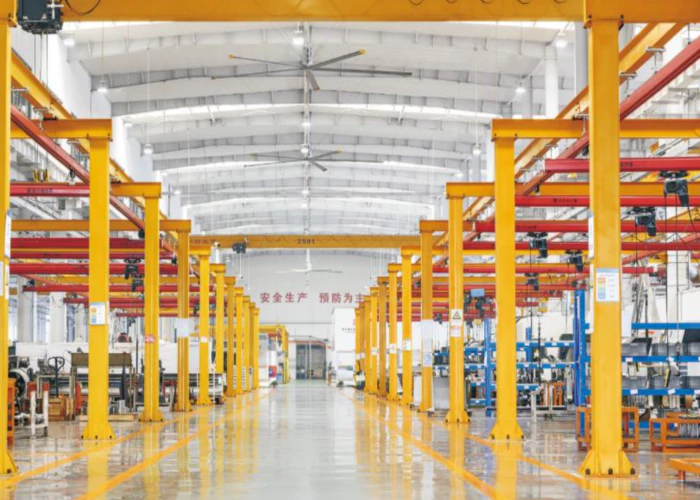
Quality control is rigorous. Every discharge cylinder undergoes a static hold test to ensure zero drift before painting.
Voices from the Quarry
“Our HP400 cones were drifting constantly. Ever Power suggested a seal kit upgrade and a different honing finish. It solved the problem instantly. Production is up 10%.”
— Mike T., Plant Manager, Nevada Gold
“I needed a replacement clearing jack for an old Nordberg. The OEM said 12 weeks lead time. These guys built it in 3 weeks, and the quality is better.”
— Johan V., Quarry Owner, South Africa
“They understand the difference between a static hold and a dynamic shock. The technical advice was spot on.”
— Sarah Jenkins, Purchasing, Rio Tinto
FAQ: Questions From the Crusher Deck
Why does my crusher discharge setting drift over time?
Drift is almost always internal leakage. The piston seal allows oil to bypass from the high-pressure side to the low side. This can be caused by seal wear, barrel scoring, or thermal expansion if the oil gets too hot.
What is the cost of a replacement discharge adjustment cylinder?
It depends on the crusher model. A small cylinder might be $1,200, while a large accumulator-equipped unit for a gyratory crusher can be $5,000+. We quote based on specs to save you money.
Can you retrofit my cylinder with internal position sensors?
Yes. We can gun-drill the piston rod and install a magnetostrictive probe. This gives you precise, digital feedback on your setting, allowing for automation integration.
Do you ship hydraulic cylinders to Peru or Chile?
Absolutely. South America is a huge market for us. We ship DDP (Delivered Duty Paid) to mining sites globally. We handle the crates and customs logistics.
What causes the chrome to flake off the cylinder rod?
This is usually corrosion under the plating, or physical impact from rock bounce. In mining, we recommend double-chrome or ceramic coatings to prevent this delamination.
How often should I change the seals on my adjustment cylinders?
In a dusty environment, we recommend a seal refresh every 12-18 months. However, if you see any drift in the setting, change them immediately to prevent barrel damage.
Maximize Your Crusher Uptime
Drift costs you tonnage. Precision makes you money. Let’s talk specs.