Double-Acting Hydraulic Dampening Cylinders for Offshore Platform Collision Avoidance Systems
Engineering resilience against kinetic impact: A technical deep dive into 42CrMo ceramic-coated actuators designed for the splash zone and vessel docking interfaces.
Mitigating Kinetic Risks in the Splash Zone
The interface between a floating supply vessel and a fixed offshore structure represents one of the most dynamic and hazardous envelopes in marine engineering. In my eighteen years specializing in heavy-duty actuation, I have observed that standard industrial cylinders are categorically unsuited for the violent unpredictability of the “splash zone.” The kinetic energy transfer during a vessel berthing, combined with the rhythmic fatigue induced by wave cycles, demands a hydraulic solution that acts not merely as a mover, but as a precision energy absorber. We are addressing the critical failure points of anti-collision arm systems: specifically, the catastrophic rod buckling and seal degradation caused by lateral shear forces and saline crystallization.
At Ever Power, we have moved beyond standard carbon steels. For collision avoidance systems, we implement a rigorous manufacturing protocol utilizing 42CrMo (AISI 4140) alloy steel. This material choice provides the necessary high yield strength to resist deformation under shock loads that would plastically deform lesser materials like Q345. Furthermore, the corrosive assault of the marine environment is neutralized through our proprietary ceramic coating technology, ensuring the rod surface remains impermeable to pitting even after years of exposure.
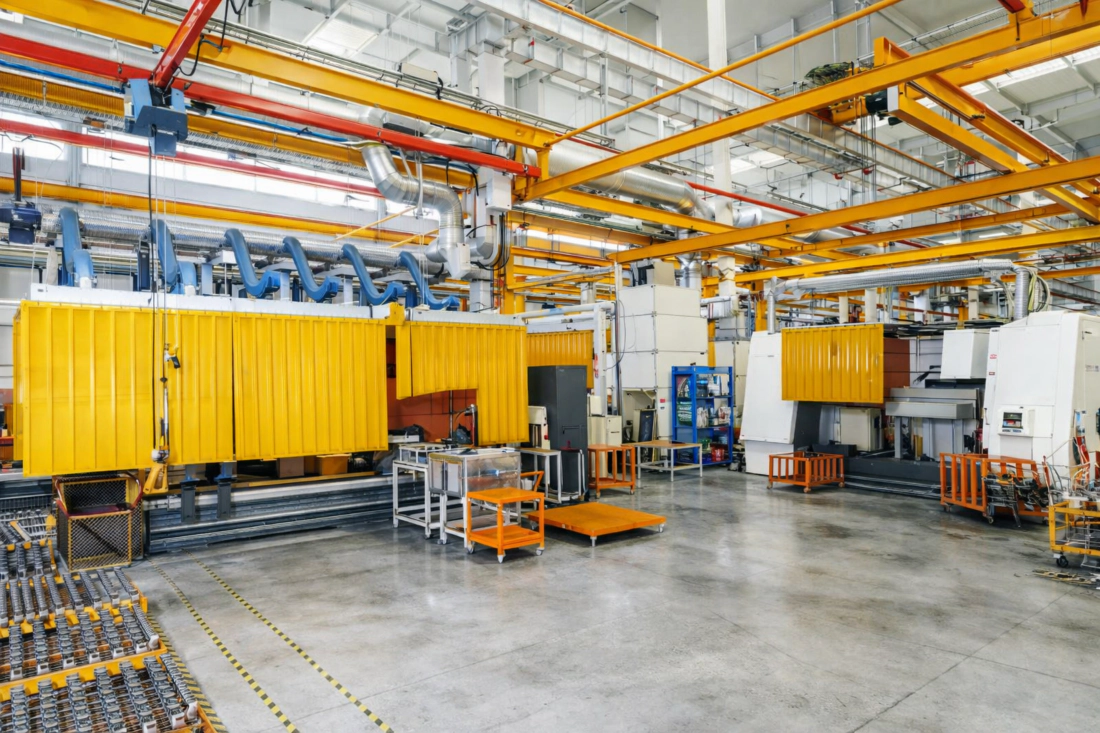
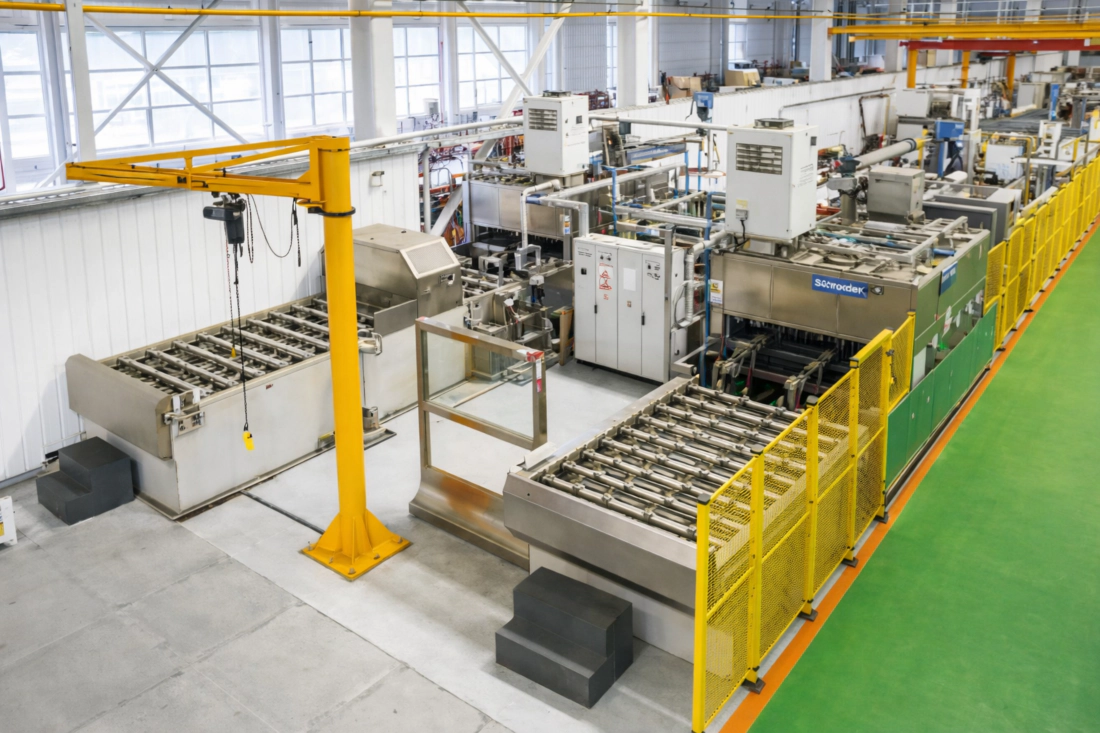
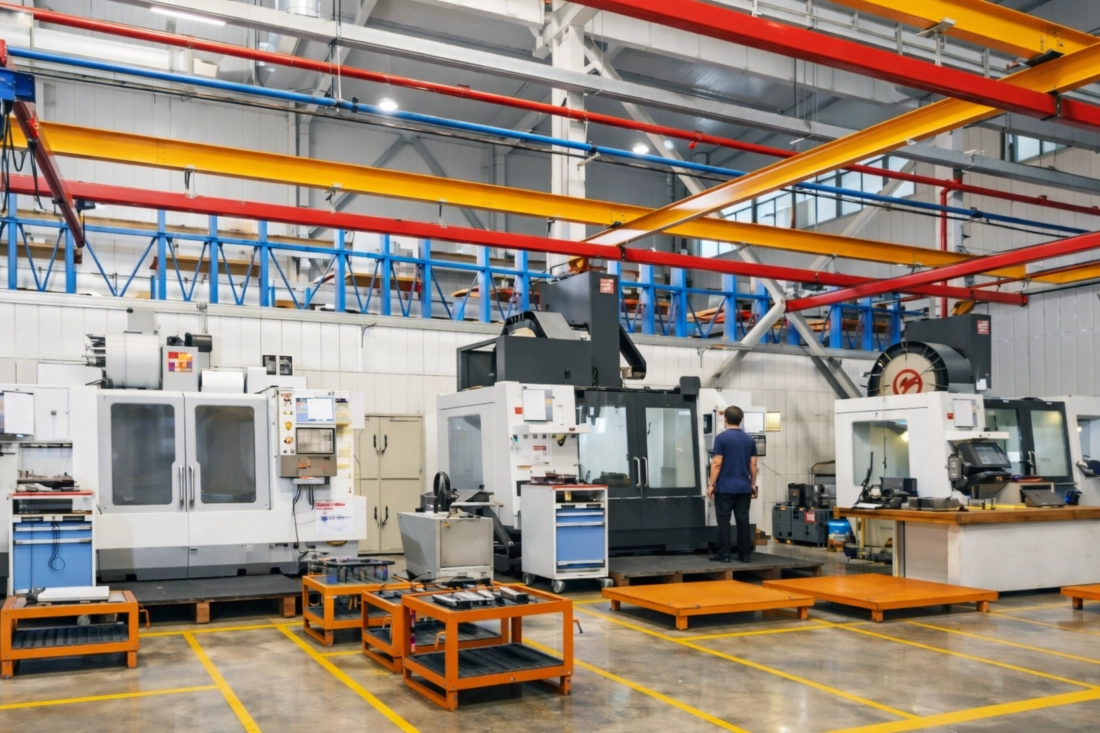
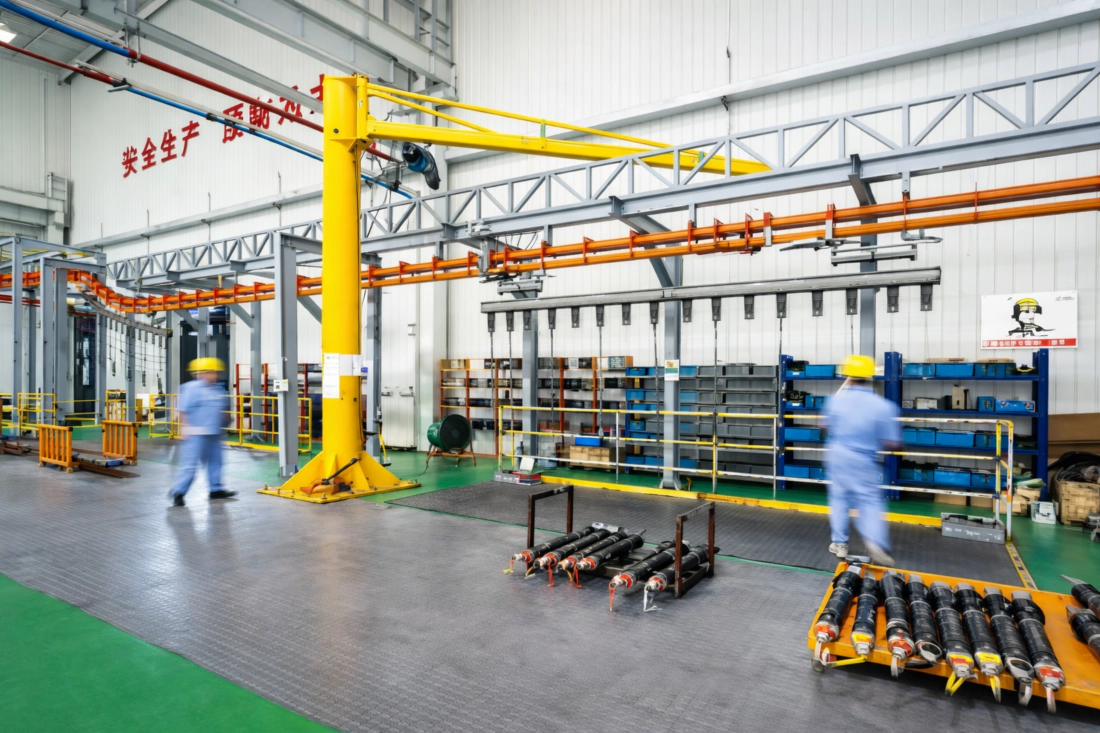
To truly understand the scale of our production and the precision of our heavy-duty welding robots, I invite you to virtually step onto our factory floor.
Global Manufacturing Hub
Located in Hangzhou, our facility integrates forging, CNC machining, and advanced plating under one roof. We offer B2B partners full traceability and rapid prototyping.
The Architecture of Impact Resistance
Why standard hydraulics fail at sea, and how we engineer survivability.
42CrMo: Structural Integrity
The collision arm of an offshore platform acts as a fuse, protecting the main structure. The hydraulic cylinder within it must handle immense compressive loads. We utilize 42CrMo quenched and tempered steel. This alloy offers a tensile strength exceeding 1080 MPa, nearly double that of standard construction steel. This high yield point is critical for preventing the barrel from ballooning or the rod from buckling during the milliseconds of peak impact force when a vessel contacts the fender system.
Ceramic HVOF Shielding
Traditional chrome plating is porous at a microscopic level. In the splash zone, salt crystals form in these pores, expanding and cracking the plating—a phenomenon known as “chrome flaking.” Ever Power employs High Velocity Oxygen Fuel (HVOF) ceramic coating. This non-porous, dielectric layer provides an impenetrable barrier against chloride ions and galvanic corrosion, offering a service life of 5000+ hours in Neutral Salt Spray (NSS) tests compared to 200 hours for standard chrome.
Reinforced Ear Geometries
The weakest point in dynamic impact cylinders is often the mounting eye. Fatigue cracks initiate here due to cyclic wave loading. We engineer “Oversized Trunnion” or spherical bearing mounts with reinforced wall thickness at the weld interface. The clevis and ear mounts are forged components, integrated into the cylinder cap via deep-penetration robotic welding to ensure the stress flow lines are uninterrupted, virtually eliminating fatigue crack propagation.
Engineered for the “Worst Case” Scenario
Double-Acting Damping Control
Our cylinders are not just passive struts. They are double-acting active components capable of adjusting the stiffness of the anti-collision arm. By controlling the fluid flow through integrated manifolds, we can dynamically alter the damping coefficient based on sea state data.
Fatigue-Proof Sealing Systems
We utilize a redundant sealing architecture featuring Parker or Merkel marine-grade profiles. A primary PTFE slide ring handles the high-frequency dither caused by waves, while a secondary heavy-duty buffer seal manages the pressure spikes during collision events. The wiper seal is specifically designed to scrape away dried salt and marine growth without damaging the ceramic rod.
Technical Specifications: Marine Anti-Collision Series
| ویژگی | مشخصات استاندارد صنعت | مشخصات فنی دریایی Ever Power |
|---|---|---|
| جنس سیلندر | Q345B / ST52 | 42CrMo (کوئینج و تمپر شده) |
| درمان سطح میله | Hard Chrome (25μm) | HVOF Ceramic Coating / Ni-Cr |
| Corrosion Resistance (NSS) | 200 Hours | > 2000 Hours (ISO 9227) |
| Impact Energy Absorption | Standard Hydraulic Damping | Enhanced Progressive Damping |
| Fatigue Design Life | 100,000 Cycles | 500,000+ Wave Cycles |
| دمای عملیاتی | -10 درجه سانتیگراد تا +80 درجه سانتیگراد | -40°C to +100°C (Arctic Grade) |
Versatile Protection for Offshore Assets
Beyond the primary anti-collision arms, our 42CrMo energy-absorbing cylinders are critical for:
- Dynamic Fendering Systems: Providing active resistance to absorb docking energy from VLCCs and supply vessels.
- Boat Landing Dampeners: Reducing the shock load on personnel transfer baskets and gangways.
- Motion Compensated Gangways: Actuating the heave compensation mechanism to maintain a stable walkway.
- Pile Grippers: Maintaining positive grip pressure during jacket installation despite subsea currents.
تولید دقیق در هانگژو، چین
Ever Power leverages the robust industrial supply chain of Hangzhou to deliver world-class hydraulic solutions. Unlike generic suppliers, we control the entire vertical process—from raw 42CrMo forging to the final ceramic coating application. This integrated approach allows us to offer global B2B clients specific customization, DNV/ABS certification compliance, and lead times that are weeks faster than European competitors.

سوالات متداول
What is the typical cost for a custom marine anti-collision cylinder?
The price varies based on stroke, bore size, and coating requirements. Generally, our 42CrMo ceramic-coated cylinders from China offer a 30% cost advantage over Western equivalents. برای دریافت یک نقل قول خاص با ما تماس بگیرید.
How does ceramic coating compare to chrome for wave impact zones?
Ceramic coating (HVOF) is non-porous and chemically inert, preventing the “chrome flaking” often seen in salt spray environments. It provides superior corrosion resistance and hardness, extending seal life significantly.
Can you provide DNV or ABS class certification for these cylinders?
Yes, we regularly work with DNV, ABS, and CCS surveyors. We provide full material traceability, welding procedures (WPS/PQR), and witnessed pressure test reports as part of the project documentation.
What is the lead time for a custom batch of offshore cylinders?
Our integrated facility allows for rapid turnaround. Typical lead time for custom marine cylinders is 45-60 days, depending on material availability and third-party inspection schedules.
How do you ensure fatigue resistance in the cylinder welds?
We use robotic full-penetration welding and reinforced “saddle” designs for the mounting ears. All critical welds undergo 100% Ultrasonic Testing (UT) and Magnetic Particle Inspection (MPI) to detect any defects.
Ever Power Hydraulic Solutions | Global Leaders in Offshore Actuation