Construction Machinery Hydraulic Cylinders: The Unsung Heroes of the Job Site
Let’s be honest for a second. When you are standing ankle-deep in mud on a job site in November, watching a 30-ton excavator tear into the ground, nobody is thinking about the hydraulic cylinders—until one fails. In my 18 years of designing and troubleshooting fluid power systems, I’ve seen projects grind to a halt because a $50 seal gave up the ghost on a boom cylinder. It’s frustrating, isn’t it? The construction machinery industry demands essentially bulletproof components. We aren’t talking about factory automation where the environment is clean and controlled; we are talking about grit, impact, side-loading, and operators who treat the machine like a sledgehammer (bless their hearts). The reality is, a construction machinery hydraulic cylinder has to withstand pressure spikes that would blow a standard industrial cylinder apart. We’ve seen OEM cylinders fail prematurely because the rod plating was just a few microns too thin, or the gland nut wasn’t secured against vibration.
Before we get too deep into the metallurgy and seal profiles, I want you to see exactly where we build these beasts. We believe in total transparency. You don’t have to fly to our facility to inspect our honing machines or check our welding quality.
👉 Click here to take a virtual tour of our VR Factory
It’s pretty cool, right? You can see the precision we put into every barrel. Now, back to the iron. The trick is understanding that construction equipment hydraulics operate in a “hostile” environment. It’s not just about pushing oil; it’s about keeping the dirt out.
The Engineering Core: What Makes a “Construction Grade” Cylinder?
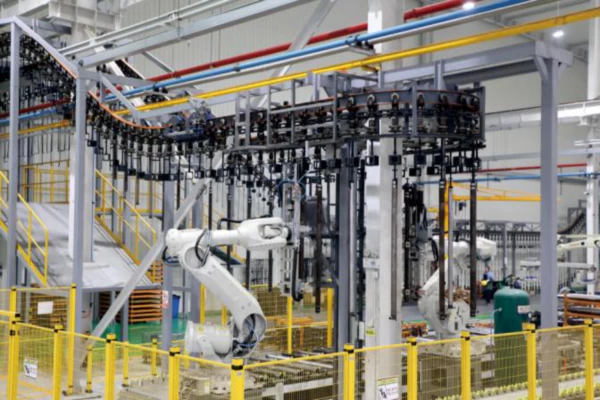
When we design a cylinder for an excavator arm or a bulldozer blade, we focus on three things: buckling strength, seal resilience, and impact resistance. Standard ST52 tubes are great, but for high-stress areas, we often upgrade to 27SiMn material which offers higher tensile strength without adding massive weight. The piston rod is the most vulnerable part. Most folks don’t realize that a standard chrome rod is basically a sponge for rock dings. Once the chrome is chipped, rust sets in, and it acts like sandpaper on your wiper seal. That’s why we insist on induction hardening for any exposed rod in the construction sector. It creates a hardened “skin” under the chrome that resists impact. If a rock hits it, it might dent, but it won’t flake.
Another critical aspect is the cushioning. When a boom comes down fast, you are dealing with massive kinetic energy. Without proper cushioning at the end of the stroke, you are essentially hammering the end cap off the cylinder barrel every time the operator bottoms out. We engineer progressive deceleration profiles into the cushion spears to bleed off that energy smoothly. It saves the welds, and frankly, it saves the operator’s back.
| پارامتر فنی | مشخصات استاندارد | Why It Matters (The “Old Pro” Take) |
|---|---|---|
| فشار کاری | 35 MPa (5000 PSI) | Construction spikes go way higher than industrial averages. You need that headroom. |
| جنس میله | 42CrMo4, Induction Hardened | Prevents the rod from bending when the operator uses the bucket as a pry bar. |
| کیتهای آببندی | Polyurethane + PTFE Buffer | The buffer seal protects the main U-cup from pressure spikes. Crucial for longevity. |
| دمای عملیاتی | -40 درجه سانتیگراد تا +110 درجه سانتیگراد | From Canadian winters to Australian summers, the oil viscosity changes drastically. |
| آبکاری | Double Chrome / Ni-Cr | Better corrosion resistance against road salts and fertilizer. |
SWOT Analysis: Strategic Positioning
نقاط قوت
- Extreme Durability: Designed for high-cycle fatigue and impact loads.
- سفارشی سازی: Ability to retrofit obsolete OEM cylinders with upgraded materials.
- Global Supply: Compatible with major brands like CAT, Komatsu, and JCB.
نقاط ضعف
- وزن: High-strength components are heavy, increasing shipping costs.
- زمان سرب: Custom induction hardening adds time to the production cycle.
فرصتها
- ادغام هوشمند: Growing demand for internal position sensors in automated grading.
- Remanufacturing: Increasing market for rebuilding large mining cylinders.
تهدیدها
- عملگرهای الکتریکی: Small-scale equipment moving to electric, though hydraulic still rules heavy lift.
- زنجیره تأمین: Fluctuations in chrome and high-grade steel pricing.
Where We Put the Pressure On (Application Scenarios)
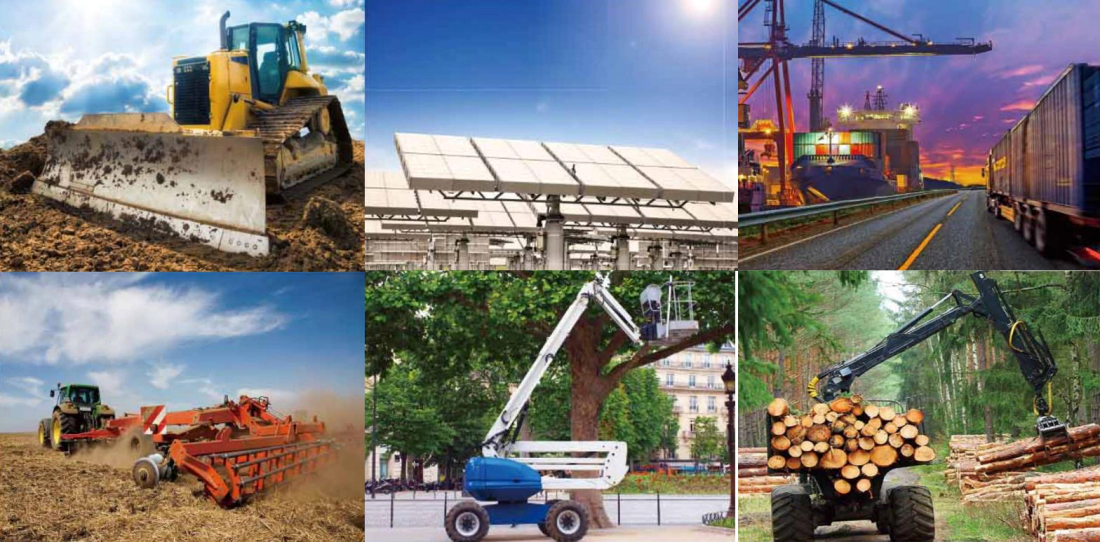
You will find our cylinders on the machines that build the world. The most demanding application is undoubtedly the Excavator Boom and Bucket. Here, the cylinder is constantly exposed to dirt falling directly onto the rod. If the wiper seal fails, the game is over. We also supply massive cylinders for جرثقیلهای متحرک (Outrigger cylinders). These are safety-critical; they hold the entire weight of the machine and the load. Zero drift is allowed. We use integrated pilot-operated check valves (PO Check) built directly into the cylinder port to ensure that even if a hose bursts, that outrigger isn’t moving an inch. Bulldozers are another beast—the tilt cylinders on a dozer blade take massive side loads when the operator is corner-cutting hard soil. We use oversized spherical bearings to handle that misalignment.
Trend Analysis: The Future is Smarter and Cleaner
In our experience, the days of the “dumb” iron cylinder are numbered. We are seeing a massive trend towards Electro-Hydraulic Cylinders. Operators want to set a dig depth on their screen and have the machine stop automatically. To do this, we drill the piston rod and install a magnetostrictive linear position sensor. It’s protected inside the cylinder, safe from rocks and water. Also, with stricter environmental regulations, “Green Hydraulics” is real. We are redesigning seal packages to be compatible with bio-synthetic fluids that break down harmlessly if spilled, which is becoming a requirement for government contracts in sensitive areas.
Case Study: Beating the Outback Dust
مشتری: RedEarth Civil Engineering | مکان: Western Australia | صنعت: ساخت و ساز جاده
چالش: RedEarth was running a fleet of motor graders in the Pilbara region. The dust there is incredibly fine and abrasive—basically iron ore powder. Their OEM steering cylinders were failing every 600 hours. The dust was getting past the standard wiper seals, mixing with the oil, and turning into a grinding paste that destroyed the rod and gland.
راه حل ما: We engineered a custom “Desert Spec” cylinder.
1. Rod Plating: We switched to a high-hardness Nickel-Chrome plating, which resists abrasion better than standard chrome.
2. آب بندی: We installed a double-lip polyurethane wiper with an external metal scraper ring to physically shear the mud crust off the rod before it hit the soft seal.
3. بلوز: We added a protective Kevlar boot over the rod.
نتیجه: The service life of the cylinders extended from 600 hours to over 3,000 hours. The client saved approximately $45,000 in downtime and parts in the first year alone.
“We were skeptical that a different seal would make such a huge difference, but Ever Power’s engineering team proved us wrong. These cylinders just don’t quit.”
– Mike T., Fleet Maintenance Manager
“Fast shipping to Australia was a surprise. Usually, we wait months for custom parts. They had them on the plane in 4 weeks.”
– Sarah J., Procurement Specialist
“The metal scraper ring was the game changer. Simple idea, but OEM cylinders didn’t have it. It saved our rods.”
– Dave R., Lead Mechanic
Factory Direct: We Build What You Need
Here is the thing: we aren’t just a warehouse. We are a manufacturer. That means if you have an old excavator from the 90s and the OEM stopped making parts ten years ago, we can reverse engineer that cylinder. You send us the dimensions (or the broken unit), and we build a drop-in replacement that often performs better than the original because we use modern sealing technology. We have CNC machining centers capable of handling cylinders up to 10 meters long. We don’t just assemble; we hone the tubes, we weld the ports, and we pressure test every single unit to 120% of rated capacity.
FAQ: Your Questions, Answered Honestly
How much does a custom replacement hydraulic cylinder cost for a CAT excavator in the Midwest?
It really depends on the tonnage and the specific bore size, but typically, for a standard boom or arm cylinder in the US market, you are looking at a range between $1,200 and $4,500. If you need specialized induction hardening for rock work, the price ticks up a bit, but it is cheaper than OEM dealer markups.
What is the typical lead time for a custom construction cylinder order to Australia?
For our Australian clients in mining and construction, we usually turn around custom designs in about 4-5 weeks, including shipping. We know downtime kills your profit margin, so we prioritize air freight options for urgent breakdown replacements.
Why is my loader bucket cylinder drifting down when the machine is turned off?
That is the classic sign of internal bypass. The piston seal has likely worn out or been scored by contaminants, allowing oil to leak from the high-pressure side to the low-pressure side. It’s rarely the valve bank if the drift is slow and steady; it’s almost always the cylinder seal integrity.
Can you manufacture cylinders that use biodegradable hydraulic fluids for eco-sensitive sites?
Absolutely. We see this requirement a lot in forestry and wetland construction projects now. We just swap the standard NBR seals for Viton (FKM) or specific polyurethane blends that won’t degrade or swell when exposed to vegetable-based or synthetic bio-oils.
Where can I find a supplier for heavy-duty cylinders with integrated linear position sensors?
You are in the right place. We integrate magnetostrictive sensors directly into the cylinder rod for smart excavators and automated grading systems. This gives your machine’s computer real-time feedback on exactly where the bucket is without external linkages that can break.