You know that feeling when you’re standing next to a 12-ton vibratory roller, and the ground is shaking so hard your teeth rattle? That is the power of controlled chaos. But inside that drum, there is a small, unsung hero working in conditions that would tear most hydraulic components apart in an afternoon. I’m talking about the vibration amplitude adjustment cylinder. In my 18 years of digging into failed compaction systems, I’ve seen more melted seals and cracked welds on these specific cylinders than almost any other part of the machine. Why? Because most people treat them like standard static cylinders, and that is a recipe for downtime.
The job of this cylinder is to shift the eccentric weights inside the drum, changing the vibration from low amplitude (for thin layers) to high amplitude (for deep compaction). It sounds simple until you realize this cylinder is riding inside a drum spinning at 3,000 RPM, vibrating at 50Hz, and baking in temperatures that can exceed 100°C. Standard seals fail here because of “hysteresis heat”—basically, the rubber can’t flex fast enough, it gets hot, and it shreds. That’s why we had to throw out the rulebook and design a welded alloy steel solution specifically for this high-frequency torture chamber. We aren’t just moving oil; we are surviving the shake.
👀 Step Inside Our High-Tech Facility
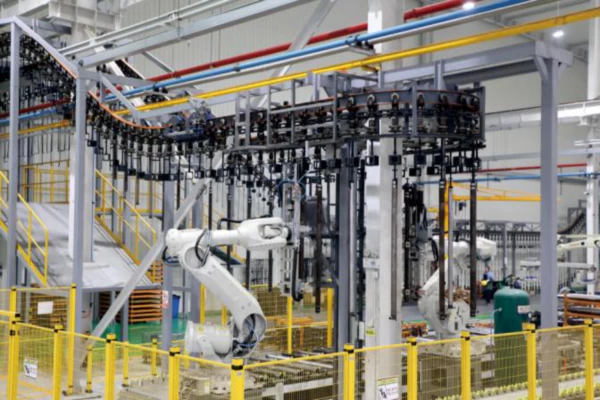
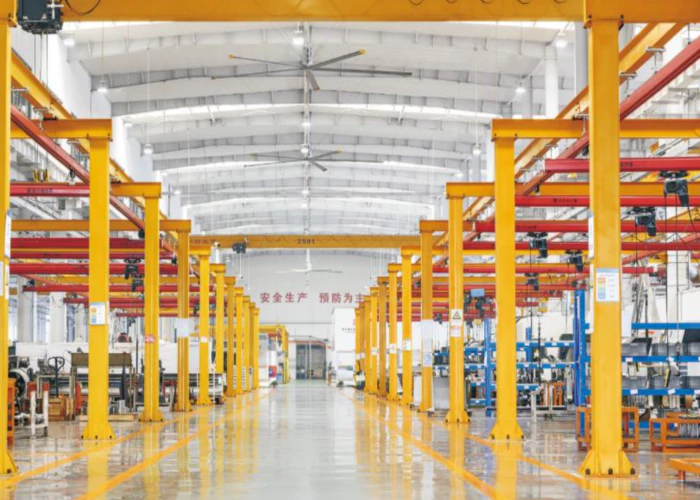
We don’t just talk about quality; we want you to see the specialized welding robots and seal installation stations we use for these heavy-duty components. We’ve set up a full Virtual Reality tour. You can walk the production line right now without leaving your desk.
The “Seal Meltdown” Phenomenon
Let’s get a bit technical, but keep it practical. The number one failure mode we see isn’t the rod bending; it’s the seal disappearing. When a cylinder is subjected to high-frequency vibration, even if the piston isn’t “moving” in terms of stroke, the micro-movements (dithering) create massive friction. Most printers/manufacturers use standard NBR (Nitrile) seals. In a vibration drum, NBR turns into a sticky black goo within 500 hours.
The trick we use is a filled-PTFE (Teflon) and Bronze composite for the piston seal, backed by a high-temp Viton energizer. PTFE has an incredibly low coefficient of friction and doesn’t generate heat as rubber does. Combined with a super-polished chrome rod (Ra < 0.2), this setup allows the cylinder to “float” through the vibrations without destroying itself. It costs a little more upfront, but compared to tearing down a drum to replace a $5 seal? It’s a no-brainer.
Material Science: Why We Weld Alloy Steel
Vibration is basically a fatigue test that never ends. Standard tie-rod cylinders have no business being inside a roller drum; the nuts will back off in an hour. Even standard welded cylinders made of 1045 (45#) steel can develop stress cracks at the base weld after a few million cycles. We switched to Q355 or 42CrMo alloy steel for our vibration series. This material has a higher yield strength and better fatigue resistance. We use a specialized submerged arc welding process that ensures deep penetration, making the base and the barrel essentially one piece of metal.
Technical Specifications: Built for the Bounce
We don’t believe in “one size fits all,” but we do have a “Gold Standard” configuration that works for 90% of the rollers out there (Sany, XCMG, Dynapac replacements). Here is what under the hood:
| Característica | Detalles de la especificación |
|---|---|
| Tipo de cilindro | Double-Acting Piston / Fully Welded Structure |
| Material del cañón | High-Strength Alloy Steel (Q355D / 42CrMo) |
| Superficie de la varilla | Hard Chrome (>30μm), Polished to Ra 0.2, Salt Spray > 96h |
| Sistema de sellado | PTFE + Bronze Slide Ring (Low Friction / High Temp) |
| Vibration Resistance | Rated for continuous operation at 30-55 Hz |
| Presión de trabajo | 16 MPa – 25 MPa (System Dependent) |
| Montaje | Integrated Trunnion or Spherical Bearing (Maintenance Free) |
Application Scenarios: Inside the Belly of the Beast
These cylinders are typically mounted axially or radially inside the drum. Their primary function is Amplitude Adjustment. By extending or retracting, they move a sliding block or a flow valve that changes the position of the eccentric weights. This allows the operator to switch between “High Amplitude” (for thick lifts of rock or clay) and “Low Amplitude” (for finishing asphalt layers).
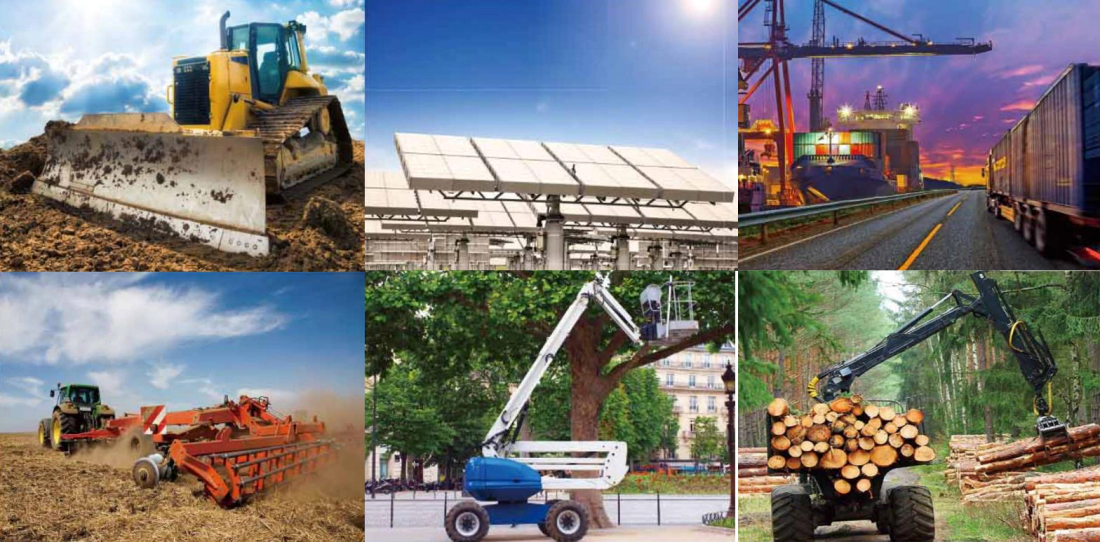
We also see these cylinders used in Oscillatory Drums, where the motion is tangential rather than vertical. The lateral forces there are even higher, requiring us to upgrade the rod eye bearings to heavy-duty, self-lubricating composites because grease fittings are impossible to reach inside a sealed drum.
SWOT Analysis: The Alloy Cylinder Advantage
To give you a balanced view—because I’m an engineer, not just a salesman—here is how our product stacks up in the market.
Fortalezas
- Fatigue Life: Alloy steel weldments resist cracking under 50Hz vibration.
- Heat Handling: PTFE seals survive temperatures that melt rubber.
- Diseño: Compact welded body fits tight drum spaces.
Debilidades
- Costo: Higher initial price than standard carbon steel units.
- Repair: Welded units are harder to service (cut-open required) than the tie-rod.
Oportunidades
- Retrofitting older fleets with reliable components.
- Emerging “Smart Compaction” markets requiring sensors.
Amenazas
- Electric linear actuators are attempting to replace hydraulics.
- Low-quality knockoffs using standard NBR seals.
Customer Success Story: Paving the Outback
A couple of years ago, we connected with Outback Road Services, a contractor in Western Australia. They were working on a highway extension in temperatures hovering around 45°C. Their rollers (a mix of older European brands) were blowing amplitude cylinders every 200 hours. The combination of ambient heat, drum heat, and vibration was cooking the seals. They were carrying crates of spares just to keep the job going.
We analyzed their failed units. The chrome was scored from dry friction. We engineered a custom batch of cylinders using our High-Temp PTFE/Bronze seal kit and increased the chrome plating thickness to 50 microns to handle the dust ingress during maintenance. The result? They ran the entire remaining 18 months of the project without a single cylinder failure in the vibration system. The maintenance manager told me the savings in downtime alone paid for the cylinders ten times over.
La voz del cliente
“I didn’t think a seal change would make that much difference, but these cylinders run cooler. We checked the case temp, and it dropped by 15 degrees.”
– Mark D., Workshop Lead, Perth
“Fitment was spot on. Usually, with aftermarket parts, you have to grind a bracket or something. These slid right into the eccentric housing.”
– Carlos R., Fleet Manager, Brazil
“We needed a custom stroke length for a modified drum. Ever Power turned it around in 3 weeks. Impressive.”
– Sarah J., Procurement, USA
Trend Analysis: Intelligent Compaction
The industry is moving beyond simple “High/Low” settings. The future is Variable Infinite Amplitude. We are now manufacturing cylinders with integrated linear position sensors (LDTs) built right into the rod. This allows the roller’s computer to adjust the vibration amplitude on the fly based on the stiffness of the ground beneath it. If the ground is soft, it hits harder; as it compacts, it backs off to prevent over-compaction. Our cylinders are “Sensor-Ready,” meaning the rods are gun-drilled to accept these probes whenever you decide to upgrade your system.
Customization: We Build What You Need
Standard parts are great, but sometimes you have a modified drum, or you are resurrecting a 20-year-old machine where the manual is long lost. That is our playground. You send us the dimensions—or better yet, the broken cylinder—and we reverse engineer it. We can upgrade the materials, change the port locations to make hose routing easier, or beef up the mounting eyes.
Preguntas frecuentes (FAQ)
We get these questions every day from mechanics and site managers. Here are the honest answers.
Why do standard hydraulic seals fail so quickly in road roller vibration drums?
It is usually due to the “dithering” effect caused by high-frequency vibration (30-50Hz). Standard rubber seals can’t keep up with the micro-movements, generating immense friction heat that literally melts the seal face.
Can you manufacture replacement amplitude cylinders for Hamm or Bomag rollers?
Yes, we specialize in reverse engineering. We can build drop-in replacements that match the OEM mounting dimensions exactly but feature upgraded alloy steel bodies and high-temp seals for longer life.
What is the typical lead time for a custom vibration adjustment cylinder?
For custom specs involving specific alloy welding and chrome plating, we generally look at a 20 to 25-day production cycle. We know downtime hurts, so we prioritize these critical components.
Do you ship heavy compaction equipment parts to construction sites in Australia?
Absolutely. We handle the logistics globally, including sturdy crating for sea freight to ensure the polished rods arrive in perfect condition at sites in Australia, the USA, or Europe.
How does the alloy steel body improve the cylinder’s performance?
Vibration causes metal fatigue. Standard carbon steel can develop stress cracks around the welds over time. We use high-strength alloy steel that absorbs the vibrational energy without yielding, preventing catastrophic barrel failure.
Stop The Leaks. Start The Compaction.
Don’t let vibration kill your productivity. Upgrade to Alloy Steel today.