Why Your Single-Acting Cylinder Strategy Might Be Costing You Down Time
Let’s cut right to the chase here. After spending nearly two decades on the shop floor and in design meetings (feels like a lifetime, doesn’t it?), I’ve noticed a recurring pattern with OEMs and aftermarket buyers alike. Everyone underestimates the humble Single-Acting Cylinder. They look at the spec sheet, see one port, and think, “Oh, it’s the cheap option, just throw it in.” But here’s the thing—simplicity is deceptive. When you are dealing with a 50-ton dump truck bed or a high-cycle scissor lift, that “simple” gravity return mechanism is the difference between a profitable shift and a hydraulic nightmare. We’ve seen guys try to retrofit double-acting units where they don’t belong, complicating the plumbing for no reason, or worse, under-speccing the spring return force on a single-acting unit, resulting in a cylinder that just… hangs there. It’s frustrating because the physics are straightforward, yet the application nuances are where projects die. In my experience, the seal friction coefficient in a single-acting setup is actually más critical than in double-acting systems because you don’t have hydraulic pressure on the retraction side to overcome a sticky seal. You’re relying on the load or a spring. If that seal swells even 5% due to thermal expansion or incompatible fluid? You’re stuck. Literally.
The Engineering Reality: Mechanics & Materials
When we talk about the internal architecture, we aren’t just talking about a tube and a rod. The magic happens in the guide tape and the wiper seal. For a Single-Acting Cylinder, the extension is powered by hydraulic fluid entering the cap end, pushing the piston. Easy enough. But the retraction? That’s where the engineering pedigree shows up. Whether it’s load-return (gravity) or spring-return, the internal surface finish of the barrel must be impeccable—we aim for Ra 0.4μm or better. Why? Because without oil pressure to force the piston back, any mechanical resistance becomes a major enemy. I remember a batch of cylinders from a generic supplier (won’t name names, but you know the type) where the honing variance was just slightly off. The cylinders extended fine, but on a cold morning in Minnesota, the oil viscosity combined with that rougher surface meant the dump beds wouldn’t come down. Panic city. We solved it by switching to a custom polyurethane seal profile with lower breakout friction and re-honing the barrels. It’s these invisible details that define quality.
| Parámetro técnico | Especificaciones estándar (Ever Power) | Impacto en el rendimiento |
|---|---|---|
| Material del cañón | ST52 / E355 Honed Tube | Ensures structural integrity under high pressure (up to 350 bar). |
| Varilla del pistón | CK45, Hard Chrome Plated (20-30μm) | Crucial for corrosion resistance, especially in outdoor single-acting applications. |
| Temperatura de funcionamiento | -30°C to +100°C | Viton seals are available for higher temp ranges in steel mill applications. |
| Carrera máxima | Custom (up to 6000mm) | Long strokes in single-acting require precise buckling calculations. |
SWOT Analysis: Is This The Right Component?
It’s not always about buying the most expensive gear; it’s about fit. We often sit down with design engineers who are torn between single-and double-acting systems. To help you visualize the decision-making process (and because I love a good chart), here is a strategic breakdown of the Single-Acting Cylinder in modern industrial applications.
Fortalezas
- Cost Efficiency: Fewer ports, fewer hoses, simpler valving reduce BOM cost significantly.
- Seguridad: In gravity-down applications, a loss of power brings the load down naturally (if valved correctly).
- Sencillez: Less seal maintenance is required on the non-pressurized side.
Debilidades
- Retraction Control: You cannot control the retraction speed as precisely without counterbalance valves.
- Stalling: If the seals degrade or debris enters, the spring/gravity force may not overcome friction.
- Fluid Hygiene: The breather port can suck in contaminants if not filtered properly.
Oportunidades
- Smart Integration: Embedding linear position sensors inside single-acting units for automated leveling.
- Material Science: New polymer bearings reducing weight in mobile crane outriggers.
Amenazas
- Actuadores eléctricos: Small-scale applications (< 1 ton) are moving to electric linear actuators.
- Cadena de suministro: Volatility in chrome and raw steel prices is affecting large-volume orders.
Where We See Them Shine (And Fail)
Context is everything. You wouldn’t use a sledgehammer to crack a nut, right? (Well, maybe some of you would). The most common application we service is the mobile lifting sector—think forklifts and scissor lifts. Here, the load itself provides the return force. It’s elegant engineering. However, the trend is shifting towards agricultural machinery. We’ve seen a massive uptick in single-acting cylinders used in plow adjustment and trailer tippers. The mistake many people make here is ignoring the “breather” on the non-oil side. If that breather gets clogged with mud—which happens constantly in farming—the cylinder creates a vacuum lock and won’t extend. We solved this for a client by designing a custom shielded breather cap that allows airflow but blocks particulate matter down to 10 microns. It’s a small plastic part, but it saved them thousands in warranty claims.
Future Trends: It’s Getting Smarter
Looking ahead to 2026 and beyond, the “dumb” iron cylinder is evolving. We are currently prototyping single-acting units with integrated IoT sensors that monitor pressure spikes and cycle counts. This is huge for predictive maintenance. Instead of waiting for a seal to blow out on a remote construction site, the fleet manager gets an alert that the pressure curve on retraction is looking funky (indicating increased friction). Also, lightweighting is king. High-strength aluminum alloys are replacing steel in the barrel construction for lower-pressure (under 200 bar) applications to save weight on EVs and mobile platforms. If you aren’t looking at weight reduction yet, you’re already behind the curve.
Case Study: Conquering the Chilean Dust
Cliente: Atacama Lithium Logistics (Mining Sector)
Ubicación: Chile
El desafío: This one was a beast. Atacama was running a fleet of side-tipper trailers to transport lithium salts. The environment is arguably the driest, dustiest place on Earth. Their existing OEM single-acting telescopic cylinders were failing every 3 months. The fine salt dust was bypassing the standard wiper seals, mixing with the hydraulic fluid, and turning the oil into a grinding paste. It chewed up the chrome plating and destroyed the main seals. Downtime was costing them roughly $12,000 per day per truck.
Nuestra solución: We didn’t just replace the cylinder; we re-engineered the defense system.
- Chrome Plating: We increased the chrome thickness on the stages from 25μm to 50μm with a double-layer process for extreme hardness.
- Seal Technology: We swapped the standard NBR wipers for a custom-molded, dual-lip polyurethane aggressive scraper. The first lip breaks the salt crust; the second wipes the microscopic dust.
- Bellows: We installed a protective concertina boot over the exposed stages.
El resultado: The service life of the cylinders extended from 3 months to over 18 months. The client reduced their maintenance fluid spend by 40% because the oil stayed clean.
What the Customer Said:
“We thought we just had to live with cylinder failures as the cost of doing business in the desert. The team at Ever Power showed us that the right seal configuration changes everything. These cylinders are bulletproof now.”
– Miguel R., Fleet Maintenance Director
“Fast quoting, faster delivery. The custom dimensions were spot on, dropped right into our existing mounts without welding. That saved us a week of retrofitting.”
– Alejandro G., Procurement Lead
“A supplier that actually picks up the phone and discusses technical specs? Rare these days. Their engineering input on the pressure ratings was invaluable.”
– Sarah T., Operations Manager (International Division)
Factory Direct: Customization is Our Standard
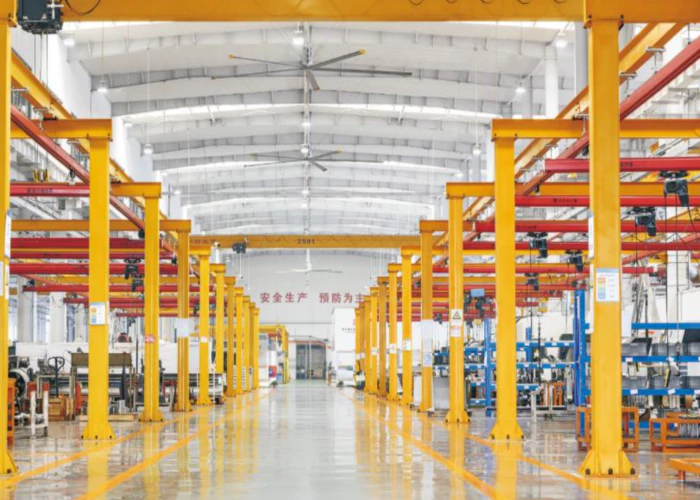
Here is the part where I brag a little bit about our shop. Most “manufacturers” you find online are just trading companies. We actually cut the metal. We have CNC machining centers capable of handling bores from 40mm up to 800mm. Custom mounting styles? Trunnion, clevis, flange, or some weird bracket you sketched on a napkin? We can do it. We understand that in the aftermarket world, “standard” rarely fits. Our lead time for custom prototypes is often faster than the big guys take to reply to an email. We pressure test 100% of our cylinders—no batch testing here. If it leaves our dock, it holds pressure.
No te fíes solo de mi palabra.
We believe in radical transparency. You can walk through our production lines, check out our honing machines, and see the assembly area right now from your browser.
👉 Click Here to Visit Our VR Factory
Experience the precision firsthand.
Frequently Asked Questions (Real Talk)
We get these questions every day on the support line, so I figured I’d answer them here to save you some time.
How much does a custom single-acting cylinder cost for agricultural loaders in the Midwest?
Honestly, it depends on the bore size and stroke length, but typically for US farming equipment, you’re looking between $200 and $600 per unit. If you need custom mounts or specialized seals for fertilizer resistance, that adds a bit, but we are usually 20% cheaper than OEM replacements.
Where can I find a supplier who ships hydraulic cylinders quickly to Canada or the UK?
We ship globally every week! For Canada and the UK, our logistics partners usually get standard orders delivered within 10-14 days. If it’s a rush breakdown situation, we have air freight options that can cut that time in half, though it costs a premium.
What is the best way to determine if my single-acting cylinder needs a rebuild or replacement?
Check the chrome rod first. If you see deep scratches or pitting, a simple seal kit won’t fix it; you need a new rod or a full replacement. If the rod is smooth but it’s leaking externally, a rebuild kit is usually the most cost-effective move.
Which hydraulic fluid viscosity should I use for cold weather operation in single-acting cylinders?
This is the #1 killer of single-acting performance! In freezing temps, standard ISO 46 turns to syrup and won’t let the cylinder retract by gravity. Switch to a lower viscosity ISO 32 or a synthetic multi-grade fluid to ensure that gravity return works smoothly in winter.
When should I choose a plunger cylinder over a standard piston style for my application?
Go with a plunger (displacement) style if you are lifting vertically and want maximum durability. Since there’s no piston seal to wear out against the barrel, they are incredibly rugged for dirty environments, but remember they only work if the rod diameter is sufficient to lift the load.
Ready to Upgrade Your Hydraulic Setup?
Don’t let a $50 seal failure cost you a $50,000 contract. Let’s build something that lasts.