Why the Double-Acting Hydraulic Cylinder is Still the King of Control
If I had a nickel for every time a client asked me, “Why can’t we just use a gravity return here to save money?” I’d probably be retired on a boat somewhere. But here we are, talking about the workhorse of the industry: the Double-Acting Hydraulic Cylinder. In my 18+ years of crawling under excavators and sketching on napkins with maintenance managers, I’ve learned that while single-acting units have their place, the moment you need precision, speed control, or power in both directions, you stop messing around and go double-acting. It’s not just about pushing and pulling; it’s about dominating the load. We’ve seen too many retrofits fail because someone tried to rely on a spring return in a horizontal application where friction simply won the battle. When you are dealing with a 3,000 PSI system, you want hydraulic fluid doing the work on both sides of that piston, not hope and gravity.
The beauty of this design lies in its inherent contradiction: it is mechanically simple yet hydraulically complex to balance. You have two ports—one at the cap end, one at the rod end. Simple, right? But the fluid dynamics inside are where the magic happens (or the headaches start). Most printers and generic manufacturers don’t realize that the retraction force is always less than the extension force because the rod itself occupies volume on the piston face. It’s basic physics, sure, but you’d be surprised how often this gets overlooked in sizing calculations, leading to a cylinder that can push the load out but stalls trying to pull it back in.
Under the Hood: It’s All About the Seal Geometry
Let’s get technical for a minute—but not boring. The heart of a Double-Acting Hydraulic Cylinder isn’t the steel tube; it’s the piston seal package. In a single-acting setup, if the seal leaks a tiny bit, maybe you lose some holding power. In a double-acting setup, internal bypass (or “drift”) is the enemy. We utilize a five-piece seal arrangement in our heavy-duty lines: a central energizer, the main sealing element, and anti-extrusion rings. Why? Because when you switch from extension to retraction, the pressure spike can be violent. We’ve seen cheap “O-ring only” pistons blow out after 200 cycles in high-shock applications like log splitters or shears.
Another thing to watch is the barrel honing. We aim for an Ra value (roughness average) of 0.4 microns or better. If the tube is too smooth, the oil film wipes away completely, and you get seal friction burn. If it’s too rough, it acts like sandpaper. It’s a Goldilocks zone. The trick is using a cross-hatch honing pattern that retains just enough microscopic oil to lubricate the seal as it travels back and forth. This is critical in double-acting cylinders because the seals are under pressure 100% of the time, unlike single-acting units that get a “rest” on the return stroke.
| Característica | Standard Material / Spec | Why It Matters (Engineer’s Note) |
|---|---|---|
| Barril de cilindro | ST52.3 / E355 Honed Steel | High yield strength prevents “ballooning” under pressure spikes. |
| Varilla del pistón | CK45 Hard Chrome (25μm min) | Chrome must be micro-cracked to hold oil; too shiny = seal squeal. |
| Kit de juntas | Hallite / Parker / Nok (PU + PTFE) | Polyurethane is tough, but PTFE glides. We mix them for longevity. |
| Presión de trabajo | Standard 210 Bar (3000 PSI) | Tested at 1.5x nominal pressure to ensure safety factor. |
| Estilo de montaje | Clevis, Flange, Trunnion, Foot | Trunnions allow pivoting, crucial for non-linear load paths. |
SWOT Analysis: Is Double-Acting Right for You?
Before you click that “buy” button or send over a PO, let’s look at the strategic fit. I always tell my junior engineers to run a mental SWOT on every component choice.
Fortalezas
- Control: Precise movement in both directions. No relying on load weight.
- Versatility: Works horizontally, vertically, or upside down.
- Speed: Faster cycle times since you can pump oil to retract quickly.
Debilidades
- Complejidad: Requires more hoses, valves, and fluid volume than single-acting.
- Force Differential: Retract force is weaker due to rod volume (physics is stubborn).
Oportunidades
- Automatización: Easy to integrate with linear position sensors for smart factories.
- Efficiency: New regenerative circuits can reuse retraction oil to speed up extension.
Amenazas
- Actuadores eléctricos: Getting stronger and cleaner, threatening low-force hydraulic markets.
- Contaminación: More ports = more entry points for dirt if not properly filtered.
Where is the Technology Going?
You might think hydraulics is a stagnant field (“if it ain’t broke…”), but we are seeing a massive shift toward “Smart Cylinders.” We are increasingly embedding linear magnetostrictive transducers directly into the rod of double-acting cylinders. This allows the machine controller to know the piston position within 0.1mm. It’s a game-changer for automated grading and robotics. Also, lightweight materials are trending. Carbon fiber wrapping on aluminum liners is starting to appear in mobile applications where weight is money, though for now, good old steel is still the king of durability.
Case Study: The Canadian Forestry Challenge
Cliente: NorthEdge Timber Solutions | Location: British Columbia, Canada
El problema: NorthEdge was running a fleet of grapple yarders in the dead of winter (-35°C). Their OEM double-acting cylinders were failing catastrophically. The standard chrome plating was cracking under the impact of frozen logs, and the seals were becoming brittle, leading to massive internal bypass. A drifting grapple meant dropped logs, which is a huge safety hazard.
La solución: We didn’t just sell them a replacement; we re-engineered the application.
- We switched the rod material to Induction Hardened Chrome (IHCP) to resist impact damage from swinging logs.
- We swapped the standard nitrile seals for Low-Temp Polyurethane specifically compounded to remain flexible down to -50°C.
- We added a heavy-duty wiper with a brass scraper to shave off ice before it entered the gland.
El resultado: Downtime dropped by 85% in the first season. The cylinders have now run for 18 months without a single seal failure.
“We were changing cylinders every three weeks. Ever Power’s solution lasted the whole season. The ROI was immediate.”
– Mike T., Fleet Manager
“Finally, a supplier that understands ‘cold’ doesn’t mean Florida cold. Real industrial grade stuff.”
– Sarah J., Procurement Lead
“The custom dimensions were spot on. Dropped right into the mounting ears. Saved us hours of welding.”
– Dave R., Chief Mechanic
Factory Direct: We Don’t Just Stock, We Create
Here’s the thing about the hydraulic market: there are a lot of middlemen. We aren’t one of them. We have our own CNC machining centers, skiving machines, and friction welders. This means if you need a non-standard stroke of 1452mm because your machine designer was feeling creative, we can build it. We offer full customization on port locations (SAE, NPT, BSPP), mounting styles, and paint specs (epoxy for marine, anyone?). We pressure test every single double-acting cylinder that leaves our floor. No batch testing. If it says “Ever Power,” it’s been pushed to the limit before you ever touch it.
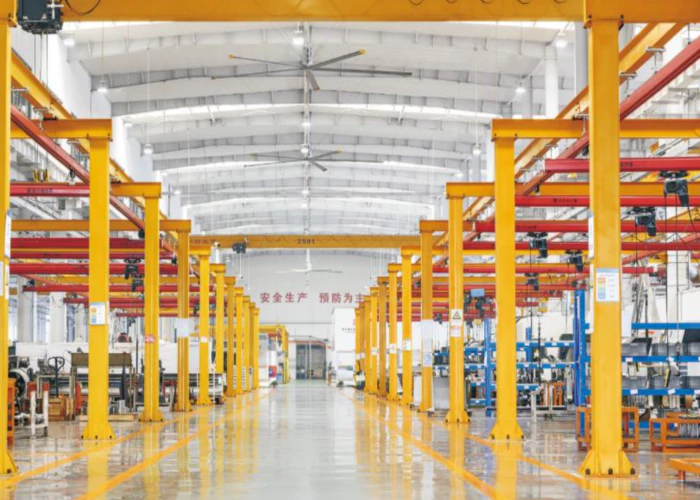
Want to See Where Your Cylinders Are Born?
We believe in transparency. Walk through our production line virtually and see our quality control in action.
FAQs: Answering Your Real-World Questions
I’ve collected some of the most frequent questions I get on sales calls and support emails. Let’s clear the air.
How do I calculate the retraction force difference for a double-acting cylinder?
It’s a classic question we get from shop floors in the Midwest. You have to subtract the rod area from the piston area before multiplying by your PSI. Most people forget the rod takes up space! Retraction is always weaker than extension.
Can you manufacture a custom double-acting replacement for a CAT excavator in Australia?
Absolutely. We ship to Australia regularly. We just need the pin-to-pin length, bore, stroke, and rod diameter. We can usually reverse engineer it to meet or exceed OEM specs, often with better seal kits.
What is the price range for a heavy-duty double-acting cylinder supplier?
It varies wildly based on tonnage, but for a standard industrial setup, you might be looking at $300 to $800. Custom, high-pressure units for mining can go higher. The best bet is to send us a sketch for an instant quote.
Why is my double-acting cylinder drifting when the valve is in neutral?
That’s almost always internal bypass. The piston seal is shot, allowing oil to leak from the high-pressure side to the low-pressure side. It could also be the control valve, but in my experience, check the cylinder seals first.
Which seal material is best for high-temperature hydraulic applications in Texas oil fields?
Standard Polyurethane won’t cut it there. You need Viton (FKM) seals. They handle the heat and the aggressive chemical additives in fire-resistant fluids much better. We can spec those in any custom build.