Why Your Crawler Crane’s Counterweight System Jams: The “Wide Guiding” Solution for Dutch Heavy Lifting
You know the sound. It’s that high-pitched metallic screech followed by a heavy thud that reverberates through the entire chassis of a 600-ton crawler crane. You are trying to extend the superlift counterweight tray to increase your load radius, and the movement is jerky, erratic, or completely stuck. In my 18 years of crawling under heavy machinery—often knee-deep in the mud of a Dutch polder—I’ve seen more damaged sliding cylinders than I care to count. Most operators blame the grease or the rollers, but nine times out of ten, the culprit is the cylinder design itself, failing to handle the massive side loads.
The reality of operating in the Netherlands, with our soft soil conditions and constant demand for heavy infrastructure work (like the massive wind farm projects off the coast), is that equipment gets pushed past the theoretical limit. A standard hydraulic cylinder is designed to push and pull in a straight line. But a counterweight sliding cylinder? It’s basically a structural member that happens to move. It has to endure immense bending forces (moments) because the heavy counterweight tray rarely slides perfectly parallel. This creates what we call “eccentric wear”—where the piston rod rubs hard against one side of the gland, destroying the seals and scoring the rod.
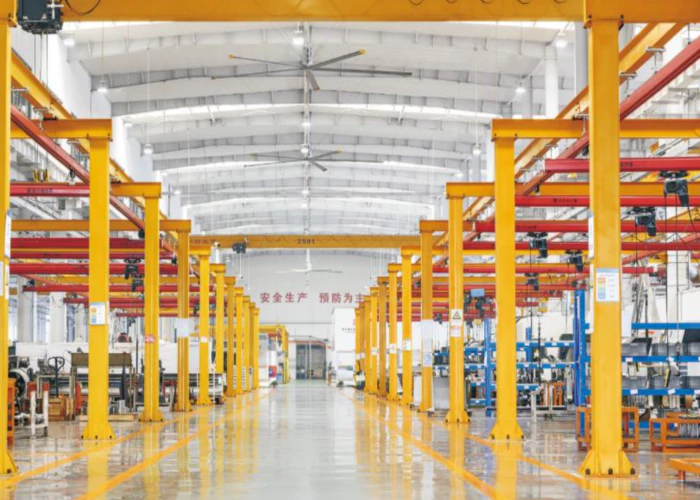
Before we dig into the metallurgy and the “wide guiding” geometry that fixes this, I want to show you exactly where we build these beasts. We believe in transparency, so we opened up our facility for a virtual tour.
Most printers and catalog suppliers don’t realize that simply making the rod thicker isn’t the answer. The trick is actually in the internal geometry. We’ve developed a Cilindro de pistón de doble efecto specifically for this sliding application that features an extended guide distance. Think of it like holding a sledgehammer: if your hands are close together near the bottom of the handle, it’s hard to control the head. If you spread your hands apart, you have leverage. We spread the wear rings inside the cylinder apart, increasing the distance between the piston bearing and the rod gland bearing. This distributes that killer side load over a larger area, preventing the rod from bowing and saving your seals from early failure.
The Engineering Fight: Alloy Steel vs. Dutch Weather
Let’s talk about the environment. Whether you are in the port of Rotterdam or on a barge in the IJsselmeer, salt and moisture are the enemies. A standard chrome rod will develop micro-cracks over time. Once that salty air gets into those cracks, the steel underneath rusts, expands, and flakes the chrome off. It’s a disaster for a cylinder that has long stroke lengths (often 2 to 4 meters) exposed to the elements.
In our experience, standard St52 steel tubing just doesn’t cut it for the long, unsupported spans seen in counterweight sliders. We upgraded to welded high-strength alloy steel (typically 27SiMn or modified 42CrMo). But the real game-changer is the plating. We don’t just use hard chrome; we often recommend a Nickel-Chrome (Ni-Cr) overlay. The nickel layer acts as a sealant, impervious to corrosion, while the chrome provides the surface hardness needed to resist scratching from grit and sand. It costs a bit more upfront, but when you consider the cost of downtime on a rental crane (which can run thousands of Euros per hour), it’s the cheapest insurance you can buy.

Strategic Analysis: Why Use Specialized Sliding Cylinders?
We are constantly analyzing why some OEM cylinders fail while ours keep running. It usually comes down to “fit for purpose” engineering. Here is a SWOT breakdown of our specialized counterweight cylinders compared to standard market options:
Fortalezas
- Wide Guiding System: Reduces contact pressure on seals by 40% under side loads.
- Ni-Cr Plating: 1000+ hours salt spray resistance (vital for Dutch coastal work).
- Welded Construction: High structural rigidity compared to tie-rod designs.
Debilidades
- Costo inicial: Higher than standard agricultural-grade cylinders due to material quality.
- Peso: Heavier construction reduces net lifting capacity slightly (negligible for large cranes).
Oportunidades
- Wind Energy Boom: Increasing demand for 600t+ cranes for turbine maintenance in Flevoland and the North Sea.
- Refurbishment Market: Upgrading older fleets (Liebherr/Demag/Kobelco) with modern, durable cylinders.
Amenazas
- Sustitutos genéricos: Low-cost cylinders lacking internal guiding, leading to rapid failure and safety risks.
- Cadena de suministro: Fluctuaciones en la disponibilidad de aceros aleados de alto grado.
Case Study: Saving a Wind Farm Project in Zeeland
A major foundation contractor (let’s call them “DutchDeep Foundations” to respect privacy) was working on a tight deadline for an onshore wind farm in Zeeland. They were using a 500-ton crawler crane with a variable counterweight tray. The soil was softer than anticipated, causing the crane to sit slightly off-level. This slight angle meant that every time they extended the counterweight, the cylinders were fighting gravity y friction.
Two weeks into the project, the original OEM cylinders seized. The rods had bent due to the side loading. The project manager was furious—every day the crane sat idle cost them massive penalties.
The Intervention:
They contacted us on a Tuesday. By reviewing their load charts and the physical constraints, we proposed our “Heavy-Duty Sliding Series” with the extended guide bushing modification. We expedited the manufacturing of two custom units.
El resultado:
The new cylinders were installed within 10 days. The “Wide Guiding” design handled the off-level operation effortlessly. The crane finished the project without a single hitch in the ballast system. The maintenance chief later told me, “I’ve never seen a rod stay this smooth after a winter in Zeeland.”
Voces desde el campo
“We used to grease our slide rails three times a day, trying to stop the cylinders from shuddering. Since switching to these wide-guide units, the movement is buttery smooth. It’s a relief.”
– Kees v.d. Berg, Senior Crane Operator
“The pricing was fair, but the technical knowledge was what sold me. They understood the ‘cantilever effect’ immediately. Delivery to Amsterdam was right on schedule.”
– Anouk Jansen, Procurement Manager
“In the rental business, durability is cash. These cylinders have outlasted the OEMs by two years so far. The nickel plating is worth every cent.”
– Liam Smit, Fleet Maintenance Director
Technical Specs: What Makes It Work?
We don’t rely on magic; we rely on physics. The key parameter here is the ratio between the rod extension and the guide length. Here is what you will find under the hood of our Counterweight Sliding Cylinders:
| Característica | Detalles de la especificación |
|---|---|
| Tipo de cilindro | Double-Acting Piston / Heavy Duty Welded |
| Guiding Technology | Extra-Wide Bronze/Composite Wear Rings (High Side-Load Capacity) |
| Material de la varilla | 42CrMo4 (Quenched & Tempered) + Nickel-Chrome Plating |
| Stroke Lengths | Customizable up to 6000mm (common range 1500-3500mm) |
| Presión de trabajo | 250 Bar (Rated) / 350 Bar (Test) |
| Sistema de sellado | Parker / Merkel (Heavy Duty Wipers for Sand/Grit exclusion) |
| Montaje | Self-Aligning Spherical Bearings (GE series) |
Beyond the Superlift: Other Applications
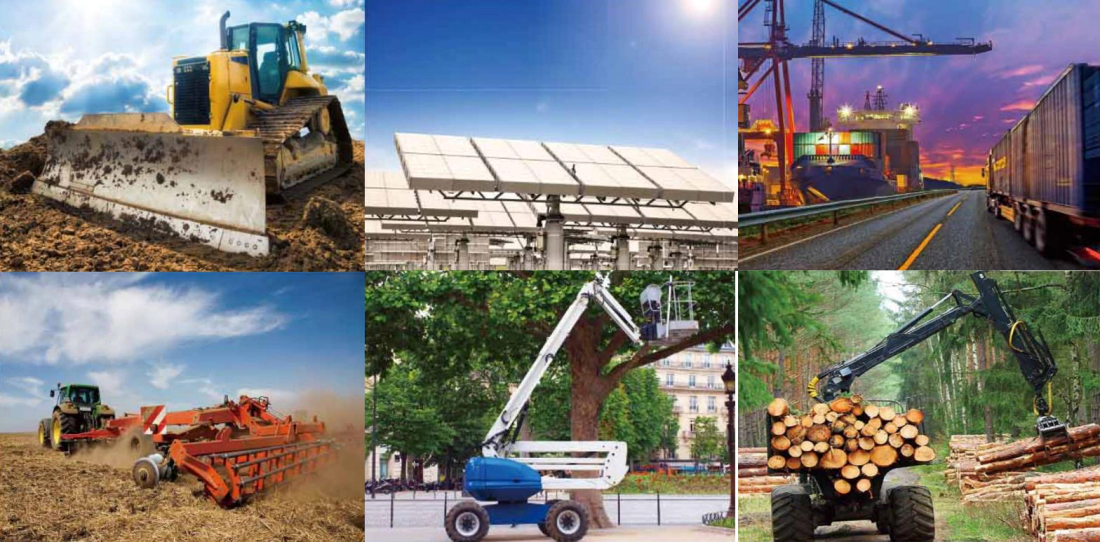
While we designed these for crawler crane counterweights, the “long stroke + side load” problem exists elsewhere. We’ve successfully adapted this design for:
- ✔
Plataformas de pilotaje: Specifically for the sliding mast sections, where vibration and misalignment are constant.
- ✔
Trituradoras y cribadoras móviles: Conveyor deployment cylinders that often get caked in rock dust and mud.
- ✔
Barge Loading Systems: Telescopic chutes in the Dutch ports that need corrosion resistance above all else.
Customization: We Speak Your Language
Here’s the thing about replacing parts on a 15-year-old crane: the manual is often wrong, or the machine has been modified. We don’t just pull a box off a shelf. We work with you to confirm the pin sizes, the retracted length, and the port locations.
Do you need integrated counterbalance valves to prevent hose-burst drop? We can machine the valve block directly into the cylinder cap (manifold block design) to eliminate external plumbing points that can leak.
Expert Talk: Common Questions (FAQ)
Why does my counterweight cylinder rod bend when fully extended?
It’s a classic case of column buckling. When the stroke is long, and the counterweight tray drags or tilts, the side load overwhelms a standard rod. We solve this by using higher yield strength 42CrMo steel and, crucially, increasing the internal guide distance to support the rod better.
How much does a replacement sliding cylinder cost, delivered to Rotterdam?
The price varies based on tonnage and stroke length. Generally, a custom high-spec cylinder is 20-30% cheaper than OEM prices, with better specs. For an exact DDP (Delivered Duty Paid) quote to your door in the Netherlands, hit the inquire button below.
What is the lead time for a custom cylinder if my crane is down?
We know downtime costs a fortune. For emergency breakdowns, we can expedite production to 12-15 days. With air freight to Amsterdam Schiphol, you can have your machine back up and running in under three weeks.
Can you make cylinders that resist the saltwater at Dutch coastal sites?
Absolutely. For coastal work, we recommend our “Duplex” or Nickel-Chrome plating. It adds a layer of nickel that seals the steel from salt spray, preventing the pitting corrosion that kills standard cylinders. It’s ideal for wind farm projects.
Do you supply the mounting pins and spherical bearings as well?
Yes, we do. We usually supply the cylinder as a “drop-in” ready assembly, including hardened pins and maintenance-free spherical bearings (GE series) to ensure everything fits perfectly right out of the crate.
Is your counterweight system stuck or leaking?
Don’t let a bent rod stop your lift. Upgrade to high-stability cylinders today.