TBM Gripper Hydraulic Cylinders: Holding the Line When the Rock Fights Back
There is a unique sensation when you are standing on the main beam of an open-mode TBM, two kilometers deep into a granite mountain. When the cutterhead engages the face, the whole machine shudders with a violence that feels like a localized earthquake. In that chaotic moment, the only thing keeping that multi-million dollar machine from sliding backward—losing its thrust and potentially jamming the head—is the TBM Gripper Hydraulic Cylinder assembly. In my eighteen years crawling through tunnels from the Swiss Alps to the copper mines of Chile, I have learned that the gripper system is the absolute heartbeat of a hard rock TBM. If the grippers slip, the drive stops. Period. Most procurement teams look at the thrust rating on a spec sheet and think “that’s enough,” but they often miss the nuance of halten versus pushing. The challenge isn’t just generating 4,000 tons of radial force; it’s maintaining that force while the cylinder is subjected to intense, high-frequency vibration that wants to loosen every valve cartridge and shred every seal. The trick is not just in the steel thickness, but in the hydraulic logic that locks that oil in place like concrete.
👀 Witness the Heavy Manufacturing Process
Spec sheets are fine, but seeing is believing. Transport yourself to our heavy-duty honing workshop instantly—no PPE required.
🚀 Betreten Sie die VR-Werkstour
100% Transparent Production Line.
The Engineering Reality: Why “Standard” Fails in the Dark
Let’s get real about the environment these cylinders live in. It is hot, it is wet, and the air is filled with silica dust that acts like diamond paste on your seals. A standard industrial cylinder—the kind you might find on a press brake or a crane—simply cannot survive in a TBM gripper application. We’ve seen OEM cylinders fail in under 500 hours because the rod plating was too porous. The rock dust settles on the rod, the wiper seal gets overwhelmed, and suddenly you have grit inside the gland, scoring the rod and destroying the pressure seal. But the bigger killer? Vibration-induced valve failure. A TBM Gripper Hydraulic Cylinder must have its load-holding valves (counterbalance or pilot-operated check valves) mounted directly to the cylinder body, preferably in a machined cavity or a bolted manifold. If you use hard piping between the cylinder and the valve, the TBM’s vibration will fatigue that pipe, crack the fitting, and you lose pressure. When a gripper loses pressure, the machine slips. We engineer our gripper shoes and cylinder mounts with spherical bearings that have specific hardening depths to handle the micro-movements without fretting corrosion.
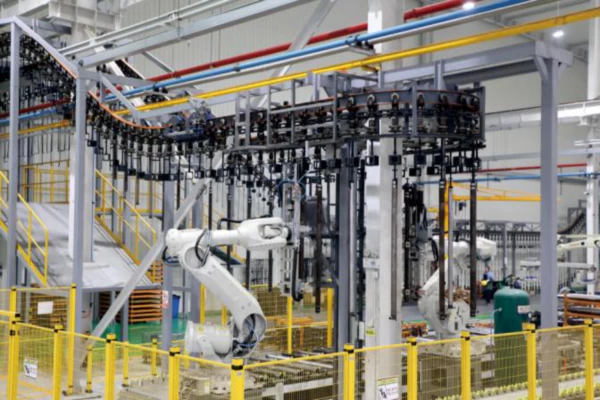
Our large-bore honing facility ensures roundness tolerances that keep seals tight even at 450 bar pressure spikes.
Technical Specs: Built for the Crush
When we talk specs for grippers, we aren’t just talking about bore size. We are talking about stiffness and surface technology. The rod material is non-negotiable; we typically use 42CrMo4 (AISI 4140) quenched and tempered steel. Standard carbon steel just doesn’t have the yield strength to resist the bending moments if the gripper shoe lands on an uneven rock face (which happens constantly). For the sealing system, we’ve moved away from standard polyurethanes for the main pressure seal. Instead, we use a PTFE-Bronze composite slide ring energized by a specialized NBR profile. This eliminates “stick-slip” and allows the cylinder to micro-adjust to the rock face without losing its grip. Below is a comparison of what you might find on a generic cylinder versus what we engineer for a Robbins or Herrenknecht class machine.

Whether in the Andes or the Alps, the Main Beam TBM relies entirely on the grip.
Application Scenarios: Hard Rock vs. Mixed Ground
It’s important to clarify that we are talking about Main Beam (Open) TBMs here, the kind used for hard rock tunneling where the rock face is self-supporting. In this scenario, the TBM Gripper Hydraulic Cylinder is the anchor. However, we also see hybrid machines (Single Shield) that use auxiliary grippers. The requirements differ slightly. In a pure hard rock environment (like granite or basalt), the shock loads are instantaneous. When the cutterhead hits a fault line, the grippers take a massive transverse jolt. We often increase the wall thickness of the cylinder barrel by 20% over standard calculations just to prevent “ballooning” or ovalization under these shock loads. In mixed ground, where water ingress is higher, we prioritize the corrosion resistance of the rod, often suggesting a nickel-base underlayer for the chrome to prevent pitting.
Case Study: The Andean Hydro Challenge
Client: Andean Tunneling Consortium (Chile)
The Crisis: Creating a 12km water transfer tunnel through the Andes mountains. The rock was incredibly hard, abrasive quartzite (300 MPa). The project was using older refurbished TBMs. The gripper cylinders began losing pressure due to intense vibration—essentially, the constant shaking was causing the cartridge valves to back out of their threads, leading to oil bypass. The machine was slipping backward 50mm every stroke. It was a safety nightmare and killed production speed.
Die Lösung: We didn’t just replace the cylinders; we redesigned the valve integration. We manufactured a custom TBM Gripper Hydraulic Cylinder set with a “Dual-Lock” manifold block. We used thread-locking compounds and a secondary mechanical locking plate over the valve cartridges to physically prevent rotation. We also upgraded the piston seals to a high-temp Viton hybrid to handle the heat generated by the vibration.
Das Ergebnis: The slippage stopped immediately. The TBM availability went from 65% to 92%. The Site Manager, Carlos, told us, “For the first time in six months, I don’t have to watch the pressure gauges every second.” They finished the drive 2 weeks ahead of the revised schedule.
SWOT Analysis: The State of TBM Hydraulics
Stärken
Vertical integration. We control the honing, the welding, and the testing. Our database of seal performance in specific rock types (Basalt vs. Sandstone) is unmatched.
Schwächen
Custom heavy engineering takes time. We cannot ship a 400mm bore gripper cylinder tomorrow. Quality requires a 3-4 week lead time, usually.
Gelegenheiten
IoT Integration. We are seeing massive demand for cylinders with built-in pressure transducers and LDTs to feed data to AI-driven TBM autopilots.
Bedrohungen
Low-cost copycats using Q345 steel instead of 42CrMo4. They look the same but will ovalize under peak load, risking catastrophic machine slip.
Trend Watch: The “Smart” Gripper
The industry is shifting from manual monitoring to predictive maintenance. The hottest trend right now is the “Smart Gripper.” We are increasingly installing Magnetostrictive Linear Displacement Transducers (LDTs) deep inside the cylinder rod. This tells the TBM operator exactly how far the gripper is extended with sub-millimeter precision, allowing for better alignment of the machine. More importantly, we are integrating pressure sensors that detect “micro-slippage”—pressure drops that happen milliseconds before the machine actually moves. This data allows the TBM control system to automatically boost pressure to compensate, preventing the slip before it happens. It’s not just a cylinder anymore; it’s a data node.
Factory & Customization: Refurbish or Replace?
TBMs are often refurbished for multiple projects. The diameters change, the geology changes. This is where our custom shop shines. We often take in old, battered gripper cylinders from a finished project. We strip them, hone the barrels to the next oversize, manufacture new oversized pistons, and install fresh heavy-duty seals. It’s often 40% cheaper than buying new, but with the performance of a brand-new unit. But if you need new, we can reverse engineer any brand—Robbins, Lovat, Wirth—and build a replacement that fits perfectly but has modern seal upgrades.
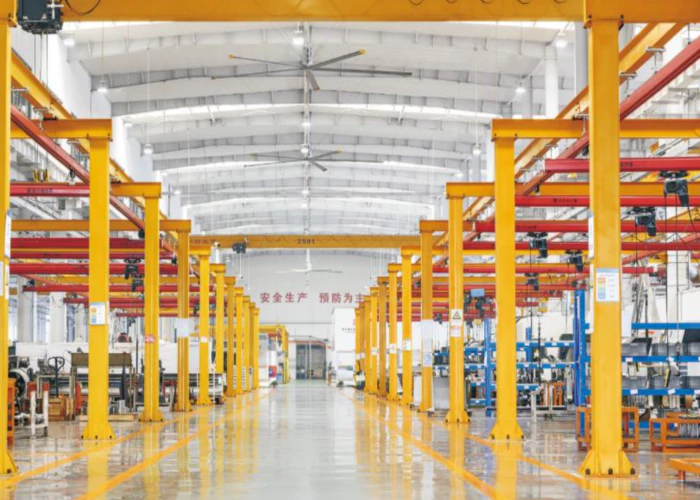
Certified welding of the trunnion mounts is critical; a weld failure here means the gripper shoe falls off.
Was die Branche sagt
“We were skeptical about using an aftermarket supplier for our main grippers. But Ever Power’s technical team knew more about the valve logic than the OEM did. The cylinders have been solid for 4km.”
— Jean-Pierre L., Tunnel Superintendent, Switzerland
“Vibration was killing our old cylinders. Their suggestion to use a mechanically locked manifold saved us so much downtime. Great engineering support.”
— Pedro G., Maintenance Lead, Chile
“Fast shipping to our site in Australia. The crate was built like a tank. The cylinders fit perfectly into our old Robbins machine.”
— Mark T., Project Buyer, Australia
FAQ: Tough Questions from the Tunnel
Why does my TBM slip when the gripper is fully extended?
Slippage usually means internal bypass. The piston seal might be worn, or more likely, the load-holding valve is leaking or vibrating loose. Check the valve torque first, then pressure test the seals.
What is the price of a custom TBM gripper cylinder?
It depends heavily on bore size and stroke, but a heavy-duty custom gripper cylinder typically ranges from $8,000 to $25,000. It’s an investment in safety and uptime.
Can you ship large hydraulic cylinders to remote mining sites?
Yes, we specialize in global logistics. We use reinforced crates and ship DDP (Delivered Duty Paid) to remote sites in South America, Africa, and Asia regularly.
How long does a gripper cylinder typically last in hard rock?
With proper maintenance and oil cleanliness, a quality cylinder should last the duration of a standard tunnel drive (5-10km). However, seals may need changing if the environment is extremely dusty.
Do you repair existing TBM cylinders or only sell new?
We do both. We can re-hone and re-rod your existing cylinders to save costs, often upgrading the seals to modern standards during the rebuild process.
What is the lead time for a custom cylinder order?
For a custom design, expect about 3-4 weeks for manufacturing and testing. We can sometimes expedite this for emergency breakdowns (AOG situations).
Don’t Let Slippage Stop the Drive
Secure your machine with cylinders built for the crush. Talk to our engineers now.