Why Your Main Boom Luffing Cylinder Needs More Than Just Standard Steel: A Deep Dive into 42CrMo & Ni-Cr Tech for the Dutch Market
You know that sinking feeling when you’re watching a telescopic crane extend to its maximum radius, carrying a concrete prefab slab, and you see just the slightest—almost imperceptible—judder in the main boom? That’s usually not the wind coming off the North Sea; it’s the luffing cylinder struggling with stick-slip or, worse, rod deflection. Over the last 18 years, I’ve spent more time in muddy construction sites and hydraulic repair shops than I care to admit, and if there’s one thing I’ve learned, it’s that the luffing cylinder is the unsung hero (or the potential villain) of any mobile crane operation.
We aren’t talking about standard agricultural rams here. When you are dealing with the dynamic loads of a telescopic boom, especially with the strict safety regulations we face here in the Netherlands and across the EU, “good enough” usually leads to a seal failure at the worst possible moment. We’ve seen operators push equipment to the limit in the port of Rotterdam, where the salty air eats standard chrome rods for breakfast. That is why we shifted our focus entirely to double-acting piston cylinders hergestellt aus 42CrMo-Stahl with specialized Ni-Cr plating. It’s about rigidity and corrosion resistance.
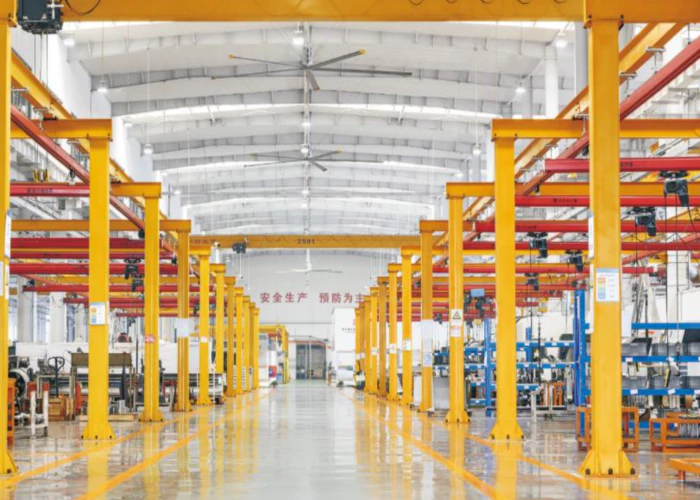
Before we get too deep into the metallurgy and load charts (and I promise, we will), why don’t you take a quick virtual walk through our production floor? You don’t even need to put on safety boots. We believe in total transparency.
It’s fascinating, really. Most procurement managers look at the price tag of a luffing cylinder, but the seasoned maintenance chiefs look at the barrel thickness and the welding technique. A luffing cylinder bears the brunt of the “moment”—it’s holding the boom angle against gravity, wind, and the load itself. If that barrel breathes (expands) even a fraction of a millimeter under 350 bar pressure, you lose efficiency, and your seals wear out prematurely. We solved this by thickening the cylinder barrel and utilizing a specialized welding process that minimizes the heat-affected zone, maintaining the structural integrity of the 42CrMo material.
The Engineering Reality: Why 42CrMo and Ni-Cr Matter in The Low Countries
Let’s talk specs without sounding like a textbook. Standard ST52 steel is fine for a dump truck. But for a crane main boom luffing cylinder, particularly when the boom is fully extended at a low angle? The buckling load on that piston rod is immense. We use 42CrMo (Chromium-Molybdenum steel) because its yield strength is significantly higher than that of standard carbon steels. It allows the rod to resist bending forces that would turn a lesser rod into a banana. (I’ve seen it happen on a site near Utrecht—not a pretty sight, and an expensive cleanup).
Then there is the issue of our environment. Here in the Netherlands, moisture is a constant. Traditional hard chrome plating has micro-cracks—it’s the nature of the beast. Over time, moisture penetrates these cracks, rusts the steel underneath, and the chrome flakes off. This is why we advocate for Nickel-Chromium (Ni-Cr) plating. The nickel layer acts as a barrier, sealing the steel, while the chrome provides the hardness. It’s a dual-defense system.

Strategic Analysis: The Luffing Cylinder Landscape
When we design these cylinders, we are constantly balancing weight against strength. It’s a trade-off. You want the cylinder to be light so it doesn’t subtract from the crane’s lifting capacity, but it has to be heavy enough to survive. Here is how we view our product’s position in the market right now:
Stärken
- Materialüberlegenheit: 42CrMo offers 30% higher yield strength than standard options.
- Korrosionsschutz: Ni-Cr plating extends lifespan by 3-5 years in coastal zones.
- Custom Welding: Full penetration welds tailored for cyclic loading.
Schwächen
- Production Time: Custom Ni-Cr plating takes 48 hours longer than standard chrome.
- Gewicht: The thickened barrel adds marginal weight (though it adds a safety factor).
Gelegenheiten
- Green Energy Sector: Increasing demand for cranes in Dutch wind farm maintenance.
- Retrofitting: Upgrading older fleets in Amsterdam and Rotterdam to meet new safety specs.
Bedrohungen
- Billige Importe: Cheap cylinders with hidden porosity in the steel.
- Rohstoffkosten: Fluctuating global nickel prices are affecting plating costs.
Case Study: Stabilizing the Giants in the Port of Rotterdam
A few years back, we were approached by a specialized logistics company operating out of the Maasvlakte area (let’s call them “HeavyLift NL” to respect their NDA). They were running a fleet of 200-ton telescopic mobile cranes. They had a recurring issue: during precise placement of wind turbine nacelles, the main boom luffing cylinders were experiencing “micro-creep”—the boom would drift down a few millimeters over 20 minutes.
Their original OEM cylinders were using standard polyurethane seals and standard chrome rods. The salt spray was causing pitting on the rods, which in turn shredded the seals, causing internal leakage. It was a mess.
Die Lösung:
We engineered a retrofit solution using our High-Load Luffing Cylinder. We increased the rod diameter by 10mm (modifying the gland nut) and applied our Ni-Cr plating. We also switched to a composite seal arrangement specifically designed for holding static loads without drift.
Das Ergebnis:
After 18 months of operation in the harbor environment, the drift was eliminated. Maintenance intervals for cylinder resealing went from every 6 months to every 2 years.
Was unsere Partner sagen
“The rod deflection resistance on these cylinders is noticeable. When we are at full reach, the boom feels much more rigid than before. Delivery to Eindhoven was faster than expected.”
– Jan de Vries, Fleet Manager, Construction Sector
“We used to replace luffing cylinders annually due to corrosion. The Ni-Cr plating on these units has survived three Dutch winters with zero pitting. Impressive stuff.”
– Pieter Jansen, Marine Maintenance Lead
“The customization process was smooth. They understood exactly what I meant by ‘holding valve integration’ without me having to draw it out.”
– Lars Bakker, Heavy Machinery Retrofitter
Technische Spezifikationen & Materialwissenschaft
We don’t believe in “one size fits all,” but we do believe in a baseline of quality that shouldn’t be compromised. The core of this cylinder is the Variable Amplitude capability—smoothly changing the boom angle while under load. This requires a unique balance of hydraulic fluid dynamics and structural steel strength.
| Parameter | Spezifikationsdetails |
|---|---|
| Zylindertyp | Double-Acting Piston / Variable Amplitude Luffing |
| Kolbenstangenmaterial | 42CrMo (vergütet und gehärtet) |
| Oberflächenbehandlung | Nickel-Chromium (Ni-Cr) Plating / Salt Spray Test > 1000h |
| Laufmaterial | ST52 / 27SiMn (Thickened Wall) |
| Arbeitsdruck | 25 MPa – 35 MPa (Max Peak) |
| Dichtungssystem | Hallite / Merkel (Low friction, Zero Drift) |
| Temperaturbereich | -30°C to +110°C (Suitable for N. Europe Winters) |
Beyond Construction: Where Else Do These Cylinders Work?
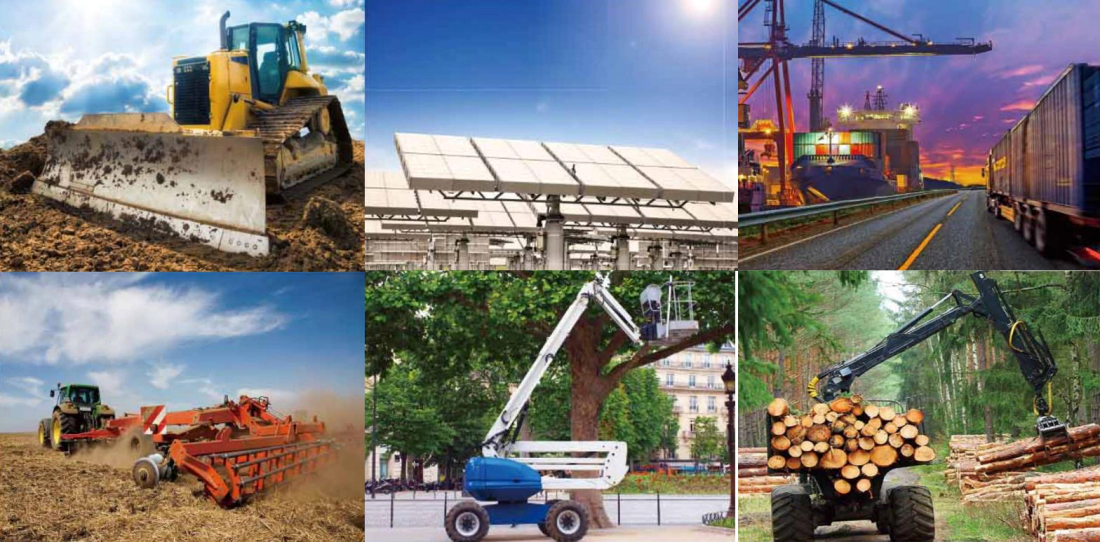
While we focus heavily on telescopic mobile cranes, the engineering principles behind our luffing cylinders apply wherever high-load angular movement is needed. I’ve personally consulted on projects involving:
- ✔
Port Machinery: Reach stackers and container handlers in Rotterdam and Amsterdam ports. - ✔
Offshore Wind Maintenance Vessels: Knuckle boom cranes that need to compensate for wave motion. - ✔
Rammgeräte: Adjusting the angle of the leader for foundation work in Dutch polders.
Customization: The “Secret Sauce” of Ever Power
Here is the thing: a catalog is great for standard parts, but a crane is rarely standard once it’s been in the field for a decade. Maybe you need a slightly different mounting eyelet or integrated counterbalance valves to meet new safety norms. This is where we shine. Our factory isn’t just an assembly line; it’s a solution center.
We can customize the stroke length, the cushioning style (to prevent that “clunk” at the end of the stroke), and the port orientation. We map out your existing hydraulics and build the cylinder to fit dein machine, not the other way around.
Conversations from the Field: FAQ
How does the damp Dutch climate affect the plating life expectancy of my luffing cylinders?
It’s a massive factor. In our experience, standard hard chrome often fails within 2-3 years near the coast due to salt permeation. Our Ni-Cr (Nickel-Chromium) plating creates a multi-layer barrier that typically extends service life to over 7 years, even in Rotterdam’s salty air.
What is the lead time for a custom 42CrMo luffing cylinder delivered to the Netherlands?
We know downtime kills profits. Typically, once we finalize the drawing, production takes about 15-20 days. Shipping to major Dutch logistics hubs usually adds another week, so you are looking at roughly 4 weeks from design sign-off to installation.
Which hydraulic seal brands do you recommend for high-load static holding capability?
Great question. For luffing cylinders that need to hold a boom angle for hours, we avoid standard O-rings. We prefer Hallite or Merkel compact seals. They offer superior extrusion resistance and prevent that annoying “stick-slip” judder when you start moving the boom again.
Can you retrofit a stronger cylinder onto an older telescopic crane model?
Absolutely. We do this all the time for clients refurbishing older fleets. We can keep the mounting dimensions identical to the original but upgrade the internal rod material to 42CrMo and thicken the barrel wall for higher safety margins.
How do I get a price quote for a batch of heavy-duty cylinders?
It’s simple. Just send us a photo of your nameplate or a basic sketch with dimensions. Click the “Inquire Now” button below, and our engineering team will get a preliminary cost estimate back to you within 24 hours.
Ready to upgrade your fleet’s lifting reliability?
Don’t let a weak link in your hydraulic system ground your cranes.