There is a specific feeling you get when you are sitting in a cab, fully extended at 22 meters over a riverbank, and you feel the boom “sag” just a little bit more than it should. It’s terrifying. In my 18 years working with excavator hydraulics, nothing stresses a cylinder quite like the Super Long Reach (SLR) application. Most printers and catalog engineers treat these like standard boom cylinders, just longer. That’s a recipe for disaster. When you hang a 1-ton bucket at the end of a 20-meter lever arm, the physics changes completely. The Long Reach Excavator Telescopic Cylinder isn’t just pushing oil; it’s fighting a massive bending moment that wants to snap the rod in half or ovalize the barrel.
We’ve seen fleet managers burning through seals every three weeks because the side-loading is causing the rod to “bite” into the gland. The trick isn’t just upping the pressure; it’s about structural rigidity and guiding surface. That is why we engineer our long-reach specific cylinders with 42CrMo-Stahl rods and a significantly “Extended Guide Bushing.” It’s overkill for a standard digger, but for dredging or high-reach demolition? It’s the only thing keeping you operational.
👀 See the Machines That Build Giants
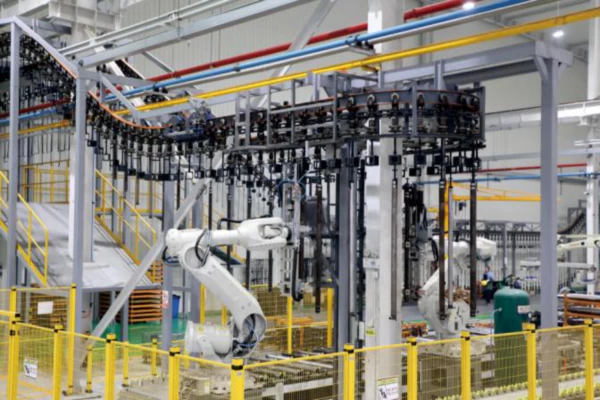
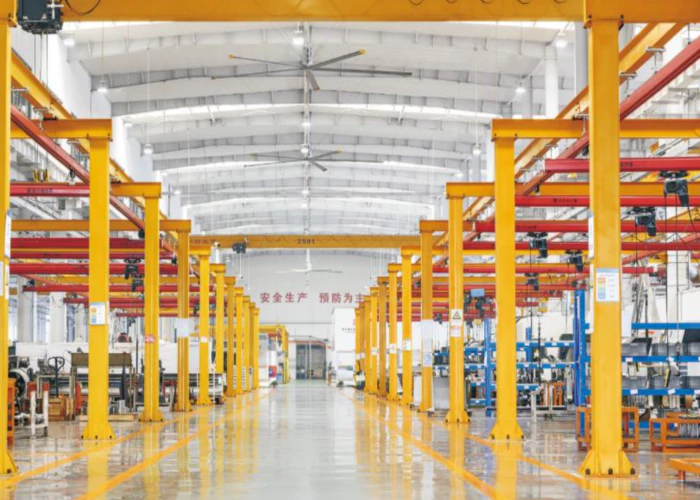
You can’t build 20-foot cylinders on a small bench. We’ve digitized our heavy-duty production floor so you can see the long-bed honing machines and heat treatment furnaces yourself.
Gehen Sie virtuell durch die Halle:
The “Bending Moment” Problem: Technical Deep Dive
Let’s talk about the elephant in the room: Seitliche Beladung (or Rod Deflection). On a standard excavator, the cylinder pushes almost in a straight line with the load. On a long reach unit, as the arm extends, gravity pulls the bucket down, creating a twisting force on the stick cylinder and boom cylinder. If you use a standard cylinder made of ST52 (1026) steel, the rod acts like a wet noodle. It bows. When a rod bows, it presses unevenly against the seals and the guide bushing.
To combat this, we implement two critical design changes. First, the material. We use 42CrMo (Chrom-Molybdän) for the rod. This isn’t just “harder”; it has a much higher yield strength, meaning it can flex further without permanently bending. Second, and this is the secret sauce, is the Extended Guide Bushing. In a standard cylinder, the distance between the rod seal and the wear band might be 50mm. In our Long Reach series, we extend this to 80-100mm. This wider stance provides a “lever arm” of support inside the cylinder head, resisting the side load and keeping the rod concentric. It drastically reduces the “rod bias wear” that causes those annoying leaks.
| Besonderheit | Standard Excavator Cylinder | Our Super Long Reach Spec |
|---|---|---|
| Stangenmaterial | CK45 / 1045 Steel | 42CrMo (vergütet und gehärtet) |
| Guide Bushing | Standard Length | Extended (+40% Bearing Area) |
| Barrel Wall | Standard Thickness | Heavy Wall (Resists Ovalization) |
| Welding Type | MIG | Deep Penetration Flux/TIG |
| Safety Factor | 3:1 | 5:1 (Critical for Long Booms) |
Where Do These Long Arms Reach?
The application dictates the design. The most brutal environment we see is the River Dredging and Desilting. Here, the machine is often on a barge or a muddy bank. The cylinder is constantly fighting the suction of the mud. When the operator tries to break the suction, the boom twists. If your cylinder isn’t built to handle that torsional stress, the rod eye will snap.
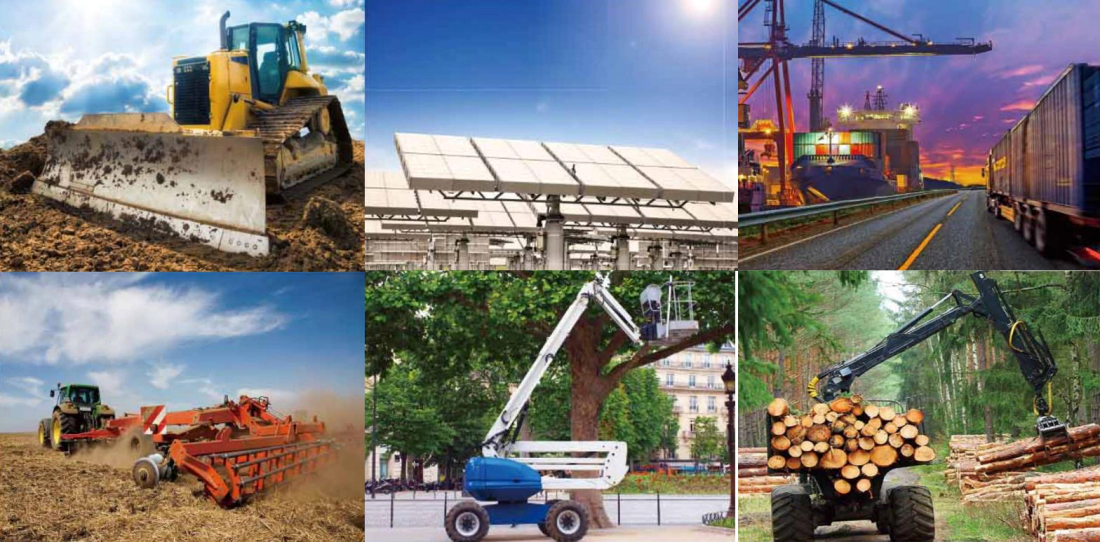
We also see a huge demand in High-Reach Demolition. These machines carry heavy shears or crushers 25 meters into the air. The “bounce” when the shear cuts through a steel beam sends a shockwave straight down the boom into the cylinder. Standard welded cylinders often crack at the base due to this fatigue. Our Doppeltwirkender Kolben design features reinforced weldments and stress-relieved ports to handle that specific vibration frequency. It’s not just about length; it’s about dampening the shock.
Case Study: The Vietnam River Widening Project
Kunde: “Mekong Infrastructure Solutions” – A large civil engineering firm in Vietnam.
Die Herausforderung: They were modifying CAT 330 excavators with 18-meter custom long arms for a canal widening project. They initially bought “budget” long-stroke cylinders from a generic supplier. Within 2 months, three rods had bent permanently, and every single unit was leaking. The side-loading from dragging wet clay was too much for the standard 1045 steel rods.
Unsere Lösung: Wir haben eine maßgeschneiderte Lösung entwickelt. 42CrMo Long Reach Cylinder.
- ✅ Material: Upgraded rod to 42CrMo with induction hardening.
- ✅ Design: Increased the gland nut length by 45mm to provide extra rod support.
- ✅ Dichtungen: Switched to a heavy-duty Parker buffer seal to handle pressure spikes.
Das Ergebnis: The fleet has now been operating for 14 months through the monsoon season without a single rod failure. The project manager, Mr. Nguyen, told us, “The stability is noticeably better. The operators feel more confident at full reach.”
Voice from the Cab
“We do deep foundation pits. Standard cylinders drift too much when holding the boom out. These Ever Power units hold their position all day. No drift.”
— Marcus T., Site Foreman, Australia
“The extended guide bushing makes sense. You can feel the stick is stiffer when you are scraping the bottom of a canal.”
— Lee Wei, Dredging Contractor, Singapore
“I was worried about shipping such a long cylinder, but the crate was built like a tank. Arrived in Texas in perfect condition.”
— Bill R., Equipment Dealer, USA
Strategische Analyse (SWOT)
Stärken
- High Yield Strength (42CrMo).
- The extended guide bushing prevents bending.
- Custom stroke lengths up to 10+ meters.
- Deep understanding of eccentric loading.
Schwächen
- Higher cost than standard steel cylinders.
- Longer production time for heat treatment.
- Shipping logistics for extremely long units.
Gelegenheiten
- Growing demand for river rehabilitation projects.
- Retrofitting standard excavators to Long Reach.
- Integration of position sensors for “Smart Digging.”
Bedrohungen
- Cheap ST52 substitutes are failing in the market.
- Rising cost of Molybdenum alloy.
- Shift to cable-operated dredging (rare but exists).
Future Trends: Smarter, Lighter, Stronger?
We are watching a shift towards “Smart Booms.” In the past, the operator guessed where the bucket was underwater. Now, we are integrating Magnetostrictive Linear Position Sensors directly inside the cylinder rod. This gives real-time feedback to the GPS. Also, there is a push for higher-pressure systems (380 bar+) to allow for smaller diameter cylinders, which reduces the weight at the end of the boom, allowing for even longer reach. If you aren’t thinking about weight reduction and sensing, you’re falling behind.
Tailor-Made for Your Reach
Here is the deal: Long reach booms are often custom jobs. You might have a 16m boom, an 18m boom, or a 22m boom. The cylinder stroke and mounting points are never standard. We specialize in Custom Manufacturing. You send us the kinematic requirements or the old drawings, and we engineer the cylinder to match. We can adjust the cushioning length to soften the stops and prevent structural cracking.
[Image of Production Process]
Häufig gestellte Fragen (FAQ)
Why do standard hydraulic cylinder rods bend when used on a 20-meter-long reach excavator boom?
It comes down to the “bending moment” physics. When you extend a boom out to 20 meters, the leverage creates a massive side-load (eccentric load) on the cylinder rod. Standard ST52 rods just don’t have the yield strength to handle that lateral force, turning your rod into a banana. We solve this by using 42CrMo quenched and tempered steel, which has nearly double the tensile strength.
How does an extended guide bushing prevent premature seal wear in long boom applications?
Great question. The guide bushing (or gland) supports the rod. In standard cylinders, this support is short. For long reach machines, we extend this guide length by 30-40%. This increases the bearing surface area, spreading the side-load out and preventing the rod from tilting and digging into the seals. It’s the difference between holding a heavy pole with two fingers versus your whole hand.
What is the price difference between a standard boom cylinder and a custom 42CrMo long reach cylinder?
Honestly, you are looking at a 25% to 35% premium for the 42CrMo material and the specialized heat treatment processes. However, considering a standard cylinder might fail in 6 months on a dredging project versus 5 years for our heavy-duty version, the cost per hour of operation is significantly lower with the upgraded unit.
Can you manufacture a replacement extension cylinder for a Hitachi or Komatsu super long front without the part number?
We do this every day. Since these machines are often modified or custom-built by third parties, part numbers are useless. We just need the physical dimensions—Pin Diameter, Closed Center-to-Center length, and Stroke. We can reverse engineer it and often upgrade the specs to handle heavier buckets.
Do you ship these extra-long hydraulic cylinders to dredging contractors in the Netherlands or the USA?
Absolutely. Long-reach excavation is global. We build custom crates to support the cylinder along its entire length to prevent transit damage and ship to major ports worldwide, including Rotterdam and Houston.
Don’t Let Your Boom Sag.
Upgrade to 42CrMo steel and extend your reach with confidence.