Cross Tube Hydraulic Cylinders: The Unsung Heroes of Stability
Let’s get real for a second. If you have been around heavy iron as long as I have, you know that the weakest link in any hydraulic system isn’t usually the seal—it’s the mount. I can’t tell you how many times I’ve walked onto a job site, looked at a front-end loader or a disc harrow, and seen a clevis ear twisted like a pretzel. It happens because lateral forces (side-loads) are the silent killers of hydraulic actuators. This is exactly where the Cross Tube Hydraulic Cylinder steps in and separates the professionals from the amateurs. Unlike a standard clevis or a pin-eye mount, a cross tube offers a wide, solid bearing surface that spans the entire width of the cylinder rod or base. It essentially turns the mounting point into a structural cross-member. In our experience, when you are dealing with equipment that twists, turns, and bounces over rough terrain, you need that extra width to distribute the torque. Most buyers don’t realize that simply changing from a pin-eye to a cross tube can double the life of your pivot pins.
The beauty of the cross tube design lies in its rugged simplicity. It’s typically a welded design (no tie-rods to stretch out), and the tubes themselves are usually heavy-wall DOM tubing welded directly to the rod end and the base cap. The trick is in the welding. I’ve seen cheap cylinders where the manufacturer just laid a bead on top of the metal without proper penetration. Sure, it looks fine when it’s painted black, but the moment you hit a rock with that plow? Snap. We focus heavily on the weld fillet size and the heat-affected zone (HAZ). You want a weld that integrates with the base metal, not one that just sits on top of it. When we engineer these, we are thinking about the guy greasing the fitting in the mud three years from now—that’s why we ensure the grease zerks are angled correctly and protected.
Fordern Sie ein individuelles Angebot an
Under the Hood: Technical Engineering Data
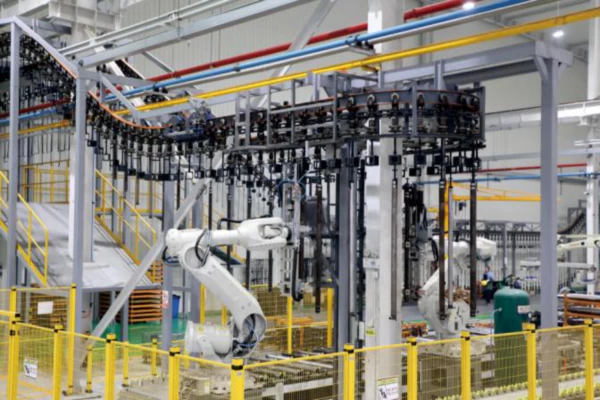
Our welding stations where cross tubes are fused to the cylinder body with deep-penetration precision.
When we talk about specs, we aren’t just reading off a sheet. The material selection for the cross tube itself is critical. We typically use ST52 or specifically modified 1026 steel because it accepts the weld better than harder alloys, preventing brittle cracking at the joint. For the rod, it’s all about the surface finish. If you are in agriculture, you know fertilizer and dust are abrasive. We recommend induction-hardened chrome rods for these applications. The chrome looks nice, but the induction hardening underneath is what stops a rock ding from becoming a seal-shredding burr.
| Besonderheit | Standardspezifikation | Auswirkungen auf die Leistung |
|---|---|---|
| Montagetyp | Double Cross Tube (Base & Rod) | Maximizes lateral stability; reduces pin wear by 40%. |
| Zylinderlauf | Honed Cold Drawn ST52 | High yield strength withstands pressure spikes common in loaders. |
| Stangenbeschichtung | Hard Chrome (25 micron min) | Resists corrosion from fertilizers and weather exposure. |
| Arbeitsdruck | 3000 PSI (Continuous) | Compatible with modern tractor and skid steer hydraulic systems. |
| Bushings | Hardened Steel or Composite | Composite options reduce greasing intervals (a huge plus for farmers). |
SWOT Analysis: Is This The Right Cylinder For You?
It’s not always about buying the most expensive component; it’s about fit. I always tell my clients to look at the application environment. A cross tube is fantastic, but it requires specific mounting brackets. Here is a quick strategic breakdown we use during design consultations.
Stärken
- Rigidity: The wide stance resists twisting forces better than any other mount.
- Compact: Welded design is shorter than tie-rod equivalents, saving installation space.
- Haltbarkeit: No tie-rods to stretch or break under shock loads.
Schwächen
- Mounting Width: Requires wider brackets on the machine frame.
- Repair: The gland is usually threaded; removing it requires specialized tools (unlike unbolting a tie-rod).
Gelegenheiten
- Smart Integration: Adding linear sensors inside the tube for automated farming precision.
- Maintenance Free: Moving to self-lubricating composite bushings to eliminate daily greasing.
Bedrohungen
- Billige Importe: Poor quality welds in budget cylinders, leading to base-cap separation.
- Standardization: OEMsare shifting mounting dimensions unpredictably.
Where We See Cross Tubes Shine

The agricultural sector is the biggest consumer of Cross Tube Hydraulic Cylinders, hands down. You will see them on the lift arms of front-end loaders, the tilt mechanisms of buckets, and the folding wings of large planters. Why? Because a tractor bouncing across a furrowed field puts massive torsional stress on the frame. A standard clevis mount would ovalize in a season. We are also seeing a huge uptick in the waste management industry. Compactor rams and dumpster lifters use cross tubes because they often push against uneven loads (garbage isn’t exactly uniform). That wide tube mount ensures the cylinder pushes straight, even if the load pushes back crooked.
Trend Analysis: The Move to Composites
Here is a trend that is catching fire: getting rid of the grease gun. Traditionally, cross tubes have a steel bushing that needs daily grease. If the operator forgets (and let’s be honest, they often do), the steel grinds away. We are now retrofitting many OEM designs with high-load composite bushings (like PTFE-lined fiberglass). These handle the high compressive loads of hydraulics but run dry. It’s a small change that saves thousands in maintenance hours over the life of a fleet. Also, we are seeing “Smart Cylinders” enter the ag space—cross tubes with internal position sensors to help autonomous tractors know exactly where the bucket is.
Case Study: Saving the Soy Harvest
Kunde: VerdeAgro Machinery (OEM) | Standort: Mato Grosso, Brazil
Das Problem: VerdeAgro produces massive disc harrows for the Brazilian soy market. The soil there is heavy clay. Their existing cylinders (standard clevis mount) were snapping at the rod eye weld due to the extreme vibration and side-loading when the discs hit submerged roots. They were facing a 15% warranty return rate in the first season. A disaster.
Unsere Lösung: We redesigned the geometry to utilize a Heavy-Duty Welded Cross Tube with an extended width (from 3 inches to 5 inches).
1. We increased the weld fillet size by 25% using a robotic welding process for consistency.
2. We switched the tube material to a thicker-walled DOM tubing to prevent deformation.
3. We added a spherical bearing *inside* the cross tube to allow for 5 degrees of misalignment.
Das Ergebnis: Warranty claims dropped to near zero in the following season. The spherical bearing allowed the cylinder to “float” with the terrain rather than fighting it.
“The stability of the new cross tube design is night and day. We used to carry spare cylinders in the truck; now we don’t bother.”
– Carlos M., Field Service Lead
“Ever Power engineered a solution that fit our existing brackets with only minor mods. Saved us from retooling the whole production line.”
– Elena R., Head of Engineering
“Price was competitive, but the weld quality was the real selling point. You can see the penetration difference.”
– Joao S., Procurement Manager
Direkt vom Hersteller: Wir bauen, was Sie zeichnen
Here is the thing about buying cylinders: you can buy off the shelf and hope it fits, or you can get it built for your machine. We have our own CNC machining centers and friction welding capabilities. This means we can control the tolerance of that cross tube bore to within microns. If you need a weird width—say, 4.25 inches with a 1.5-inch pin—we just program it and cut it. No “standard size” limitations here. We pressure test every single cylinder before it gets painted. If it leaks on our floor, it doesn’t go to yours.
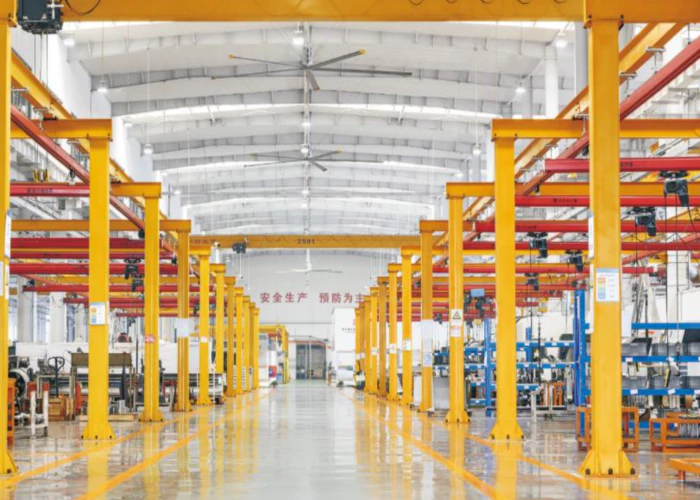
Betreten Sie unsere Einrichtung
We believe in transparency. Take a virtual walk through our welding bays and assembly lines.
FAQ: Your Questions, Answered
How much does a custom cross-tube hydraulic cylinder cost for agricultural loaders?
It really depends on the bore size and stroke length, but typically, for a standard welded cross tube cylinder used in ag loaders, you are looking at anywhere between $150 to $450 per unit. If you need induction hardened rods or specialized paint, the price ticks up a bit, but we are usually about 20% cheaper than the big catalog brands.
What is the main advantage of a cross tube mount over a clevis mount?
It is all about width and stability. A clevis puts all the stress on two thin ears, whereas a cross tube spreads that load across the entire width of the tube. This drastically reduces the wear on the pivot pin and stops the cylinder from “walking” side-to-side under heavy load.
Can I replace my tie-rod cylinder with a welded cross tube design?
You can, but you need to check your mounting width. Cross tubes are usually wider than the clevis on a tie-rod cylinder. If you have the space in your mounting bracket, switching to a welded cross tube is a massive upgrade in durability because you don’t have those tie-rods stretching over time.
Where can I find a supplier who ships cross-tube cylinders to Australia or Canada?
We ship to Australia and Canada almost weekly! We handle all the crating and export documents. For standard sizes, we can have them on the water in a few days; for custom builds, give us about 4-5 weeks to get it perfect.
Why is my cross tube cylinder leaking around the weld on the base?
That is a classic sign of fatigue cracking, usually caused by poor weld penetration during manufacturing. If the root weld didn’t bite deep enough into the base cap, the pressure cycles eventually crack it. You need a replacement that has been friction-welded or properly MIG-welded with pre-heat.