Mining Truck Dump Hoist Cylinders: Because Downtime at the Crusher Costs Millions
There is a specific sound that haunts every mine site manager’s dreams: the silence of a haul truck sitting idle at the crusher tip. When you are moving 400 tons of copper ore or overburden, the أسطوانة رفع قلاب شاحنة التعدين is effectively the heartbeat of your cycle time. If it lifts slowly, you lose money. If it leaks, you lose money. If it fails? Well, you are looking at a logistical nightmare involving cranes and a lot of angry radio chatter. In my eighteen years of engineering hydraulics for the mining sector—from the dusty pits of the Pilbara to the frozen oil sands of Alberta—I have learned that “standard” cylinders just don’t cut it in the big leagues. Most printers and procurement teams look at a CAD drawing and check the mounting dimensions, but they miss the internal geometry. They don’t realize that when a truck is on a 12% grade and the load shifts, the side-loading on that hoist cylinder can snap a standard chrome rod like a twig. The trick isn’t just brute force; it’s about the elasticity of the steel and the friction coefficient of the seals. We’ve seen cylinders that looked pristine on the outside but were chewed to pieces internally because the wiper seals couldn’t handle the abrasive silica dust.
⚒️ Step Inside the Heavy-Duty Workshop
Don’t just take my word for it. Walk our production floor virtually and inspect our massive honing machines and chrome plating tanks right now.
🚀 ادخل جولة المصنع بتقنية الواقع الافتراضي
100% Transparent. No PPE required.
The Engineering Reality: Why “Off-the-Shelf” Means “Out-of-Service”
Let’s talk about the specific torture a أسطوانة رفع قلاب شاحنة التعدين endures. It’s not just the weight. It’s the dynamic shock. When an excavator drops a 20-ton rock into the bed, the hydraulic pressure spikes instantly. If your cylinder tube walls are made of standard Q345 steel, they balloon. This ballooning expands the gap between the piston and the barrel, allowing the seal to extrude (nibble). Once the seal is damaged, you get an internal bypass, and suddenly your multi-stage cylinder won’t hold the bed up. We address this by using 27SiMn or cold-drawn ST52 steel with a higher yield strength.
Furthermore, let’s discuss contamination. In a mine, dust is everywhere. It’s abrasive, it’s fine, and it wants to get into your oil. We’ve seen OEMs use single-lip wipers that are fine for highway trucks but useless in a quarry. We use a double-lip metal-encased wiper system. The first lip acts as an ice/mud scraper, and the second lip does the fine cleaning. It’s these unsexy details that keep your trucks running for 10,000 hours instead of 2,000.
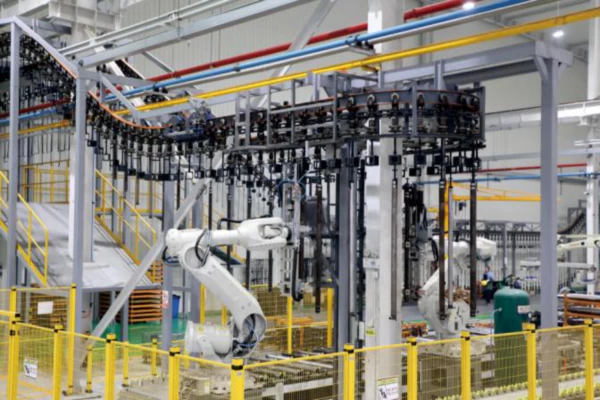
Our large-bore honing facility ensures roundness tolerances that keep seals tight even during high-pressure tipping cycles.
Technical Specs: Built for the Ultra-Class
When replacing a hoist cylinder on a CAT 793 or a Komatsu 930E, you can’t compromise on metallurgy. We treat the rod surface like a piece of jewelry—if jewelry were designed to be smashed by rocks. Standard chrome plating (20 microns) is too porous for the acidic water often found in coal and copper mines. We utilize a multi-layer plating process (Mil-Spec) that exceeds 50 microns in some applications. Below is a comparison of what you typically get from a generic supplier versus what we engineer for mining.
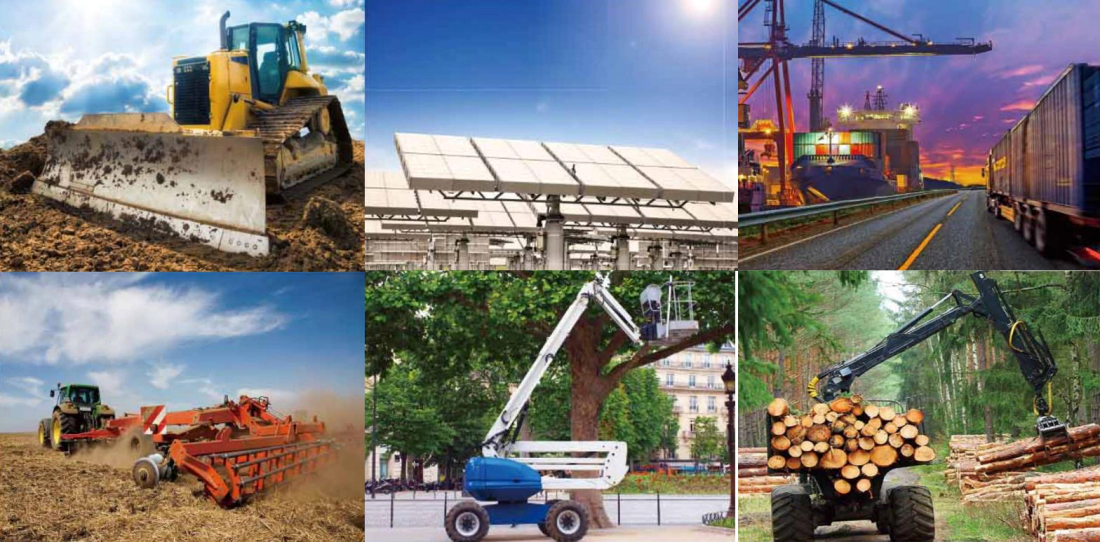
From 100-ton rigids to 400-ton ultra-class haulers, the hoist cylinder is the pinch point of production.
Application Scenarios: Extreme Cold to Desert Heat
A hoist cylinder that works perfectly in an Australian gold mine might fail catastrophically in a Siberian diamond mine. Temperature changes everything. In extreme cold (-40°C), standard seals become brittle like glass. The first time the operator hits the hoist lever, the seals crack, and you have a fountain of oil. For our Arctic clients, we use specialized low-temperature polyurethane and fluorosilicone compounds. Conversely, in deep underground mines where ventilation is limited, ambient temperatures can soar. Here, heat dissipation is the issue. The hydraulic oil can get so thin that it bypasses the piston. We engineer tighter gap tolerances for these hot environments to maintain lift efficiency even when the oil viscosity drops.
Case Study: The “Atacama Dust” Victory
Client: Copper Ridge Mining (Chile)
التحدي: Operating a fleet of Komatsu 930Es in the Atacama Desert—one of the driest, dustiest places on Earth. The dust there is extremely fine and abrasive. Their OEM Mining Truck Dump Hoist Cylinders were failing every 4,000 hours. The dust was packing into the wiper grooves, scoring the chrome, and eventually destroying the main pressure seals. They were changing cylinders twice as often as the maintenance schedule allowed.
الحل: We re-engineered the top nut assembly. We installed a custom “Ice & Dust” scraper ring made of brass, followed immediately by a heavy-duty double-lip polyurethane wiper. We also applied a Laser Cladding treatment to the final stage rod—a ceramic-metal matrix that is harder than the silica dust attacking it.
النتيجة: The test trucks have now surpassed 12,000 hours on the same cylinders with zero leakage. The maintenance superintendent, Carlos, sent us a WhatsApp saying, “I finally have time to worry about the engines instead of the hydraulics.” We are now retrofitting their entire fleet.
SWOT Analysis: The State of Mining Hydraulics
نقاط القوة
Our vertical integration allows us to control the honing, plating, and testing. We don’t rely on third-party platers who might cut corners on chrome thickness.
نقاط الضعف
High-quality custom manufacturing takes time. We cannot ship a bespoke 3-stage cylinder in 24 hours (though we stock common cores).
فرص
The rise of “Smart Cylinders.” We are integrating pressure transducers and position sensors to help autonomous trucks dump safely.
التهديدات
The influx of low-cost cylinders using recycled steel (Q235) instead of high-tensile alloys. They are cheap but dangerous under heavy loads.
Trend Watch: Lighter, Faster, Smarter
Mining is obsessed with payload. Every kilogram of steel in the truck is a kilogram of ore you can’t carry. The biggest trend we are seeing is “Lightweighting.” By using ultra-high-strength steel alloys (yield strength >900 MPa), we can reduce the wall thickness of the cylinder stages without compromising safety. This can shave 200kg off a large hoist cylinder set. Also, autonomous trucks are changing the game. They dump harder and faster than human drivers. This puts more stress on the cushioning at the end of the stroke. We are redesigning our internal cushions to absorb this robotic efficiency without hammering the cylinder mounts.
المصنع والتخصيص: نعيد بناء العمالقة
A new set of hoist cylinders for a 797F costs a small fortune. That’s why we offer a comprehensive remanufacturing service. We can take your old, scored cylinders, re-hone the barrels, manufacture new oversized stages, and return them to you better than new. But if you need new, we can reverse engineer any OEM cylinder. We often improve the design—adding grease ports where the OEM forgot them, or changing the port orientation to make hose replacement easier for your mechanics. We build what you need, not just what’s in the catalog.
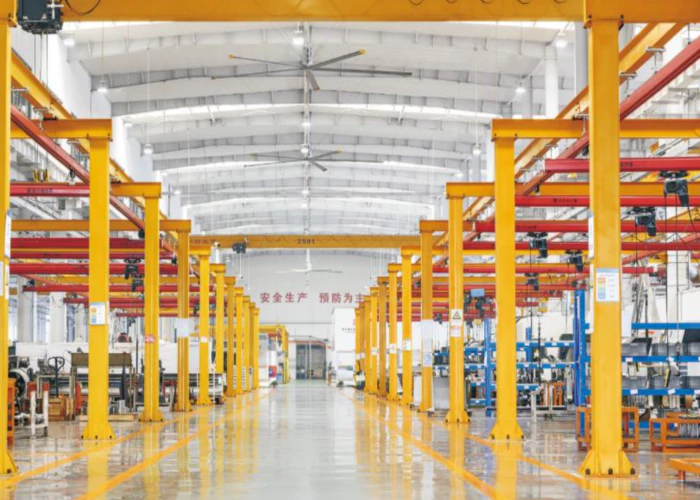
Robotic welding ensures deep penetration on the trunnion mounts, critical for safety when lifting 400 tons.
Voices from the Pit
“Our previous supplier’s cylinders kept leaking at the top stage. Ever Power came in, measured the wear, and suggested a different seal kit. It’s been 18 months, and they are still dry.”
— Mark D., Maintenance Planner, Western Australia
“We needed a custom-length cylinder for a modified water truck. They turned it around in 3 weeks. The weld quality is excellent.”
— Jean-Luc P., Equipment Manager, Quebec
“Honest guys. I asked for a repair, they told me the barrel was too far gone and explained why. The new cylinder was priced fairly and arrived crated properly.”
— Mateo G., Mine Owner, Peru
الأسئلة الشائعة: المحادثات التي نجريها يومياً
Why is my hoist cylinder leaking from the top stage?
It’s usually the wiper seal. If dust gets past the wiper, it eats the main seal. Also, check for ‘ballooning’—if the top stage tube has expanded due to pressure spikes, the seal loses contact and leaks.
How much does a replacement hoist cylinder cost for a CAT 777?
Prices vary based on steel prices, but a high-quality aftermarket cylinder typically ranges from $5,000 to $12,000. It’s cheaper than OEM but built to the same or better specs.
How do I bleed air from a telescopic hoist cylinder?
Most have a bleed screw at the top. Extend the cylinder slowly with no load, crack the screw until clear oil flows, then close it. Do not do this under load! Or cycle it fully 5-10 times.
Can you ship massive mining cylinders internationally?
Yes. We ship DDP (Delivered Duty Paid) to mining sites globally. We handle the heavy-duty crating and customs paperwork so it arrives at your workshop ready to install.
What oil should I use for mining trucks in extreme cold?
Standard AW46 turns to jelly at -30°C. You need a high Viscosity Index (VI) fluid like multigrade ISO 32 or specific arctic hydraulic fluid to prevent pump cavitation and sluggish hoisting.
Do you offer a warranty on your mining cylinders?
Yes, typically 12 months or 2,000 hours, whichever comes first. We stand behind our welds and seals because we test every single unit before it leaves the factory.
Keep Your Fleet Moving
A blown cylinder shouldn’t stop production. Let’s get you back in the dirt.