Loader Steering Hydraulic Cylinders: Because “Close Enough” Doesn’t Cut It in the Pit
There is a very specific feeling you get when a loader’s steering starts to go. You are hauling a 10-ton block of granite, you gently nudge the joystick to the left to navigate a muddy berm, and… nothing happens for a split second. Then, صوت طقطقة, it engages. We call that the “dead band,” and in my eighteen years of troubleshooting hydraulic systems across three continents, it is usually the first sign that your Loader Steering Hydraulic Cylinder is waving the white flag. Unlike lift cylinders, which take massive static loads, steering cylinders are the marathon runners of the hydraulic world. They are constantly dithering—making micro-adjustments thousands of times an hour. Most printers and even some OEM procurement managers don’t fully grasp that the wear pattern on a steering cylinder is fundamentally different from a boom cylinder. It’s not just about pushing power; it’s about responsiveness and lateral rigidity. When we engineer these units, we aren’t just looking at the pressure rating; we are looking at how that rod behaves when the loader is fully articulated at 40 degrees and hits a pothole. That is where cheap cylinders buckle, and that is where the “real deal” keeps the operator safe.
🏭 Don’t Just Read About It—Walk Our Floor
We believe in radical transparency. Put on your virtual hard hat and inspect our honing machines, seal assembly stations, and pressure testing bays right now from your phone.
🚀 ادخل جولة المصنع بتقنية الواقع الافتراضي
Experience the precision behind every weld.
The Anatomy of Control: What Makes These Cylinders Tick?
Let’s get under the hood. The defining characteristic of a Loader Steering Hydraulic Cylinder—especially in articulated wheel loaders—is that they usually work in pairs. As one extends, the other retracts. This “push-pull” dynamic creates a unique hydraulic circuit requirement. If the internal leakage (bypass) in one cylinder is even slightly different from the other, you get “steering drift.” The operator has to constantly correct the wheel just to drive straight. In our experience, the culprit is often the piston seal energizer losing its elasticity under thermal cycling. We’ve seen cheap seals turn into hard plastic after a few weeks of operating at 80°C (176°F).
To combat this, we use a composite sealing system. We don’t just rely on a standard O-ring; we use a glass-filled PTFE slide ring backed by a square-profile NBR energizer. Why? Because PTFE has low friction (no “stick-slip” or jerky steering) and the square energizer prevents the seal from rolling in the groove during those rapid back-and-forth movements. Furthermore, the rod material is non-negotiable. It has to be induction hardened. When a loader is turning in a gravel pit, rocks are constantly pinging off that steering rod. If the chrome is soft, it chips. A chip rips the wiper seal. Dust gets in. Game over.
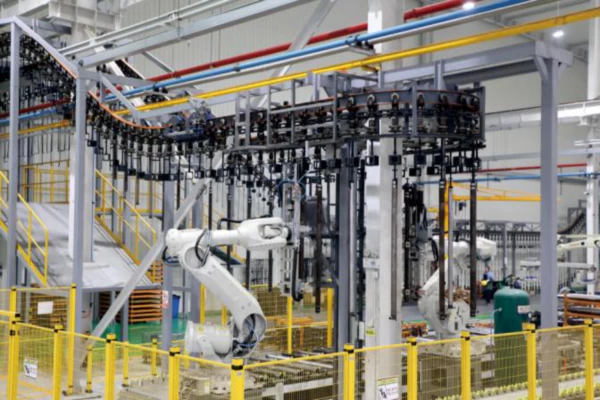
Precision Honing: We achieve surface finishes of Ra 0.2µm to ensure seal longevity even during rapid steering oscillation.
المواصفات الفنية وعلم المواد
It is easy to look at a spec sheet and just check the dimensions, but the magic is in the metallurgy. Standard ST52 tubing is fine for light duty, but for mining-class loaders, we often upgrade to modified grades with higher yield strengths to prevent “ballooning” under pressure spikes. Steering circuits often have relief valves set higher than the main lift circuit to prevent the machine from losing steering when the bucket is stuck. This means the cylinder must handle pressure transients that would blow the seals off a lesser unit. Here is a breakdown of what we typically build for high-hour applications:
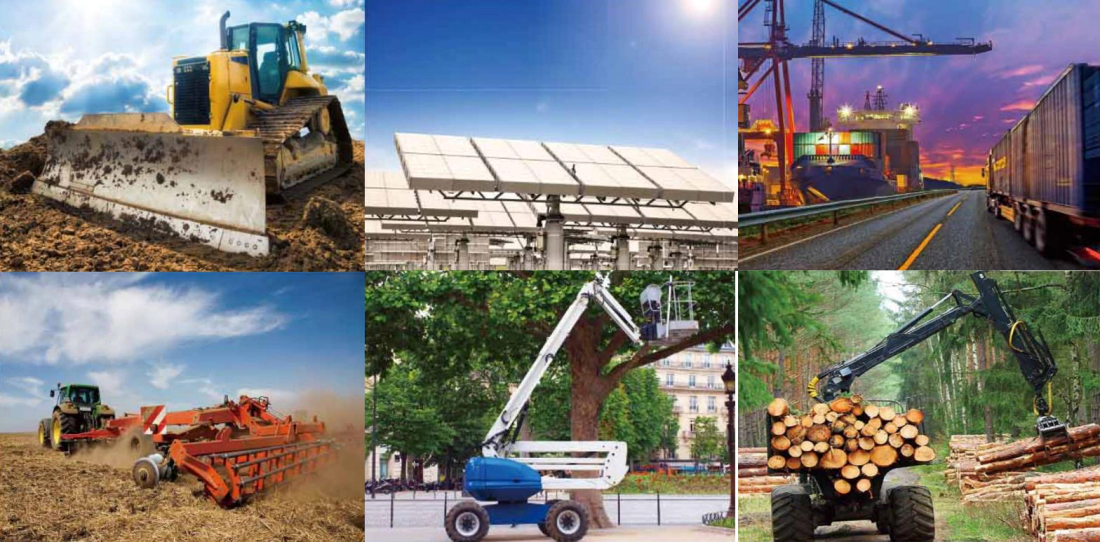
Whether it’s an articulated dump truck or a wheel loader, the side-loads are real.
Field Report: Where These Cylinders Earn Their Keep
You will find our Loader Steering Hydraulic Cylinder units in places you probably wouldn’t want to visit on vacation. In underground mining (LHD Loaders), the environment is cramped and hot. The steering cylinders there take a beating because the operators are constantly banging the sidewalls of the tunnels. We reinforce the rod eyes in these applications because standard eyes ovalize within months. Then there is the forestry sector—skidders and forwarders. Here, the danger isn’t heat; it’s debris. Branches and logging slash act like spears. If the cylinder ports aren’t guarded or oriented correctly, a branch will shear off a hydraulic fitting instantly. We often design custom port blocks (manifolds) that sit flush against the cylinder body to eliminate this risk. It’s these small design choices that save thousands in downtime.
Case Study: The Australian Dust Bowl
Client: Red Earth Aggregates (Western Australia)
The Situation: Red Earth runs a massive fleet of 50-ton wheel loaders handling iron ore. The dust in the Pilbara region is incredibly fine and abrasive—it’s essentially grinding powder. In 2022, they were losing steering cylinders every 600 hours. The dust was getting past the wipers, mixing with the oil, and scoring the barrels. The OEM replacements were costing them a fortune and taking 12 weeks to arrive.
الحل: We analyzed the failed units. The standard polyurethane wipers weren’t scraping the fine dust off effectively. We engineered a custom solution: a dual-wiper system. We installed a brass scraper ring (to knock off the heavy mud crust) followed immediately by a double-lip aggressive polyurethane wiper. We also upgraded the rod plating to a double-layer chrome process.
النتيجة: The service life of the steering cylinders jumped from 600 hours to over 4,500 hours. The maintenance manager, Steve, sent us an email saying, “I’ve finally stopped having nightmares about steering leaks.” We now supply their entire fleet.
SWOT Analysis: The State of Steering Tech
نقاط القوة
We have 18+ years of specific data on seal failure modes. Our ability to reverse-engineer obsolete cylinders is unmatched.
نقاط الضعف
Custom manufacturing takes time. We cannot compete with “off-the-shelf” generic sizes for 24-hour delivery.
فرص
Steer-by-wire systems require cylinders with integrated sensors. We are already prototyping these smart units.
التهديدات
Low-cost imports using recycled steel are flooding the market, creating a safety risk that gives the industry a bad name.
Trend Watch: The Future is “Smart”
The days of “dumb” iron are numbered. The biggest trend we are tracking is the integration of Linear Position Sensors (LDTs) directly inside the steering cylinder rod. This allows the machine’s ECU to know the exact articulation angle without external linkages (which always break). This is crucial for the new generation of semi-autonomous loaders. Also, keep an eye on “cushioning” technology. Traditionally, steering cylinders slam into the mechanical stops at full turn, shaking the operator. New designs feature progressive hydraulic cushioning that slows the cylinder down in the last 15mm of stroke, making the ride buttery smooth. We are currently retrofitting this tech into older machines for several clients.
Factory & Customization: Your Specs, Our Steel
Most people think they are stuck with whatever the dealer sells them. Not true. If you have a modified loader—maybe you’ve added heavy tire chains or a larger bucket—the stock steering geometry might be off. We can manufacture a Loader Steering Hydraulic Cylinder with a thicker rod diameter to handle the increased buckling load, or change the mounting centers to give you a tighter turning radius. Our process starts with raw steel and ends with a painted, tested unit. We don’t just assemble parts; we manufacture the barrel, the piston, and the gland nut in-house. This gives us total control over the fit.
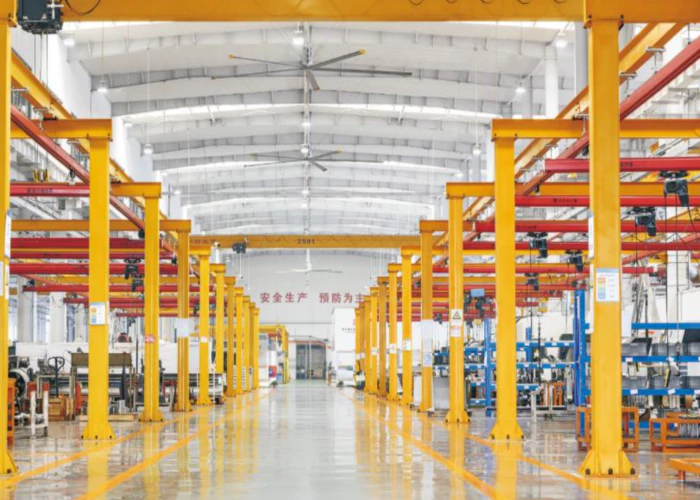
From raw tube to finished product, quality control is in our DNA.
Voices from the Field (Testimonials)
“Our Caterpillar 980s were eating steering seals every winter. Ever Power suggested a low-temp seal kit update. We haven’t changed a seal in two seasons. Solid advice.”
— Jean-Luc M., Construction Director, Quebec, Canada
“I was skeptical about ordering custom cylinders online for our Volvo fleet. But the technical drawings they sent were spot on. Fitment was perfect.”
— Carlos R., Quarry Manager, Spain
“Price is good, but the knowledge is better. They actually asked me about my hydraulic fluid type before building the cylinder. That shows they care.”
— Ahmed K., Logistics Operations, Dubai
الأسئلة الشائعة: المحادثات التي نجريها يومياً
Why does my loader steering feel jerky or loose?
Jerky steering, often called ‘shimmy,’ usually means air is trapped in the system or your steering cylinder seals are bypassing oil internally. It’s a safety hazard, so check the piston seals immediately.
How much does a replacement steering cylinder cost for a John Deere loader?
For a standard mid-size loader, prices range from $600 to $2,500, depending on whether you want OEM or aftermarket. Custom heavy-duty versions might cost a bit more but last longer.
Where can I buy custom hydraulic cylinders in the USA?
While we manufacture globally to keep costs down, we ship directly to the US with full DDP service (delivered duty paid). You get the specs you need without the import headache.
What is the lead time for a custom steering cylinder order?
Typically, once we sign off on the drawing, it takes about 15 to 20 days for production. Shipping time depends on whether you need air freight (fast) or sea freight (economical).
Which hydraulic seal material is best for high-heat environments?
If you are running in hot climates or near furnaces, standard Nitrile won’t cut it. You need Viton (FKM) seals, which can handle temperatures up to 200°C without degrading.
How do I measure my old cylinder for a replacement quote?
We need four key numbers: pin-to-pin length (closed), rod diameter, bore diameter (barrel width), and stroke length. Snap a few photos of the mounting ports, too, and we can do the rest.
Stop Losing Time to Leaks
Our engineers are ready to review your specs. No obligation, just solutions.