Deep-Sea Cylinders: Surviving the Abyss
When the pressure outside is higher than the pressure inside, physics changes. Here is how we build specifically for the crush depth.
I’ve stood on the deck of a support vessel in the middle of the Atlantic, watching a $2 million ROV (Remotely Operated Vehicle) being hoisted out of the water with a blown manipulator arm. It wasn’t a collision that broke it; it was the pressure. Most people, even seasoned hydraulic engineers who stick to land-based equipment, don’t fully grasp what happens when you descend past 3,000 meters. Down there, the water is trying to crush everything into a dense little ball. We call it “the crushing grip,” and it’s the primary enemy of the Deep-Sea Hydraulic Cylinder. In my nearly two decades of designing actuators for these hostile environments, I’ve learned that standard rules of hydraulics are basically suggestions at that depth. You aren’t just fighting the load; you are fighting the ocean itself.
The biggest misconception we see is about sealing. On land, the pressure is inside the cylinder trying to get out. At 6,000 meters deep, you have 600 bar (nearly 8,700 PSI) of external pressure trying to get in. If your wiper seal isn’t designed to resist that inward force, the seawater will force its way past the gland, mix with your hydraulic fluid, and turn it into a milky, corrosive emulsion within hours. We’ve seen standard “marine grade” cylinders (which are really just painted steel) implode because the barrel wall thickness was calculated for internal burst pressure, not external buckling pressure. The trick is balancing the internal fluid pressure with the external ambient pressure—using compensators—so the cylinder walls don’t have to support the entire pressure differential. It’s a delicate dance of physics.
The Engineering Reality: Materials & Mechanics
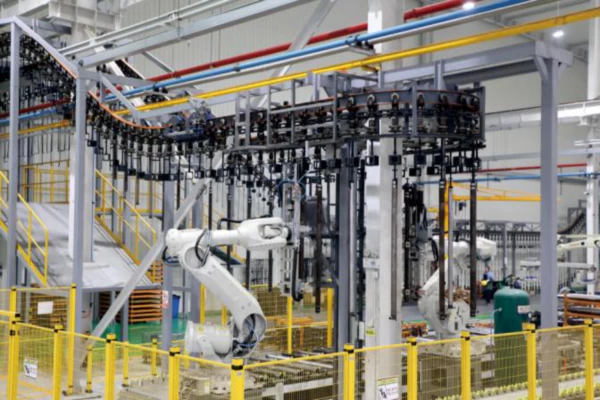
Our precision machining center handles exotic alloys for subsea applications.
When we specify materials for deep-sea use, 316 Stainless Steel is actually considered the “budget” option, and honestly, we hesitate to use it below 1,000 meters because of crevice corrosion and pitting. For the serious depths—3,000m to 6,000m—we move to Duplex 2205 أو Super Duplex 2507. These materials have a dual-phase microstructure that provides incredible strength (allowing for thinner, lighter walls) and massive corrosion resistance. For weight-critical applications, like AUVs (Autonomous Underwater Vehicles), we machine the entire body from Grade 5 Titanium (Ti-6Al-4V). Titanium is fantastic because it’s immune to saltwater corrosion and is non-magnetic, which is crucial if the ROV is carrying sensitive survey magnetometers. However, titanium has a nasty habit of galling (cold welding) if the rod and gland slide against each other without special coatings. We use a proprietary plasma-spray ceramic coating on the rod to prevent this.
| ميزة | Deep-Sea Spec (Ever Power) | رؤية "الخبير المخضرم" |
|---|---|---|
| Max Depth Rating | 3,000m – 6,000m (Standard) | Don’t guess here. A cylinder rated for 3km will deform at 4km. |
| Primary Materials | Titanium / Super Duplex / Monel | Titanium is expensive, but replacing a rusted cylinder at sea costs 10x more. |
| طلاء القضيب | HVOF Ceramic / DLC (Diamond-Like Carbon) | Chrome plating is useless here; it peels off in saltwater. |
| نظام إحكام الغلق | Dual Wiper / Pressure Compensated | We design the wiper to scrape barnacles, not just dust. |
| Fluid Medium | Water-Glycol / Bio-Oil (Panolin) | Must be environmentally friendly in case of a leak (rules are strict). |
SWOT Analysis: Is Deep-Sea Tech Right for Your Rig?
Before you commission a subsea build, you need to weigh the variables. This isn’t just about “will it work,” it’s about “will it last.” Here is how we break down the strategic viability.
نقاط القوة
- Corrosion Immunity: Using Titanium/Duplex means the cylinder body practically lasts forever.
- مصداقية: Designed for months of submersion without maintenance.
- Power Density: Hydraulics still beat electrics for power-to-weight ratio underwater.
نقاط الضعف
- يكلف: Exotic materials and specialized seals drive the price up significantly.
- مهلة: Getting high-grade titanium billet takes time; stock is rarely sitting on a shelf.
فرص
- Deep Sea Mining: A booming sector needing robust actuation for nodule collectors.
- Offshore Wind: Floating wind farms require subsea tensioning cylinders.
التهديدات
- المحركات الكهربائية: “All-Electric” subsea trees are becoming popular to remove potential oil leaks.
- Regulations: Stricter environmental laws regarding hydraulic fluid leaks.
Where We See Them Shine (The Real World)

The most visible application is obviously ROV Manipulator Arms—those robotic claws you see in documentaries. But the real heavy lifters are in the oil and gas sector. We build massive **BOP (Blowout Preventer) Stack** cylinders that must actuate safety valves at the bottom of the ocean to prevent disasters. If those fail, you have a catastrophe. Another growing area is **Subsea Trenching**, where massive underwater tractors plow the seabed to lay cables. These cylinders live in a cloud of abrasive sand and silt, so the rod coating hardness is critical. Recently, we’ve also been supplying Scientific Sampling Equipment cylinders that need to be clean and precise to pick up fragile coral samples without crushing them.
Trend Analysis: The “Smart” Ocean
The ocean floor is getting smarter. We are seeing a massive shift toward cylinders with integrated Subsea Position Sensors. In the past, you just guessed where the cylinder was. Now, we are gun-drilling the rods to accept pressure-rated magnetostrictive probes (LVDTs) that can withstand 600 bar. This gives the operator on the surface ship real-time feedback on exactly how far a valve is open or where the robotic arm is positioned. It adds complexity to the sealing (you have to seal the sensor cable exit too), but the control it offers is unbeatable.
Case Study: The Norwegian Node Project
عميل: Nordic Subsea Innovations | موقع: Stavanger, Norway
الصداع: The client was developing a new autonomous subsea docking station for drones at a depth of 3,200 meters. They were using “modified” standard stainless cylinders for the locking mechanism. The issue? After 15 cycles, the rod seals would invert due to the pressure differential, causing the hydraulic system to ingest seawater. The failure rate was 100% within 48 hours.
حلنا: We engineered a custom **Pressure-Compensated Titanium Cylinder**.
1. **Material:** Switched body and rod to Grade 5 Titanium to reduce weight for the drone’s buoyancy budget.
2. **Sealing:** Implemented a double-reversed U-cup seal arrangement that energizes from *both* internal and external pressure.
3. **Compensation:** Added an integrated bladder compensator port to balance the internal oil pressure with the ambient sea pressure.
النتيجة: The new units successfully completed a 6-month continuous submersion test. The docking station is now live in the North Sea.
“The pressure compensation design was the game changer. We stopped fighting the ocean and started working with it. Brilliant engineering.”
— Erik J., Lead Systems Engineer
“Titanium machining is usually a nightmare for lead times, but Ever Power had the raw bar stock on hand. Saved our prototype schedule.”
— Sven T., Project Director
“The documentation package was perfect. DNV certification is strict, and their material traceability reports breezed through inspection.”
— Lena K., QA Manager
Factory Direct: We Build What You Draw (Or We Draw It For You)
You can’t buy deep-sea confidence off a shelf. We have dedicated hyperbaric testing chambers in our factory. This means we can simulate the pressure of 6,000 meters deep right here on dry land. We test every single deep-sea cylinder for leakage under external pressure, not just internal pressure. If it survives our chamber, it will survive your mission. We can customize porting (SAE, BSPP, or specialized subsea stab plates) and mounting interfaces to fit any ROV chassis.
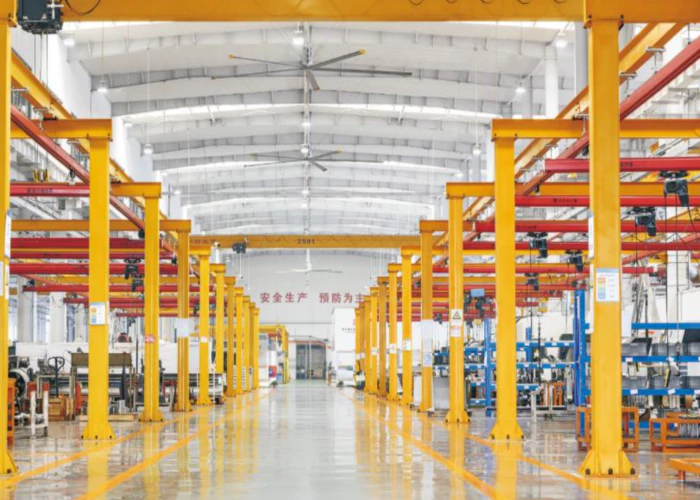
See Our Testing Facilities
We believe in transparency. Walk through our testing bays and see the hyperbaric chambers in action.
👈 انقر هنا لزيارة مصنع الواقع الافتراضي الخاص بنا
No dive gear needed. Experience the quality virtually.
FAQ: Real Questions from the Industry
How much does a custom titanium deep-sea cylinder cost for an ROV project?
It is not cheap, I’ll tell you that upfront. Titanium pricing fluctuates, but for a typical subsea actuator rated for 4000m, you are usually looking at 4 to 5 times the cost of a standard stainless unit. The material cost is high, but the machining of Grade 5 Titanium is what really drives the price up because it eats tooling alive.
Can you manufacture a subsea cylinder that works at 6000 meters depth without imploding?
Yes, we do this for research vessels and deep-sea mining rigs. At 6000m, the ambient pressure is roughly 600 bar. We have to design the barrel wall thickness to resist buckling, not just bursting. We often use a pressure-compensated design where the internal oil pressure is balanced with the sea pressure so the seals don’t get crushed.
What is the best material for hydraulic cylinders used in saltwater environments in the North Sea?
For the North Sea, standard 316L stainless steel is often not enough due to crevice corrosion. We recommend Super Duplex 2507 or at least Duplex 2205. It has a much higher PREN (Pitting Resistance Equivalent Number) and withstands the cold, oxygen-rich saltwater much better over long deployment cycles.
Why do my subsea cylinder seals fail so quickly, even when the cylinder isn’t moving?
This is a classic issue called ‘cold flow’ or extrusion. At depth, the external water pressure pushes the wiper seal *into* the gland, which can deform it. If you aren’t using a specific heavy-duty subsea wiper with a rigid backbone, the salt crystals will get in, and the seal geometry will collapse.
Where can I find a manufacturer who ships deep-sea hydraulic cylinders to Singapore or Australia?
We ship to the APAC region constantly. Since most subsea projects are time-critical (docking fees are insane), we offer expedited air freight for custom subsea units. We crate them in ISPM-15 timber so they fly right through customs without getting stuck.
Ready to Explore the Deep?
Don’t let pressure stop your progress. Let’s engineer a solution that survives the crush.